Incorporating Modern Social Media into the Classroom to Enhance Students' Conceptual Understanding in Science Education: A Quasi- Experimental Study
published: 17 November 2025 | https://doi.org/10.63174/xdi.KGFN8564
Abstract
The digital age has significantly transformed information dissemination, positioning modern social media as a key platform for student engagement in educational contexts. Despite its advantages, the diverse, informal, and interdisciplinary nature of modern social media content presents cognitive challenges for students. This study proposes an approach to integrating modern social media as a pedagogical tool by utilizing its contemporary features to develop a comprehensive instructional model for teaching scientific concepts. The model aims to guide students in critically examining diverse modern social media perspectives through a sociological lens. It facilitates the acquisition of solid scientific concepts, enhancement of critical thinking skills, and accurate interpretation of modern social media narratives via independent inquiry, evaluation of scientific evidence, and perspective reframing. The study employed a quasi-experimental design in four middle school classes, comprising an intervention group (N=44) and a control group (N=52). Results revealed a significant positive effect of the model on students' conceptual understanding and reasoning skills.
1. Introduction
The channels of information dissemination have been significantly transformed by digital technologies[1],[2]. This shift has profoundly impacted educational contexts, altering the presentation formats and communication patterns of media[3]. Throughout the 20th century, traditional media—characterized by rigorous editorial oversight—served as the primary information source for the public. Such oversight ensured information reliability and credibility. Since the early 21st century, Internet proliferation and technological advances have enabled smart device-based platforms to become primary dissemination channels. A defining feature of these platforms is that users function as both information receivers and creators. Thus, information sources, opinions, and expressions typically lack rigorous scrutiny. This user-generated paradigm facilitates exponential growth of fragmented resources, predominantly characterized by informal discourse. Simultaneously, this paradigm amplifies subjectivity, arbitrariness, and fact-opinion blending, while eroding information authenticity and credibility[4]. For secondary school students, modern social media has become the primary information source. This profoundly influences their development, serving as a key resource for societal understanding, knowledge construction, and scientific conceptual development[5].
Given modern social media’s pervasive influence on adolescent concept formation , a critical examination of the cognitive substrates underlying scientific conceptual understanding is warranted. Within science education, scientific concepts function as foundational schema within students' cognitive architectures. Thus, concept-centered pedagogy remains a core imperative in science education, with conceptual learning constituting a well-established research domain. Empirical studies have systematically documented students' alternative conceptions[6],[7],delineating contextual catalysts and epistemic barriers to conceptual change. Building on this foundation, evidence-based strategies—including conceptual change texts, modeling, analogies, and scientific writing[8],[9]—have been operationalized. Technological innovations now enable emergent approaches, such as simulations and game-based learning that harness motivational affordances of digital environments[10],[11]. This pedagogical shift parallels dialectical tensions between technological innovation and sociocultural practices, wherein evolving information channels reconfigure epistemic authority. Consequently, an ontology-aware instructional model is exigent—one leveraging modern social media’s poly-contextual resources to scaffold conceptual adaptation within authentic, digitally mediated ecosystems.
Compared to existing strategies for enhancing scientific concept understanding, science instruction that integrates the strengths of modern social media—including multimodal communication and culturally relevant resources—significantly boosts students' intrinsic motivation and engagement[12-14].Exposure to these authentic materials encourages students to analyze social science issues from diverse perspectives, thereby enriching the curriculum and transforming classrooms into more interactive learning environments that foster deeper conceptual understanding[15],[16].As a result, this study examines the design principles and implementation efficacy of modern social media-integrated pedagogy for scientific concept development, evaluating its impact on secondary students' conceptual understanding within digitally saturated learning ecologies.
2. Literature Review
Enhancing students' conceptual understanding remains a central goal of physics education[17].Empirical studies, however, reveal that traditional instruction frequently fails to cultivate robust conceptual knowledge of fundamental principles, as students may master algorithmic problem-solving yet struggle with novel tasks requiring deep conceptual transfer[18].This gap underscores the potential of diverse instructional environments—particularly those enabled by modern social media resources—to scaffold deeper physics learning through multimodal engagement and authentic context[19].Consequently, leveraging modern social media's pedagogical affordances (e.g., real-world relevance, collaborative discourse) presents considerable potential for transforming scientific concept instruction.
With accelerated information technology development, modern social media has emerged as students' primary source for life-relevant information, offering a pedagogically viable approach to enhancing conceptual understanding[20].Several scholars have noted that integrating modern social media platforms like TikTok into teaching places students at the center of the learning process, thereby transforming the educational experience into a more motivating and engaging one[21-23].Consistent with constructivist learning theory, students actively construct their understanding and knowledge through experience, reflection, and interaction with their environment . Promoting learner engagement in hands-on activities, peer collaboration, and content acquisition through self-directed exploration enhances learning outcomes[24],[25].In concept teaching, modern social media can serve as a resource, an interactive platform, or an inquiry tool, playing multiple roles[26-28].However, research on applying modern social media in basic education remains limited. Given the ongoing evolution of modern social media's functions and resources[29],it is crucial to continuously investigate its impact on science concept learning in basic education.
Modern social media also merits attention for the unprecedented scale and complexity of digital content, particularly its multi-perspective nature stemming from user-generated resources[30],which establishes unique pedagogical affordances. While trending topics capture adolescent engagement, content creators with heterogeneous backgrounds often express conflicting interpretations of the same scientific phenomena. Consequently, such discourse frequently amalgamates scientific and pseudoscientific claims (e.g., empirically unsubstantiated assertions), posing critical challenges for learners lacking evaluation competencies[31].Paradoxically, these discursive contradictions can stimulate productive conceptual conflict, functioning as multi-perspectival learning scaffolds that advance conceptual understanding[32].Modern social media provides a unique opportunity for students to critically evaluate claims and declarations, fostering their ability to assess the relationship between evidence and hypotheses. This process supports students in constructing their own understanding.
Modern social media trends frequently originate from authentic societal contexts, presenting complex, multifaceted challenges requiring interdisciplinary knowledge integration. When leveraged as problem-based scenarios for instructional design, these trends necessitate interdisciplinary pedagogical frameworks. Empirical studies confirm that such frameworks significantly enhance creative capacity, technical proficiency, learner engagement, and intrinsic motivation—catalyzing meaningful conceptual depth[33].Specifically, interdisciplinary models serve as catalytic conduits for knowledge transfer, demonstrably advancing students' systems thinking and evidence-based reasoning abilities[34].Scientific reasoning ability is a highly valued competency in science education[35].Scientific reasoning ability (SRA) plays a crucial role in developing scientific thinking and cultivating students' analytical skills[36].Strong scientific reasoning ability and conceptual understanding can enhance problem-solving capabilities[37].Scientific reasoning ability is one of the key objectives in science education and has been extensively studied in teacher education and science education fields. Scientific reasoning ability (SRA) plays a crucial role in advancing science education and cultivating students' analytical skills. Strong scientific reasoning and conceptual understanding can promote the development of students' problem-solving abilities.There is also substantial evidence that interdisciplinary teaching helps students experience more learning stimuli and remain fully engaged in the task and continuously intrinsically motivated[38].From this point of view, science pedagogy must anchor instruction in students' lived realities through modern social media resources; correspondingly, the inherent multi-perspectival nature of these resources mandates interdisciplinary curricular architectures as the optimal pedagogical response.
Traditional interdisciplinary physics instructional design is often constrained by knowledge application. An interdisciplinary approach is constructed based on the relationships between Science, Technology, Society, and the Environment (STSE)[39].For instance, teachers connect physics with engineering and technology and utilize the knowledge of physics to address problems in engineering or technology fields[40],[41].These interdisciplinary designs formulate educational strategies based on the inherent affinity between science and engineering. Such approaches tend to diminish the development of students' critical thinking and reasoning skills. Consequently, numerous scholars have leveraged Social Scientific Issues (SSI) to cultivate students' social responsibility and critical thinking[42],generating significant impact[43],[44].and establishing an effective interdisciplinary teaching model.
It has been acknowledged that teaching based on SSI is an active learning methodology which places scientific content in a social context and provides students with motivation and autonomy in their learning[45].SSI-based instruction is an effective organizational form of interdisciplinary instruction , encouraging students to use higher-order thinking to integrate and evaluate information so that they can solve the problems discussed[46],[47].It also allows students to explore scenarios of how science is used in society and enhances the relevance and pertinence of conceptual laws taught in the science classroom. What’s more, the use of SSI-based teaching methods improves students' comprehension[48].Among similar areas of scholarship and pedagogical practice has been development of education relating to “socially-acute questions” (SAQ), which deal with controversies that have high levels of public consciousness and debate with varying extents of connection to fields of science and technology , such as debates on topics related to science and politics, economy[49].However, teaching materials for these discussions often draw from news events in broadcast media or newspapers, resulting in limited resources that frequently remain confined to pro-and-con debates. Moreover, most of these debates require substantial prior knowledge and strong argumentation skills, presenting certain operational challenges in the teaching organization process. However, the emergence of modern social media has facilitated access to SSI teaching resources. These resources encompass not only international events but also SSI topics that resonate with students' daily lives. Perspectives are no longer confined to pro-con debates or minority viewpoints. An exponentially growing number of viewpoints now emerge from individuals across diverse professions, personalities, and languages, creating opportunities to cultivate students' critical thinking and interdisciplinary comprehension skills.
Rapid technological advancement has fundamentally reshaped the visual ecosystem and reconfigured students' primary information pathways, necessitating commensurate evolution in learning and cognitive processes. Conceptual teaching—a critical scaffolding system for knowledge construction—must dynamically transform alongside these multimodal resource shifts. Crucially, the algorithmically curated multisensory resources dominating contemporary modern social media platforms enable unprecedented conceptual teaching innovation through their inherent interdisciplinary affordances.
Specifically, this study intends to utilize the resources of modern social media, which are in line with the information acquisition habits of modern students, to design science concept teaching and to drive students' independent deep learning of concepts. The study will focus on the question: “How effective is the science teaching model under modern social media integration in influencing students' conceptual learning?”
3. Theoretical Framework
The algorithmically curated multisensory resources that characterize contemporary modern social media establish a multi-contextual learning ecosystem. This convergence of multimodal information channels enables the construction of embodied cognitive schemas that bridge the gap between abstract concepts and perceptual experiences[50].This multisensory foundation helps activate cognitive schemas during concept encoding. At the same time, the participant structure of role flow—where all individuals play the roles of both content consumers and creators—generates a multivocal knowledge network. When high-traffic topics arise, cross-domain contributors (including laypeople) generate cognitively heterogeneous perspectives, some of which are algorithmically amplified to propagate claims that are not scientifically recognized[50].These discursive contradictions create intentionally induced conceptual conflicts that trigger cognitive conflicts and stimulate interest in exploration and debate. Of course, inherent sociolinguistic engagement mechanisms activate socialized self-directed learning[51],which enhances intrinsic learning motivation. Finally, based on the characteristics of modern social media that naturally induce topic discussion, it will effectively promote discussion and communication in concept teaching. These features provide a complete teaching vein for science concept teaching.
Drawing on the theoretical foundations of knowledge integration and conceptual frameworks[52],[53],this study develops science teaching strategies that incorporate modern social media within SSI and interdisciplinary instructional approaches. The implementation begins with the selection of themes—specifically, relevant SSI topics—aligned with students’ cognitive profiles to ensure that modern social media resources effectively enhance learning motivation. Subsequently, a resource repository is built by gathering multimedia materials from popular modern social media platforms such as TikTok, where diverse professional perspectives and engaging formats foster student interest, sustain attention, and support deeper cognitive engagement through multisensory input[26-28].
Based on this curated collection of modern social media resources, interdisciplinary knowledge networks are identified to form the core of the curriculum. A guided question chain is then designed to structure self-directed learning via modern social media, strengthening the purposefulness of the learning process. Finally, in the classroom setting, modern social media resources are leveraged to facilitate inquiry-based learning. Using the question chain as a scaffold, students are guided to explore resources critically, with emphasis placed on developing argumentation and reasoning skills. Instructors capitalize on the fragmented and multi-voiced nature of modern social media to deliberately provoke cognitive conflict, prompting students to engage in reasoning, discard misconceptions, integrate accurate views, and ultimately construct robust scientific concepts—achieving meaningful conceptual understanding.
Science instruction integrated with modern social media recreates the processes students undergo when searching for information, filtering content, reasoning, synthesizing knowledge, and forming explanations within modern social media platforms. This teaching approach leverages fragmented yet diverse and rich modern social media resources to create cognitive conflict scenarios. It helps students identify, filter, and transform misconceptions, ultimately constructing and solidifying scientific concepts. Based on information processing models in cognitive psychology, this teaching model integrates knowledge, reduces cognitive load, and promotes deep learning of concepts. Simultaneously, the teaching format incorporating modern social media addresses the characteristics of contemporary online information life, focuses on the subjectivity of student learning and cognition, and follows the learning pathways of scientific concepts. This instructional model aims to equip students to adapt to modern digital media-dominated social life, cultivate scientific thinking and inquiry skills, enable them to critically evaluate online perspectives, and acquire information scientifically. It fosters sound cognition and helps establish correct worldviews and values[54].
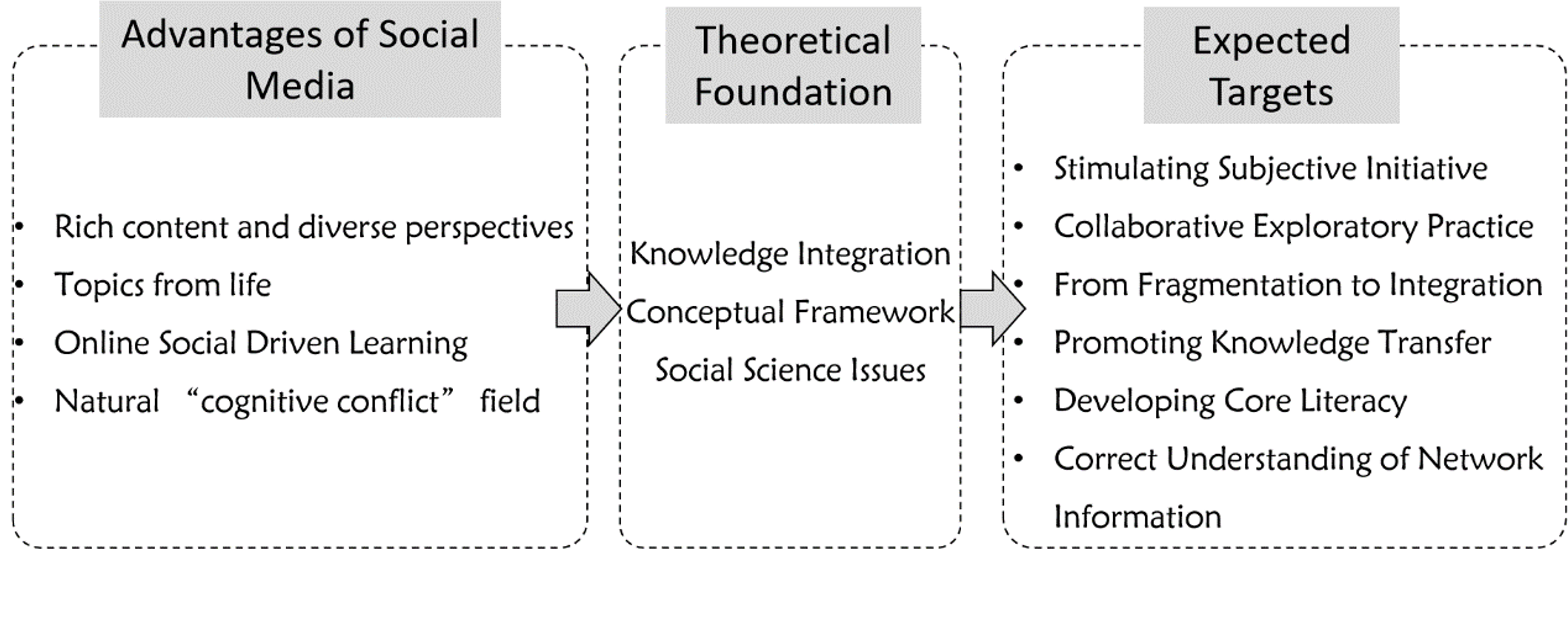
Figure 1. Theoretical framework and hypothesis of the teaching model.
4. Methodology
According to the teaching design idea of the integrated model of teaching scientific concepts based on social media, following the logic of reverse design and forward teaching, the following teaching design and experiment are carried out as an example of teaching the concept of electric power.
4.1. Teaching case design
4.1.1. Determine effective topics from the students' perspective
According to the conceptual learning objectives, select modern social media platforms pedagogically appropriate for target demographics, setting age-specific parameters. Usually the topic is determined by the following three criteriato: to search for core scientific concepts and applied manifestations, and identify 'hot topics' through engagement metrics (views/comments)and other relevant data; to extract entries from the platform's curated discovery modules (e.g., Hot Search lists), and screen for 'hot topics'; to mine discourse events of student concern to identify viable topics if no recent relevant 'hot topics' exist. Subsequently, conduct prior-knowledge diagnosticsvia class polls to assess familiarity with the 'hot topic'. Pedagogical viability is confirmed when ≥80% students demonstrate topic awareness.
In the teaching of electric power, the TikTok platform, persistently accessed by the target cohort, serves as the primary resource curation platform. Through the tripartite screening protocol, the first method yielded limited power-relevant algorithmic hotspots, predominantly displaying pedagogical micro-learning content; the second method identified no high-engagement algorithmic hotspots recently; the third applied select 'Netflix' as a trending node, then mined high-impact network events to identify the topic "a well-known livestream sales of blenders accused of power rating falsification"as the core instructional scaffold.
4.1.2. Establishing a media resource set based on “hot topics”
Following the design idea of the conceptual teaching model, we take the “hot” topic as the aggregation point, and obtain the commentaries and discussion resources on the “hot” topic from different perspectives and directions. Usually, the resources can be searched by keywords or expanded in the form of snowballing through “@ other related bloggers” in the comment area, which is consistent with our literature search method. In the design of electrical engineering teaching materials, we identified a wealth of self-media interpretation resources through keyword searches such as “overstated power ratings of circuit breakers.” By filtering these resources for similar content, we ultimately selected several videos relevant to this topic. Examples include interpretations from a physics principles perspective, arguments based on experimental test data, self-justifications from manufacturers and sellers, and analyses grounded in national standards and legal frameworks. Finally, we decided to use the videos from the perspective of physics, experimental test data, self-evidence of producers and sellers, analysis of national standards and laws, and so on.
4.1.3. Determine the interdisciplinary knowledge network based on the resource set
On the basis of modern social media “hot” topics, establish an interdisciplinary knowledge system, collect text and video resources to assist students in inquiry, reasoning and argumentation, and pave the way for students to solve problems independently. The design of this lesson is under the core concept of electric power, and combines all kinds of resources such as video arguments, conception distinguishment, and practical regulations. Among other things, the interdisciplinary testing standards, national standards, advertising laws and other related text resources are supplemented to ensure that students can integrate interdisciplinary knowledge in problem solving.
4.1.4. Constructing the teaching scaffolding of the umbrella structure question chain
After constructing a complete teaching scenario and the chain of knowledge, it is necessary to choose the appropriate chain of questions to help students' scientific inquiry, reasoning, and argumentation, which is an important cognitive carrier for students to master metacognitive strategies, learn to learn, and gradually form scientific exploration and research. In the design of electric power instruction, the topic core video is used to lead to the central question, which is the basis for designing strings of branched questions under the chain of knowledge and the arguments in the video resources. These strings of questions created focus on motivating students to argue and seek evidence, and to ask questions based on ideas with distinct cognitive conflicts. For example, what is the stirring power of a wall-breaker and how is it measured? Does the blending power of the whole machine refer to the rated power of the internal motor? Why do different bloggers measure different actual power? Why do some lawmakers say it is not falsely advertised while others say it is falsified? These questions guide students to think about is the definition of electric power → categories of electric power → ways to measure electric power → measurement error →the law and national standards → the application of electric power in daily life →the concept of electric power process from a systematic and comprehensive angle, so that students' understanding of the concept and its application is promoted.
4.2. Instructional Experiments
4.2.1. Teaching intervention design
In the past, teaching was usually in the form of lecture-based and demonstration experiments, which positioned students as the main observers and information receivers[55].This study transforms students from passive recipients into active explorers. This shift is primarily achieved by guiding students to utilize modern social media resources, supplemented by supportive guidance from educators. This approach enables students to independently explore and re-examine these concepts while systematically mastering core concepts.
(1) Content of the teaching intervention
The study chose “electric power” theme from the Grade 9 Physics, and selected the topic of “a well-known live sales of wall-breaking machine is questioned power false labeling problem”. The event is divided into three core stages: Stage 1, Netflix sells wall-breaking machines and advertises high power; Stage 2, a counterfeiting V dismantles the machine and denounces the inconsistency between the mixing power and the motor power; in Stage 3, a variety of self-media bloggers debate the legitimacy of the event, e.g., consumers believe that the power labeling is misleading, the seller displays the test report to prove the product's compliance, the laboratory researcher refutes this claim with the actual data, and legal scholars argue that the power labeling is not in accordance with national standards and the law. Laboratory researchers refute this claim with actual measurement data, and legal scholars argue that it meets the requirements according to the national standard and relevant legal norms. This “hot” topic generated a large amount of video and text material, sparking a social discussion about regulatory compliance of product power labeling. Based on this “hot” topic in modern social media, and following the design of the model for teaching science concepts based on modern social media, a scenario was set up to provide a chain of information and questions for students to complete a research study on this social issue.
(2) Instructional Intervention Methods
The experimental group will utilize the intervention instructional design described above. Teachers will avoid teaching physics content directly, choosing instead to provide resources and materials in video and written form, such as physics textbooks, relevant legal and sociological texts, and self-published materials. Educators will present a range of perspectives from modern social media through video, prompting students to create cognitive conflict and progressively understand the problem being addressed. The instructor guides them in utilizing the resources provided, including lab equipment (three full mixers for students to disassemble and experiment with), various online self media resources, and a space for discussion. Students were divided into small groups based on their perspectives and worked on video analysis, literature study, experimental manipulation, and collaborative discussion. Facilitated by the instructor and peer collaboration, students will complete their learning and training in the concept of electric power and its social applications.
On the contrary, the control group will use the previous lecture-based teaching format. First of all, the concept of electric work is introduced by the energy transformation of living objects, such as that electric lamps are converted from electric energy to light energy, and that electric fans are converted from electric energy to kinetic energy. Next, a demonstration experiment on electrical work and its influencing factors using small light bulbs was conducted to introduce the concept of electrical work. Then, in the second stage, the concept of power was introduced by demonstrating multiple small light bulbs of the same specifications but varying power consumption rates. Finally, the practice content was summarized. The specific teaching processes and differences between the experimental and intervention groups are shown in Table 1. The entire teaching experiment lasted one week, continuously exerting influence across three dimensions—teaching, post-class discussions, and assignments—to minimize errors caused by random factors.
Table 1. Instructional design of the intervention and control groups
| Stage | Group | Task |
|---|---|---|
| Stage1 | Intervention | Starting with a video of multiple arguments in modern social media, the topic of discussion is presented: is the power of a wallbreaker misrepresented? |
| Control | Introduce the concept of electrical work by showing and analyzing the energy conversion process of several common appliances in life. | |
| Stage2 | Intervention | Provide students with different individuals' analysis and comments on this event, already various experimental videos from self-published bloggers on the internet. Students will be able to fully understand the various viewpoints. |
| Control | Demonstration experiment: what factors affect electrical work. | |
| Stage3 | Intervention | The teacher gives several questions to inspire students to think. The teacher also points out that there is knowledge related to electric work and electric power in the textbook, which students are encouraged to study independently according to the online resources. |
| Question 1: Are there any fake products being sold by online bloggers? | ||
| Question 2: What is their relationship between the power of the motor as stated by the counterfeiter and the power rating of the entire machine? | ||
| Question 3: How should power be measured?······ | ||
| Control | Teachers give the same specification of different power bulbs, let the students observe these small bulbs to consume electricity quickly and slowly, leading to the concept of electric power | |
| Stage4 | Intervention | The teacher asks the group to present their views and explanations. Finally, summarize and sublimation, pointing out that in life, you can't blindly listen to what Netflix says, but rather reason and analyze scientifically before making a judgment. |
| Control | Review what you have learned in this lesson from beginning to end. Focus on the concepts and formulas of electric work and electric power. | |
| Stage5 | Intervention | Students independently identify similar issues in modern social media and give explanations. Creates an ongoing impact. |
| Control | Assign routine connection questions to promote application of knowledge. |
4.2.2. Sample Characteristics
The sample for the teaching experiment was all 8th grade students in a suburban middle school in Shanghai, with students aged about 15 years old. The middle school is ranked in the middle of the city, and the four 8th grade classes have similar learning bases, with a balanced gender ratio in each class. The students have access to a wide range of modern social media platforms and have a high frequency of modern social media use in their daily lives. The experiment was randomized to determine the experimental and control groups, consisting of 44 students from two classes in the experimental group and 52 students from two classes in the control group. None of the students had formally learned the content related to electrical power prior to this instructional experiment intervention.
4.2.3. Measurement design
The assessment instrument used in this study was a designed question paper (“the paper”). This study focuses on the impact on the learning of scientific concepts. Therefore, the test paper was designed to assess the level of conceptual understanding. The design of the assessment tool was based on the conceptual framework assessment theory of Prof. Bowery in the United States. Several studies have found[56],[57]that typical and atypical questions can be used to assess students' ability to transfer knowledge, which is an important indicator of whether or not students understand concepts. Typical problems consist of situational problems that students frequently encounter in lectures, textbooks, and homework assignments and can be solved by memorized formulas and problem-solving models. On the other hand, atypical problems are designed in unfamiliar contexts and require the use of core concepts to be solved correctly. Typical and atypical test questions are used to assess students' ability to transfer knowledge through the transformation of problem situations. This determines whether they are able to understand the concepts in depth, develop core concepts and achieve deep learning. Therefore, the questions in the test paper were categorized into typical and atypical test questions as shown in Table 2.
Based on the characteristics of modern social media-driven science concept teaching, the study concluded that the teaching can enhance students' conceptual understanding and reasoning ability. Therefore, the test questions were categorized into conceptual questions and scientific reasoning questions based on the characteristics of the content and abilities examined. Questions that can be accomplished by using a single concept are considered conceptual questions, and questions that require students to extract relevant physical quantities and perform reasoning calculations are considered applied reasoning questions. The categorization is shown in Table 2.
Table 2. Question design for conceptual testing
| Context | ||
|---|---|---|
| Type | Typical | Atypical |
| Conceptual Understanding | Q1,Q4 | Q7(only post-test) |
| Applied Reasoning | Q5 | Q2,Q3,Q6 |
The assessment was divided into a pre-test and a post-test. The pre-test was administered three days prior to the start of the teaching experiment intervention and consisted of six questions with a 15-minute completion time. The posttest was administered immediately after the end of the instructional pilot intervention, with the first six questions matching the pretest. An additional atypical conceptual type question Q7 was included with a completion time of 20 minutes. Data were analyzed using software such as SPSS 23.0 and Excel, and descriptive statistics, t-tests, and Cohen's d effect sizes were used to describe differences in data before and after the teaching experiment.
5. Results
5.1. Analysis of the results of the teaching experiment
The test paper pilot test collected data from 120 students with 117 valid data. It was used to assess the quality of the test paper, including data on reliability, difficulty, and differentiation. The test paper reliability Cronbach α = 0.684, with good reliability (>0.65)[58].The test paper was scored for content validity by experts in the university's own field and by secondary school experts, resulting in a content validity of 0.803, and good agreement between the items and the overall test could be determined by the data related to the point two columns. The overall difficulty and differentiation were 0.578 and 0.409, respectively, which were in a good range[59].In summary the test paper is of good quality and can be used for assessment, some of the data are shown in Table 3.
Table 3. Descriptive statistics (N=117)
| Item | Difficulty | Discrimination | Pb-r |
|---|---|---|---|
| 1 | 0.923 | 0.188 | 0.314 |
| 2 | 0.692 | 0.719 | 0.578 |
| 3 | 0.256 | 0.105 | 0.294 |
| 4 | 0.752 | 0.500 | 0.601 |
| 5 | 0.769 | 0.405 | 0.466 |
| 6 | 0.202 | 0.372 | 0.715 |
| 7 | 0.448 | 0.578 | 0.405 |
| M | 0.578 | 0.409 | 0.482 |
In the pedagogical intervention experiment, a total of 96 valid answers were collected in the pre-test, with 44 from the intervention group and 52 from the control group, and the pre-test data are shown in Table 4. In the pre-test, the mean score of the total scores of the intervention group was 39.35, and that of the control group was 44.11, with no significant difference in the performance of the total scores of the two groups. It can be observed that there is no significant difference between the experimental and control groups in terms of conceptual understanding, application of reasoning and performance on atypical questions. Significant differences were observed only in the performance on typical problems, which may be due to the fact that some of the students had independently practiced the content.
Table 4. Pre-test intervention and control group t-test data
| Item(Pre-test) | N | group | M | SD | F | t | sig | Cohen’s d |
|---|---|---|---|---|---|---|---|---|
| Total | 44 | Intervention | 39.35 | 13.92 | 3.351 | -1.431 | 0.156 | 0.296 |
| 52 | Control | 44.11 | 18.00 | |||||
| Conceptual Understanding | 44 | Intervention | 34.77 | 14.70 | 0.842 | -1.685 | 0.095 | 0.349 |
| 52 | Control | 40.58 | 18.41 | |||||
| Applied Reasoning | 44 | Intervention | 28.22 | 15.06 | 0.713 | -0.863 | 0.391 | 0.178 |
| 52 | Control | 31.25 | 18.73 | |||||
| Typical | 44 | Intervention | 64.39 | 25.31 | 3.923 | -2.153 | 0.034 | 0.443 |
| 52 | Control | 76.28 | 28.27 | |||||
| Atypical | 44 | Intervention | 24.32 | 15.31 | 4.375 | -0.134 | 0.893 | 0.024 |
| 52 | Control | 24.81 |
|
After the teaching experiment, the total scores of the students in both groups improved, as shown in Figure 2. According to the images, the mean total score of the intervention group was 39.35 in the pre-test and 49.72 in the post-test with significant differences (shown in Table 5), and the mean total score of the intervention group in the post-test increased by 10.37 points compared to the pre-test. The control group had a mean score of 44.11 on the pre-test and 52.94 on the post-test, with a significant difference (shown in Table 6), and the control group's mean total score on the post-test increased by 8.83 points from the pre-test. In terms of score improvement, the intervention group demonstrated a greater increase in scores. This indicates that both teaching models can promote students' learning of scientific concepts, with the intervention group showing slightly superior results compared to the control group.
It is obvious from the trends in the pre and post-test scores of the intervention and control groups with different sets of questions in Figure 2.that the teaching of science concepts based on modern social media resources is more effective in improving students' higher-order thinking skills, such as knowledge transfer and scientific reasoning abilities. Traditional teaching, on the other hand, was significantly more effective in basic conceptual learning, especially in typical scenarios in which students obtained high scores, which suggests that their conceptual learning relies mainly on rote memorization and is difficult to transfer and apply in unfamiliar scenarios. The changes in the pre- and post-tests of the intervention group and the control group are discussed below with specific data.
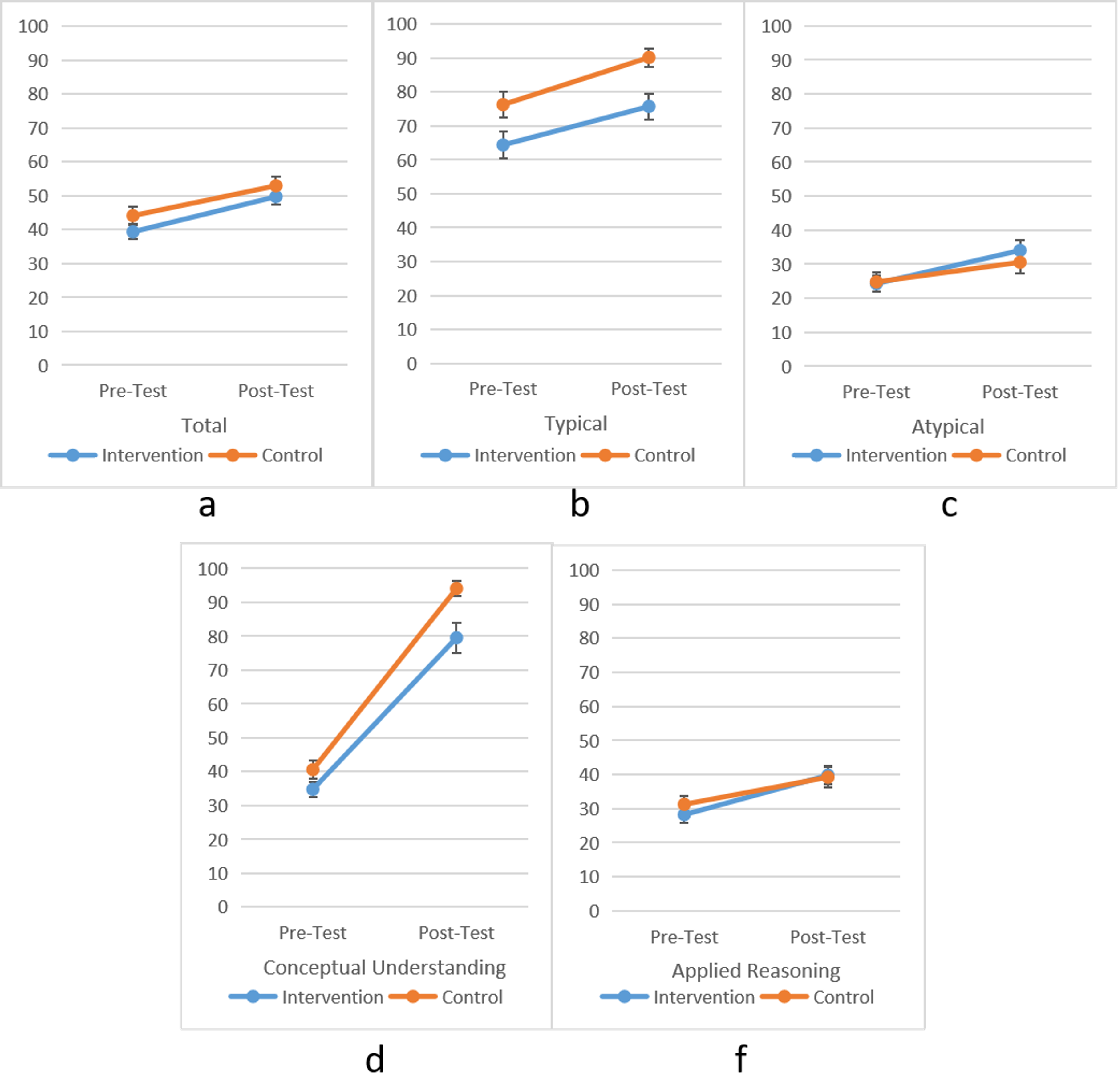
Figure 2. (a-f) Distribution of pre and post-test score means for each topic set.
5.1.1. Analysis of pre-test and post-test data of the intervention group
The intervention group showed significant score improvement in all four test sets of this study as shown in Table 5.
. First, the posttest of the conceptual test set showed an improvement of 44.78 points over the pretest, and there was a significant difference between the pretest and posttest. The data suggests that there is a significant improvement in the level of conceptual mastery of the students. Second, the posttest of the reasoning category test set improved by 11.55 points over the pretest with a significant difference. The data indicated a significant development in the students' application and reasoning skills. Finally, students improved 11.37 points on the typical test set posttest over the pretest and 9.77 points on the atypical test set posttest over the pretest with significant differences. The data indicate that students were able to transfer the application of relevant concepts proficiently and achieved deeper learning of concepts.
Table 5. T-test data for pre-test and post-test of the intervention group
| Item(Intervention) | N | Test | M | SD | F | t | sig | Cohen’s d |
|---|---|---|---|---|---|---|---|---|
| Total(Q1-6) | 44 | pre | 39.35 | 13.92 | 0.458 | 3.277 | 0.002 | 0.698 |
| 44 | post | 49.72 | 15.72 | |||||
| Conceptual Understanding | 44 | pre | 34.77 | 14.71 | 38.482 | 9.091 | <0.001 | 1.938 |
| 44 | post | 79.55 | 29.17 | |||||
| Applied Reasoning | 44 | pre | 28.22 | 15.06 | 0.174 | 3.299 | 0.001 | 0.703 |
| 44 | post | 39.77 | 17.69 | |||||
| Typical | 44 | pre | 64.39 | 25.31 | 0.561 | 2.107 | 0.038 | 0.449 |
| 44 | post | 75.76 | 25.28 | |||||
| Atypical | 44 | pre | 24.32 | 15.31 | 1.561 | 2.609 | 0.011 | 0.556 |
| 44 | post | 34.09 | 19.57 |
5.1.2. Analysis of pre-test and post-test data of the control group
The data of the control group presented different characteristics from the intervention group, as shown in Table 6. First, the posttest of the conceptual test set improved by 53.54 points over the pretest, which is a significant difference. The data indicate that the students' conceptual mastery level has developed significantly. Second, the posttest of the reasoning category test set improved by 7.97 points over the pretest with no significant difference between the pre and posttests. The data indicated that traditional instruction was not effective in promoting the development of students' application and reasoning skills. Finally, students' posttest on the typical test set improved by 14.64 points over the pretest, a significant difference; however, the posttest on the atypical test set improved by 5.78 points over the pretest, with no significant difference between the pre and posttests. The data suggest that students can only apply what they have learned in familiar environments but not in unfamiliar ones, finding it difficult to transfer and apply knowledge effectively, and that students are mostly in the shallow learning of mechanical memorization.
Table 6. T-test data for the pre-test and post-tests of the control group
| Item(Control) | N | Test | M | SD | F | t | sig | Cohen’s d |
|---|---|---|---|---|---|---|---|---|
| Total(Q1-6) | 52 | pre | 44.11 | 18.00 | 0.021 | 2.478 | 0.015 | 0.448 |
| 51 | post | 52.94 | 18.17 | |||||
| Conceptual Understanding | 52 | pre | 40.58 | 18.41 | 2.054 | 15.629 | <0.001 | 3.082 |
| 51 | post | 94.12 | 16.27 | |||||
| Applied Reasoning | 52 | pre | 31.25 | 18.73 | 1.991 | 1.967 | 0.052 | 0.388 |
| 51 | post | 39.22 | 22.25 | |||||
| Typical | 52 | pre | 76.28 | 28.27 | 14.935 | 2.927 | 0.004 | 0.576 |
| 51 | post | 90.20 | 19.20 | |||||
| Atypical | 52 | pre | 24.81 | 19.65 | 1.213 | 1.327 | 0.188 | 0.261 |
| 51 | post | 30.59 | 24.37 |
5.1.3. Comparison of data between the intervention group and the control group
It is clear from the data that teaching science concepts based on modern social media resources can promote students' development in a more comprehensive way and realize deep learning; traditional teaching can only promote students' ability to solve problems in concept mastery and familiar scenarios, while the ability to reason and apply and transfer knowledge fails to be developed. The increased Q7 of the posttest showed the same pattern, with an average score of 42.90 for the intervention group and 43.63 for the control group, with no significant difference between the two.
6. Conclusion and Applications
Technological development has led to changes in lifestyle, the source of students' access to information has changed significantly, and students' cognitive habits will inevitably change as well. Conceptual learning, as an important carrier of students' cognition, is imperative to change teaching and learning by relying on new forms of information dissemination media. Therefore, this study first analyzes the characteristics of modern social media, which is one of the main ways for students to obtain information; then, it constructs an integrated model for teaching science concepts based on modern social media according to its characteristics; finally, it designs teaching cases under the guidance of the teaching model and verifies its effectiveness through teaching experiments, and obtains the following insights.
First, modern social media resources serve as an important auxiliary tool for teaching science concepts. Modern social media resources, characterized by their interactivity, immediacy and user-generated content (UGC), have become an important resource to assist the teaching of science concepts. These platforms not only provide a rich venue for information exchange, but also allow teachers and students to share, discuss, and extend scientific knowledge. Through modern social media, teachers are able to update their course content, collect rich teaching materials to keep up with the times and current events, and enhance the connection between the classroom and life. In addition, the visibility and readability of modern social media make the classroom more lively and interesting, thus increasing student interest and engagement.
Second, According to the data analysis, it can be seen that both teaching modes can promote the improvement of students' performance, and it is worthwhile to pay attention to the fact that the sources of students' performance improvement are different. The teaching of scientific concepts based on modern social media resources has yielded progress in conceptual understanding, reasoning application, and knowledge transfer. This comprehensive advancement indicates that students achieve profound conceptual comprehension through autonomous exploration within contemporary social media environments, thereby demonstrating robust reasoning abilities and knowledge transfer skills. Such learning is regarded as deep learning[43].In contrast, the control group achieved significant development in conceptual categories and typical test sets, while reasoning and atypical test sets failed to achieve significant development. This indicates that students' conceptual understanding after traditional instruction, although showing significant development, is still shallow and memory-based conceptual learning[60].Overall, compared to traditional teaching methods, modern social media-based instruction can more effectively promote deep learning among students, particularly in the development of critical thinking and other essential skills.
Third, science concept teaching based on modern social media can comprehensively enhance students' abilities. This teaching approach can more fully improve students' conceptual understanding, reasoning and application skills, as well as knowledge transfer capabilities. This kind of teaching not only helps students master simple concepts, but also shows significant improvement in the application and reasoning ability in complex situations. Meanwhile, while traditional teaching has shown significant improvement in the mastery of simple concepts and the application of familiar situations, it is relatively limited in developing students' adaptability and creativity when they face new situations and problems. Modern social media instruction enables deeper learning by providing diverse perspectives and hands-on opportunities for students to apply and extend their scientific knowledge in real-world contexts.
Fourth, organizing teaching through modern social media resources can effectively integrate and utilize the fragmented resources in modern social media, reduce the impact caused by the disadvantages of modern social media resource information, and enhance students' ability to process and integrate such information.
However, it should not be overlooked that the teaching efficiency of utilizing modern social media resources still requires further improvement. Additionally, enhancing students' comprehension of key concepts within limited time frames and developing more efficient strategies for screening and evaluating resources are areas worthy of attention in subsequent research.
Changes in social lifestyles triggered by technological innovations have had a profound impact on the field of education. As an important carrier of cognitive learning, visual materials are transforming from traditional paper-based media to digital platforms, and their contents and forms are changing dramatically as well. These changes have not only reshaped the access to educational resources, but also revolutionized teaching methods, such as virtual reality technology that makes historical scenes come to life, and augmented reality technology that makes boring science experiments lively and interesting. For students, these changes have profoundly affected their cognitive habits and information processing logic, thus having a significant impact on the changes in the shape of education. In-depth exploration of the impact of changes in new visual materials, such as modern modern social media, on the shape of education is of great significance for understanding cognitive learning patterns in the new era, and is an important foundation for exploring future educational patterns. On this basis, the impact of different digital information media on teaching and learning is further investigated from a view of better serving the transformation of modern education. Attention is given to how digital media technologies are redefining the meaning and scope of education in an unprecedented way, and the key role they play in the process of modernizing education. Through these studies, it is expected to provide guidance for educational practices and help educators and learners adapt to the new requirements of the digital era, thereby promoting the continuous development and innovation of education.
Supporting Information
This work was supported by the Ministry of Education Youth Program for Humanities and Social Sciences Research (24YJC880090), National University Physics Reform Research Project (2024PR032), Jiangsu Provincial Education Science Planning Key Project (B/2023/01/136). Any opinions expressed in this work are those of the authors and do not necessarily represent those of the funding agencies.
Author Contributions
Author 1 directed the overall research process, responsible for study design and manuscript writing; Author 2 implemented the instructional intervention; Author 3 refined and polished the manuscript; Author 4 compiled relevant literature; Author 5 guided educational practice; Author 6 revised test content.
Competing Interests
The authors declare no competing interests.
References
-
D. Höttecke, D. Allchin. "Reconceptualizing nature-of-science education in the age of social media." Sci. Educ. 2020, 104, 4, 641–66.
-
M. Avgerinou, J. Ericson. "A review of the concept of visual literacy." Br. J. Educ. Technol. 1997, 28, 4, 280–91.
-
D. Yizhen. "A contemporary reflection on communication language in the perspective of new media--A review of Communication Language: Evolution, Characteristics and Trends." Med (China) 2024, 02, 98.
-
M. Xiaofei and W. Dong. "Characteristics, Value and Path of Adult Informal Learning in the Age of Self-Media." AE (China) 2022, 42, 04, 1-5.
-
Y. Nan and R. Jinluan. "Exploration of Lifelong Learning Path for Learners in the Era of We-media." MDE (China) 2022, 04, 92-96.
-
G. J. Posner, K. A. Strike, P. W. Hewson, W. A. Gertzog. "Accommodation of a scientific conception: toward a theory of conceptual change." Sci. Educ. 1982, 66, 2, 211–27.
-
M. Gregoire. "Is it a challenge or a threat? A dual-process model of teachers' cognition and appraisal processes during conceptual change." Educ. Psychol. Rev. 2003, 15, 2, 147–79.
-
C. R. Hynd, G. Qian, V. G. Ridgeway, M. Pickle. "Promoting conceptual change with science texts and discussion." J. Read. 1991, 34, 8, 596–601.
-
L. Mason. "Analogy, metaconceptual awareness and conceptual change: a classroom study." Educ. Stud. 1994, 20, 2, 267–91.
-
A. Zitek, M. Poppe, M. Stelzhammer, S. Muhar, B. Bredeweg. "Learning by conceptual modeling–changes in knowledge structure and content." IEEE Trans. Learn. Technol. 2013, 6, 3, 217–27.
-
X. Fan, D. Geelan, R. Gillies. "Evaluating a novel instructional sequence for conceptual change in physics using interactive simulations." Educ. Sci. 2018, 8, 1, 29.
-
G. Casey, T. Evans. "Action research to support the integration of social media in the classroom." Action Res. 2018, 16, 2, 127–51.
-
A. Roohani, M. Heidari Vincheh. "Effect of game-based, social media, and classroom-based instruction on the learning of phrasal verbs." Comput. Assisted Lang. Learn. 2023, 36, 3, 375–99.
-
S. Korucu-Kış. "Instag(R)ite: integrating visual social media into academic writing instruction." Comput. Assisted Lang. Learn. 2025, 38, 4, 799–830.
-
Y.-S. Su, C.-F. Lai. "Applying educational data mining to explore viewing behaviors and performance with flipped classrooms on the social media platform facebook." Front. Psychol. 2021, 12.
-
J. Hu, Y. Lai, X. Yi. "Effectiveness of social media-assisted course on learning self-efficacy." Sci. Rep. 2024, 14, 1, 10112.
-
L. Bao, K. Koenig. "Physics education research for 21st century learning." Discip. Interdiscip. Sci. Educ. Res. 2019, 1, 1, 2.
-
M. Chiu, C. Guo, D. F. Treagust. "Assessing students' conceptual understanding in science: an introduction about a national project in taiwan." Int. J. Sci. Educ, 2007, 29, 4, 379–90.
-
Z. Liu, S. Pan, X. Zhang, L. Bao. "Assessment of knowledge integration in student learning of simple electric circuits." Phys. Rev. Phys. Educ. Res. 2022, 18, 2, 020102.
-
I. Díaz-García, G. Almerich, J. Suárez-Rodríguez, N. Orellana. "University students' competences in ICT: a view from the education domain." Australas. J. Educ. Technol. 2023, 39, 1, 106–24.
-
E. F. N. Sari, N. M. Siregar, S. Sukiri, R. R. Julianti, A. M. Resza. "How physical education through TikTok makes a difference: the use of TikTok to promote learning activities." Int. J. Hum. Mov. Sports Sci. 2022, 10, 2, 187–92.
-
D. Conde-Caballero, C. A. Castillo-Sarmiento, I. Ballesteros-Yánez, B. Rivero-Jiménez, L. Mariano-Juárez. "Microlearning through TikTok in higher education. An evaluation of uses and potentials." Educ. Inf. Technol. 2024, 29, 2, 2365–85.
-
M. J. Gómez-Ortiz, E. Domínguez Romero, J. Bobkina. "Instagram as a learning tool to improve technical vocabulary for sports science students." J. Hosp. Leis. Sport Tour. Educ. 2023, 32, 100416.
-
S. López-Carril, M. H. González-Serrano, T. Ribeiro, P. Jiménez-Jiménez. "TikTok for learning through movement, dramatization, and music: insights for higher education applications in sport sciences." J. Hosp. Leis. Sport Tour. Educ. 2024, 35, 100501.
-
P. Escamilla-Fajardo, M. Alguacil, S. López-Carril. "Incorporating TikTok in higher education: pedagogical perspectives from a corporal expression sport sciences course." J. Hosp. Leis. Sport Tour. Educ. 2021, 28, 100302.
-
W. A. Balushi, F. S. Al-Busaidi, A. Malik, Z. Al-Salti. "Social media use in higher education during the COVID-19 pandemic: a systematic literature review." Int. J. Emerg. Technol. Learn. (iJET) 2022, 17, 24, 4–24.
-
N. Al-Qaysi, A. Granić, M. Al-Emran, T. Ramayah, E. Garces, T. U. Daim. "Social media adoption in education: a systematic review of disciplines, applications, and influential factors." Technol. Soc. 2023, 73, 102249.
-
A. Sivakumar, S. Jayasingh, S. Shaik. "Social media influence on students' knowledge sharing and learning: an empirical study." Educ. Sci. 2023, 13, 7, 745.
-
P. A. Tess. "The role of social media in higher education classes (real and virtual) – a literature review." Comput. Hum. Behav. 2013, 29, 5, A60–68.
-
Y. Wang, Y. Dai, H. Li, L. Song. "Social media and attitude change: information booming promote or resist persuasion?" Front. Psychol. 2021, 12.
-
Y.C. Shen, C. T. Lee, L.Y. Pan, C.Y. Lee. "Why people spread rumors on social media: developing and validating a multi-attribute model of online rumor dissemination." Online Inf. Rev. 2021, 45, 7, 1227–46.
-
M. J. Hutchens, E. Romanova, B. Shaughnessy. "The good, the bad, and the evil media: influence of online comments on media trust." Journal. Stud. 2023, 24, 11, 1440–57.
-
G. Vars G. "The effects of interdisciplinary curriculum and instruction. Annual review of research for school leaders." NY: Scholastic. 1996.
-
R. Greenwood. "Subject-based and cross-curricular approaches within the revised primary curriculum in Northern Ireland: teachers' concerns and preferred approaches." Educ. 3-13 2013, 41, 4, 443–58.
-
G. Gito Gizaw, S. Sorsa Sota, S. Assefa Zinabu, D. Workineh Adamu. "The effects of explicit science process skill instructions by using four-component instructional design model on pre-service science teachers scientific reasoning ability." Int. J. Sci. Educ, 0, 0, 1–28.
-
M. Luo, D. Sun, G. Zhu, L. Zhu, F. Jia. "Factors influencing scientific reasoning ability in junior secondary students: examining gender and grade-level predictive differences." Think. Ski. Creat. 2025, 57, 101824.
-
S. C. Cheng, H. C. She, L. Y. Huang. "The impact of problem-solving instruction on middle school students' physical science learning: interplays of knowledge, reasoning, and problem solving." Eurasia J. Math. Sci. Technol. Educ. 2018, 14, 3, 731–43.
-
A. Papaioannou, D. Milosis, C. Gotzaridis. "Interdisciplinary teaching of physics in physical education: effects on students' autonomous motivation and satisfaction." 2019.
-
K. MacLeod. "Pre-service teachers' perceptions of teaching STSE-based high school physics: implications for post-secondary studies." Eur. J. Phys. Educ. 2014, 5, 1, 1–15.
-
C. Michelsen. "Mathematical modeling is also physics—interdisciplinary teaching between mathematics and physics in danish upper secondary education." Phys. Educ. 2015, 50, 489.
-
M. K. Al Salami, C. J. Makela, M. A. de Miranda. "Assessing changes in teachers' attitudes toward interdisciplinary STEM teaching." Int. J. Technol. Des. Educ. 2017, 27, 1, 63–88.
-
D. L. Ross, M. Grant. "Studying collisions: social justice in physics." Sci. Teach. 2022, 89, 4, 46–52.
-
L. Bencze, C. Pouliot, E. Pedretti, L. Simonneaux, J. Simonneaux, D. Zeidler. "SAQ, SSI and STSE education: defending and extending 'science-in-context.'" Cult. Stud. Sci. Educ. 2020, 15, 3, 825–51.
-
B. Dudley. "It's Debatable! Using Socioscientific Issues to Develop Scientific Literacy K-12." Educ. Dig. 2015, 80, 5, 61.
-
T. D. Sadler, S. A. Barab, B. Scott. "What do students gain by engaging in socioscientific inquiry?" Res. Sci. Educ. 2007, 37, 4, 371–91.
-
R. Yuliyani, A. Mulyani, N. Azmi, E. Chandra. "The effectiveness of write-to-learn social-oriented-scientific-issues on students' critical thinking and argumentation skills." Sci. Educ. 2021, 10, 1, 01.
-
L. Ke, E. Kirk, R. Lesnefsky, T. D. Sadler. "Exploring system dynamics of complex societal issues through socio-scientific models." Front. Educ. 2023, 8.
-
K. Carroll Steward, D. Gosselin, M. Chandler, C. T. Forbes. "Student outcomes of teaching about socio-scientific issues in secondary science classrooms: applications of EzGCM." J. Sci. Educ. Technol. 2024, 33, 2, 195–207.
-
L. Simonneaux, C. Pouliot. "Les questions socialement vives (QSV) ou socially acute questions (SAQ)." Sisyphus . J. Educ. 2017, 5, 2, 6–9.
-
X. Zhenguo, W. Jianing, W. Yue, G. Shunli and X. Wanli. "Research on Quality Evaluation of Online Courses for We Media Platforms Based on Deep Learning." e-Educ. Res.(China). 2023, 44, 08, 42-48.
-
L. Zengze, G. Chenyue and P. Sudong. "Implications and Paths of Interdisciplinary Practice in Physics from Sociological Perspective." J. Tianjin Norm. Univ. (Elem. Educ. Ed.). 2024, 25, 3, 31-36.
-
M. C. Linn, H.-S. Lee, R. Tinker, F. Husic, J. L. Chiu. "Teaching and assessing knowledge integration in science." Science 2006, 313, 5790, 1049–50.
-
L. Bao, J. C. Fritchman. "Knowledge integration in student learning of newton's third law: addressing the action-reaction language and the implied causality." Phys. Rev. Phys. Educ. Res. 2021, 17, 2, 020116.
-
H. Yue and L. Shengquan. "The Turn of Information Epistemology in the All-media Era and the Formation Mechanism of Students' Information Literacy." Chin. Educ. Technol. 2021, 08, 07.
-
K. Moodley, E. Gaigher. "Teaching electric circuits: teachers' perceptions and learners' misconceptions." Res. Sci. Educ. 2019, 49, 1, 73–89.
-
W. Xu, Q. Liu, K. Koenig, J. Fritchman, J. Han, S. Pan, L. Bao. "Assessment of knowledge integration in student learning of momentum." Phys. Rev. Phys. Educ. Res. 2020, 16, 1, 010130.
-
Z. Liu, S. Pan, L. Bao. "Effectiveness of conceptual-framework-based instruction on promoting knowledge integration in learning simple electric circuit." Phys. Rev. Phys. Educ. Res. 2024, 20, 2, 020113.
-
H. Akhsan, K. Wiyono, M. Ariska, N. Melvany. "Development of higher-order thinking test instrument on fluid material for senior high school students." J. Phys. Conf. Ser. 2020, 1467, 1, 012046.
-
N. Bedduside, A. Hadis, A. I. A. Jalal., Syamsiah, D. D. P. U. S. Patongai. "Inovation of biology learning through the development of authentics assessment based on scientific literacy for student of senior high school." J. Phys. Conf. Ser. 2021, 1899, 1, 012142.
-
N. Ishartono, A. Nurcahyo, I. Dwi Setyono. "Guided discovery: an alternative teaching method to reduce students' rote learning behavior in studying geometric transformation." J. Phys. Conf. Ser. 1999, 1265, 1, 012019.