Gut Microbiota and Academic Traits: A Global Bibliometric Perspective
published: 18 July 2025 | https://doi.org/10.63174/xdi.GIMD5916
Abstract
Objective: This study aimed to systematically map the global research landscape at the intersection of gut microbiota and cognitive-academic traits, highlighting publication trends, collaboration networks, research hotspots, and thematic gaps to support future interdisciplinary investigations. Methods: We conducted a comprehensive bibliometric analysis of publications retrieved from the Web of Science Core Collection (2000–2025) using a predefined topic search strategy covering gut microbiota and cognitive-academic terms. Data on publication year, authors, affiliations, journals, citations, and keywords were extracted and analyzed using VOSviewer, CiteSpace, and the Bibliometrix R package to visualize collaboration patterns, keyword trends, and thematic evolution. Results: A total of 67 relevant articles were identified. Annual publications have steadily increased since 2015, with a notable rise after 2020, although most studies focus on disease contexts, particularly neurodegenerative disorders and neuroinflammation. Research directly addressing academic performance, learning ability, or discipline-specific cognitive styles remains sparse. China and the United States lead in output, but international and cross-disciplinary collaborations are limited. Keyword analysis revealed dominant themes related to the gut-brain axis and oxidative stress, with minimal focus on educational traits. Conclusion: This study provides the first quantitative synthesis of global research trends on gut microbiota and cognitive-academic traits. Findings highlight the need for empirical studies and cross-sector collaboration to explore the role of gut microbiota in learning and cognition, offering a foundation for future personalized education and cognitive intervention strategies.
1. Introduction
The human gut microbiota plays a vital role in maintaining host health by participating in various physiological processes, including digestion, metabolism, immune modulation, and neuroregulation[1]. In recent years, the concept of the gut-brain axis has attracted increasing attention, highlighting the bidirectional communication between the gut microbiota and the central nervous system[2]. A growing body of evidence suggests that alterations in gut microbiota composition can influence brain function, emotional states, and cognitive performance through mechanisms involving immune pathways, neuroinflammatory responses, and microbial metabolites[3, 4]. Most studies to date have focused on the association between gut microbiota dysbiosis and neurodegenerative disorders such as Alzheimer’s disease, Parkinson’s disease, and multiple sclerosis, as well as psychiatric conditions including depression and anxiety[5]. These investigations have deepened our understanding of the microbiota’s role in brain health and disease, and have spurred interest in microbiota-targeted interventions for neuropsychiatric disorders.
Despite substantial progress in elucidating the link between gut microbiota and brain disorders, much less is known about its role in non-disease contexts such as daily cognitive function, learning ability, and academic performance[6, 7]. Existing research has largely concentrated on pathological conditions, while potential contributions of the gut microbiota to individual differences in academic traits or cognitive styles—including discipline-specific tendencies (e.g., science versus humanities learning)—remain largely unexplored. Given that cognitive traits and academic abilities are shaped by complex neurobiological and environmental factors[8], the gut microbiota may represent an overlooked modulator that merits systematic investigation.
Given the interdisciplinary nature of gut microbiota research—spanning microbiology, neuroscience, psychology, nutrition, and education[9]—there is an urgent need for a systematic overview of the literature to identify research trends, hotspots, and gaps. The rapid growth of publications across these domains has led to a fragmented knowledge base with limited integration of findings from different disciplines[10]. Bibliometric analysis offers a quantitative and visual approach to map the development of this emerging field, revealing patterns of international collaboration, author and institutional networks, thematic evolution, and underexplored areas. Such analysis is particularly valuable for highlighting the lack of synergy between biomedical studies on gut microbiota and investigations related to cognitive function, academic performance, and learning traits[11]. A comprehensive bibliometric study can therefore inform future interdisciplinary research and promote more cohesive cross-sector collaboration.
In this study, we conducted a comprehensive bibliometric analysis to map the global research landscape at the intersection of gut microbiota and cognitive-academic traits. Our aim was to characterize publication trends, country and institutional contributions, author collaborations, journal distribution, research hotspots, and thematic evolution over time. By quantitatively synthesizing these features, we sought to highlight the current state of the field, identify knowledge gaps, and provide a data-driven foundation for future interdisciplinary investigations. We particularly hope to support emerging research on how gut microbiota may relate to learning ability, academic performance, and discipline-specific cognitive styles, thereby promoting dialogue between biomedical and educational sciences. To guide this investigation, we posed the following research questions: 1. What are the global trends, thematic focuses, and knowledge gaps in research at the intersection of gut microbiota and cognitive-academic traits? 2. Who are the key contributing countries, institutions, authors, and journals in this interdisciplinary field, and how are their collaboration networks structured? 3. To what extent does current research integrate biomedical and educational perspectives, and what are the opportunities for future cross-sector collaboration?
2. Methodology
2.1. Data Source and Search Strategy
A comprehensive literature search was conducted in the Web of Science Core Collection database on July 6, 2025, aiming to identify publications related to gut microbiota and cognitive-academic traits. The following topic search formula was used: TS = ((gut microbiota OR gut microbiome OR intestinal microbiota OR gut microflora OR intestinal flora) AND ("academic performance" OR "school achievement" OR "learning ability" OR "STEM learning" OR "mathematics learning" OR "science learning" OR "arts education" OR "language learning" OR "academic discipline" OR "cognitive function" OR cognition OR "executive function" OR memory OR attention)). The search covered all document types and languages, with a publication period from January 1, 2000 to July 1, 2025.
2.2. Inclusion and Exclusion Criteria
Two independent reviewers screened the retrieved records for relevance. Studies were included if they primarily focused on gut microbiota and its relationship with cognitive, academic, or learning-related traits. Publications that mentioned these topics superficially without substantive focus were excluded. Disagreements were resolved by discussion or consultation with a third reviewer.
2.3. Data Extraction and Processing
The metadata of included publications—including title, authors, affiliations, year, document type, journal, citation counts, and subject categories—were exported in plain text and tab-delimited formats from Web of Science. Data were organized and cleaned using Microsoft Excel 2019. Publication types were categorized into original articles, reviews, and other types.
2.4. Bibliometric Tools and Visualization
The following tools were used for bibliometric analysis and visualization: VOSviewer (version 1.6.17) for co-authorship networks, institutional collaborations, and keyword co-occurrence mapping. CiteSpace (version 6.1.R6) for detecting burst keywords, reference co-citation clusters, and thematic evolution. R (version 4.2.1) with the Bibliometrix package for plotting annual trends, Sankey diagrams, and thematic maps. The analysis included: Annual publication and citation trends; Country and institutional contributions; Author and collaboration network mapping; Subject category and journal distribution; Keyword frequency, co-occurrence, and temporal dynamics; Figures were exported in TIFF or PDF formats at high resolution for publication quality.
2.5. Ethical Considerations
This study did not involve human participants or animal experiments and therefore did not require ethical approval.
2.6. Limitations of Data Source
Only the Web of Science Core Collection was used as the data source. Publications not indexed in this database (e.g., regional journals, preprints) may have been excluded.
3. Results
According to the retrieval strategy, a total of 67 articles were searched from the Web of Science Core Collection database.
3.1. Analysis of annual publication trends and the relationships among authors (AU), affiliated institutions (AU_UN), and publication journals (SO)
The annual number of publications and citation trends reflect the development and scholarly attention in the field of gut microbiota and cognitive-academic research (Figure 1A). Between 2015 and 2025, the number of publications showed an overall upward trajectory, with noticeable acceleration after 2020. The annual citation counts also increased during this period, peaking in 2023, suggesting that the topic has garnered growing academic interest in recent years. However, while the volume of publications expanded, much of the research remained concentrated on disease-related contexts, such as neurodegenerative disorders and cognitive impairment, rather than directly addressing educational or learning performance in everyday settings. This indicates that although the field is active, research targeting the intersection of gut microbiota and academic traits or discipline-specific learning remains sparse.
The relationships among prolific authors (AU), their affiliated institutions (AU_UN), and the journals (SO) where they published are visualized in the Sankey diagram (Figure 1B). The left side of the diagram presents leading authors, with the size of each rectangle proportional to their publication output. The middle section represents their institutions, including key contributors such as Beijing University of Chinese Medicine, China Academy of Chinese Medical Sciences, and Fuzhou University. The right side displays the journals where these works appeared, notably Journal of Ethnopharmacology, Brain Behavior and Immunity, and Frontiers in Neuroscience. The connections illustrate complex many-to-many relationships, with several institutions publishing across multiple journals and authors often collaborating within regional or institutional clusters. The collaboration patterns reflected in this diagram suggest that while certain research hubs have formed, particularly within China, the field lacks extensive international or cross-disciplinary collaboration—especially between biomedical and educational research domains. This highlights a significant gap and opportunity for future integrative research linking gut microbiota to academic discipline-specific traits.
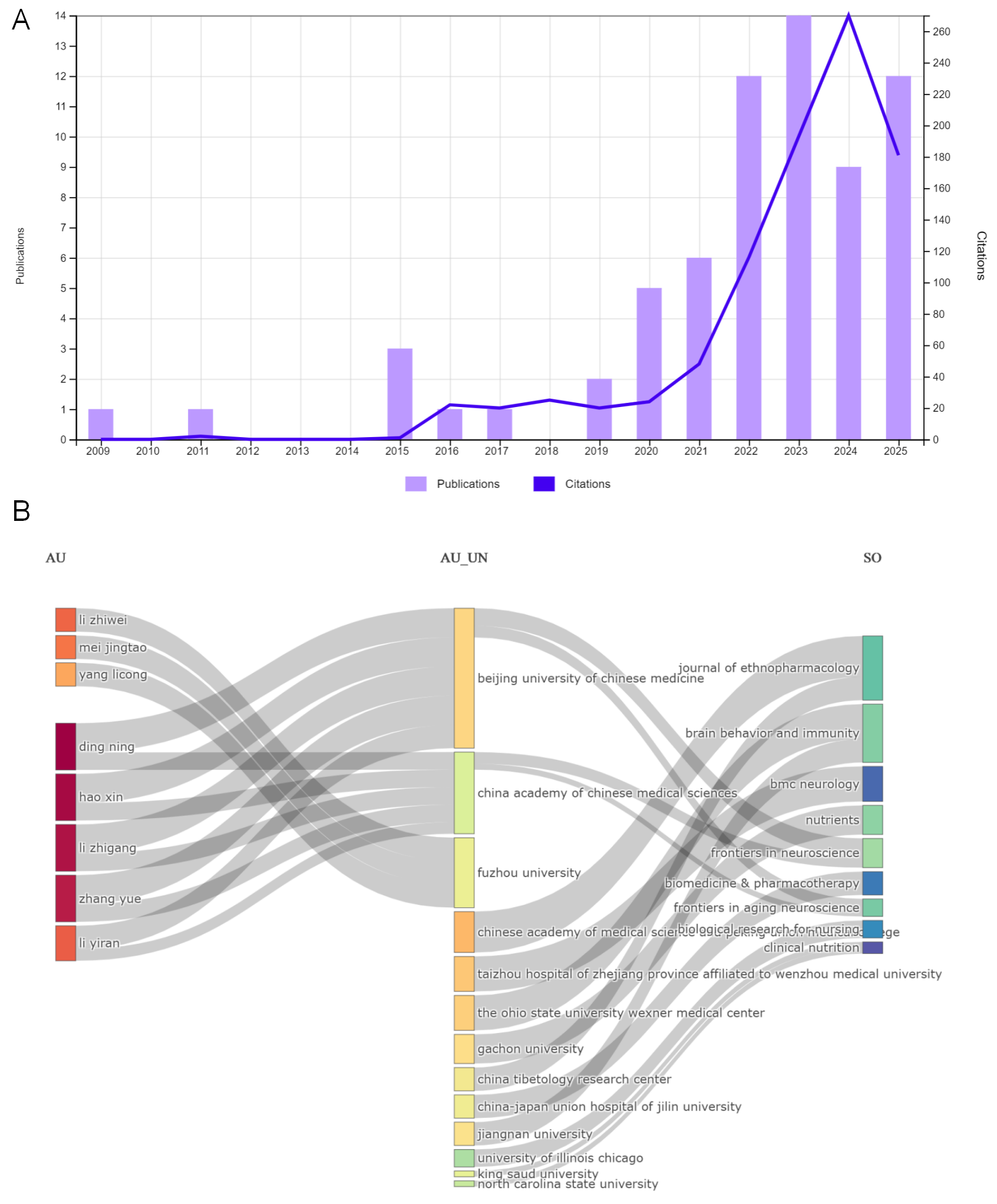
Figure 1. Annual publication and citation trends and author-institution-journal collaboration network in gut microbiota and cognitive-academic research from 2015 to 2025. (A) The purple bars represent the annual number of publications related to gut microbiota and cognitive-academic traits. The number of publications began to increase noticeably after 2015, with rapid growth observed from 2020 onwards. The dark blue line indicates the annual citation counts, peaking in 2023, reflecting heightened academic attention in recent years.
3.2. Journal distribution and publication trends in gut microbiota and cognitive-academic research
Among the gut microbiota and cognitive-academic related publications from 2015 to 2025, the top journals with the highest publication counts are shown in Figure 2A. These include Frontiers in Neuroscience, International Journal of Molecular Sciences, and Nutrients, each contributing three articles. Other active journals, such as Brain Behavior and Immunity, Frontiers in Aging Neuroscience, Gut Microbes, Journal of Ethnopharmacology, and Neuropsychiatric Disease and Treatment, each published two articles. As depicted in Figure 2B, the cumulative publication trends of the top journals show that International Journal of Molecular Sciences and Nutrients have demonstrated relatively early and steady contributions to this field. Frontiers in Neuroscience and Journal of Ethnopharmacology showed increased output primarily after 2021, reflecting emerging scholarly interest in the intersection between gut microbiota and cognitive-academic traits. However, overall publication volume across journals remains modest, highlighting that this research area is still in its early stages of development, with limited cross-disciplinary integration between biomedical and educational fields.
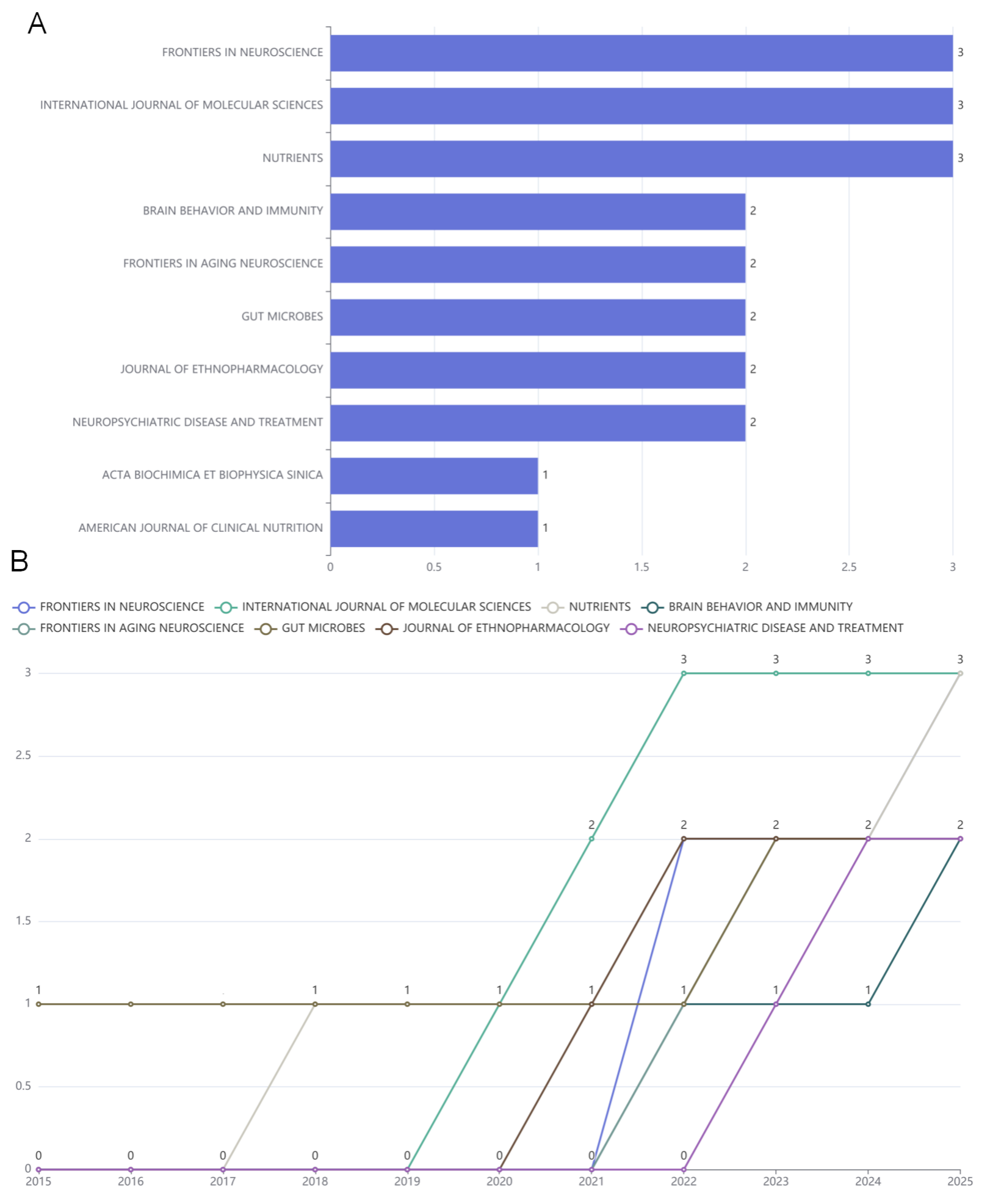
Figure 2. Distribution and temporal trends of top journals publishing gut microbiota and cognitive-academic research from 2015 to 2025. (A) Bar chart illustrating the publication counts of the top journals contributing to gut microbiota and cognitive-academic research. Frontiers in Neuroscience, International Journal of Molecular Sciences, and Nutrients were the most prolific, each publishing three articles. Other active journals included Brain Behavior and Immunity, Frontiers in Aging Neuroscience, Gut Microbes, Journal of Ethnopharmacology, and Neuropsychiatric Disease and Treatment with two publications each. (B) Line chart showing the cumulative publication trends of the top journals over time. International Journal of Molecular Sciences and Nutrients displayed early and sustained increases, while Frontiers in Neuroscience and Journal of Ethnopharmacology exhibited growth primarily from 2021 onwards, reflecting emerging interest in this interdisciplinary topic.
3.3. Contribution of countries and authors
A total of 33 countries contributed to publications on gut microbiota and academic discipline-related research (Figure 3A). The leading contributors were China (accounting for 39.71% of the total publications), followed by the United States (18.66%) and India (11%). Other countries with notable output included South Korea (6.22%), Iran (5.74%), and Ecuador (2.39%), as shown in Figure 3B. Although multiple countries have engaged in this research area, the global distribution is highly uneven, with most publications concentrated in a few countries and relatively limited international collaboration. To identify prolific researchers, we ranked the top 10 authors by publication count (Figure 3C). The most productive authors each contributed between two and three articles, including Ding Ning, Hao Xin, Li Zhigang, and Zhang Yue. As shown in Figure 3D, the publication activity of these authors mainly began after 2019, with output levels remaining modest and relatively stable in recent years. This pattern reflects that while interest in the intersection of gut microbiota and academic disciplines is emerging, research efforts remain fragmented, and influential core author groups or international teams have yet to form.
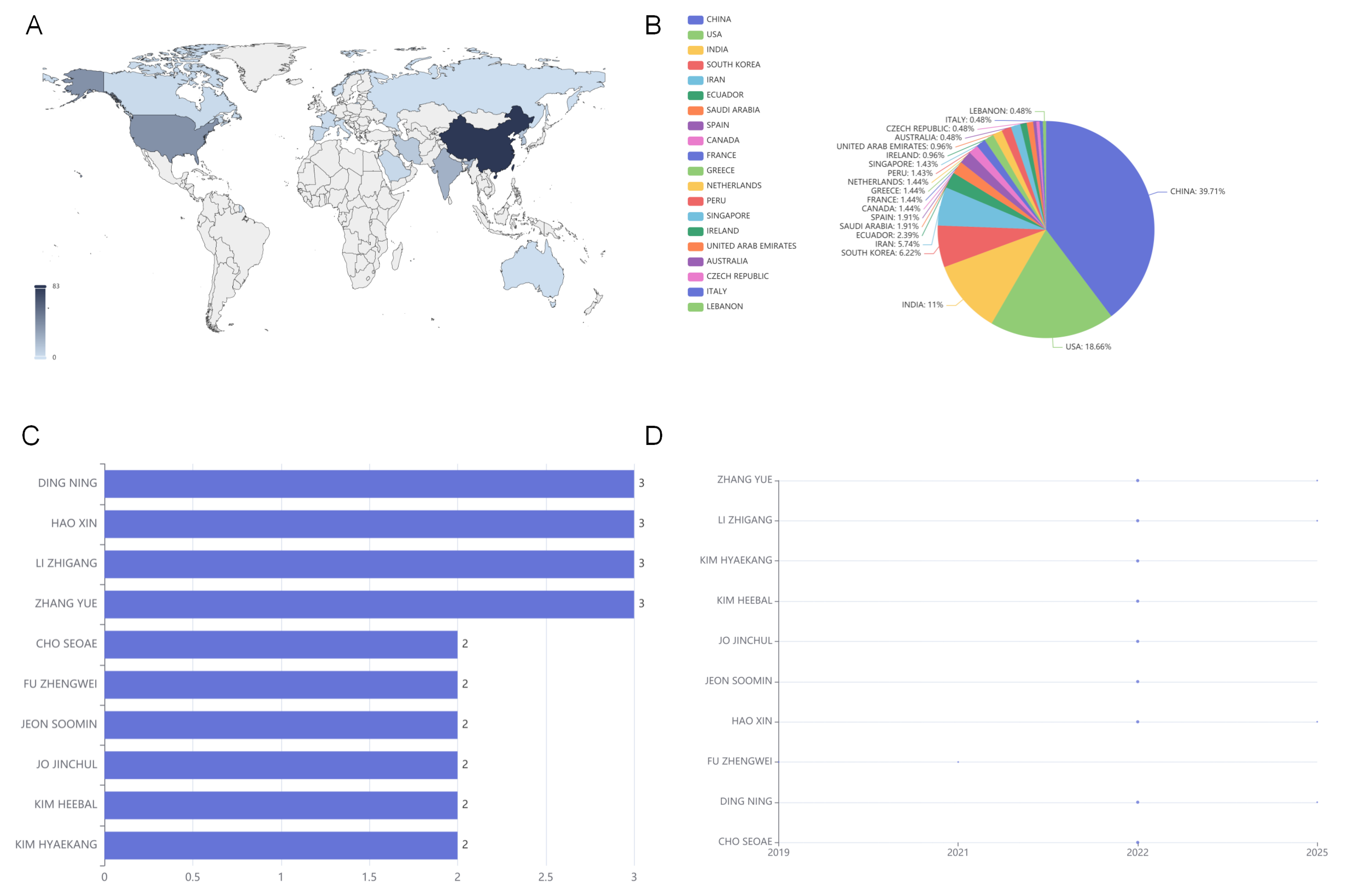
Figure 3. Geographic and author-based contributions to gut microbiota and academic discipline-related research. (A) World map depicting the global distribution of publications on gut microbiota and academic discipline-related topics. Darker shading indicates higher publication output, with China and the United States emerging as the leading contributors, followed by India, South Korea, and Iran. (B) Pie chart illustrating the proportional contribution of the top 20 countries to the total publication output. China accounted for the largest share (39.71%), followed by the USA (18.66%) and India (11%). Other notable contributors included South Korea (6.22%), Iran (5.74%), and Ecuador (2.39%). (C) Bar chart displaying the top 10 most productive authors in the field, each contributing between 2 to 3 publications. Authors such as Ding Ning, Hao Xin, Li Zhigang, and Zhang Yue were among the most prolific. (D) Timeline of annual publication activity for the top 10 authors between 2019 and 2025. Each point represents the number of publications per year, with most top authors beginning to contribute within the last five years and showing similar levels of output.
3.4. Countries and authors cooperation
Based on the data, we analyzed the patterns and trends of global research cooperation in gut microbiota and academic performance studies. As shown in Figure 4A, China and the United States are the leading contributors in terms of publication volume. However, international collaborations appear largely concentrated around these two major contributors, with additional but more modest involvement from countries such as India, Australia, and European nations. Despite participation from multiple countries, collaboration patterns remain regionally clustered, and extensive cross-national partnerships are still limited. Figure 4B displays the annual publication output by country. China consistently maintained the highest number of publications each year from 2015 to 2025, followed by the United States. Over time, there has been a gradual increase in the diversity of contributing countries, with newer contributions from the UK, Singapore, Bangladesh, and others. This reflects growing but still fragmented international interest in this interdisciplinary field. To further explore cooperation patterns, the co-authorship network of researchers was visualized using VOSviewer (Figure 4C). In the network graph, nodes represent individual authors, with node size proportional to publication output, and the thickness of connecting lines indicating co-authorship strength. Several distinct clusters emerged, primarily representing teams from China, South Korea, and other regions. These clusters demonstrate active intra-group collaboration but relatively weak links between groups, underscoring the absence of strong international or cross-disciplinary research networks at the author level.
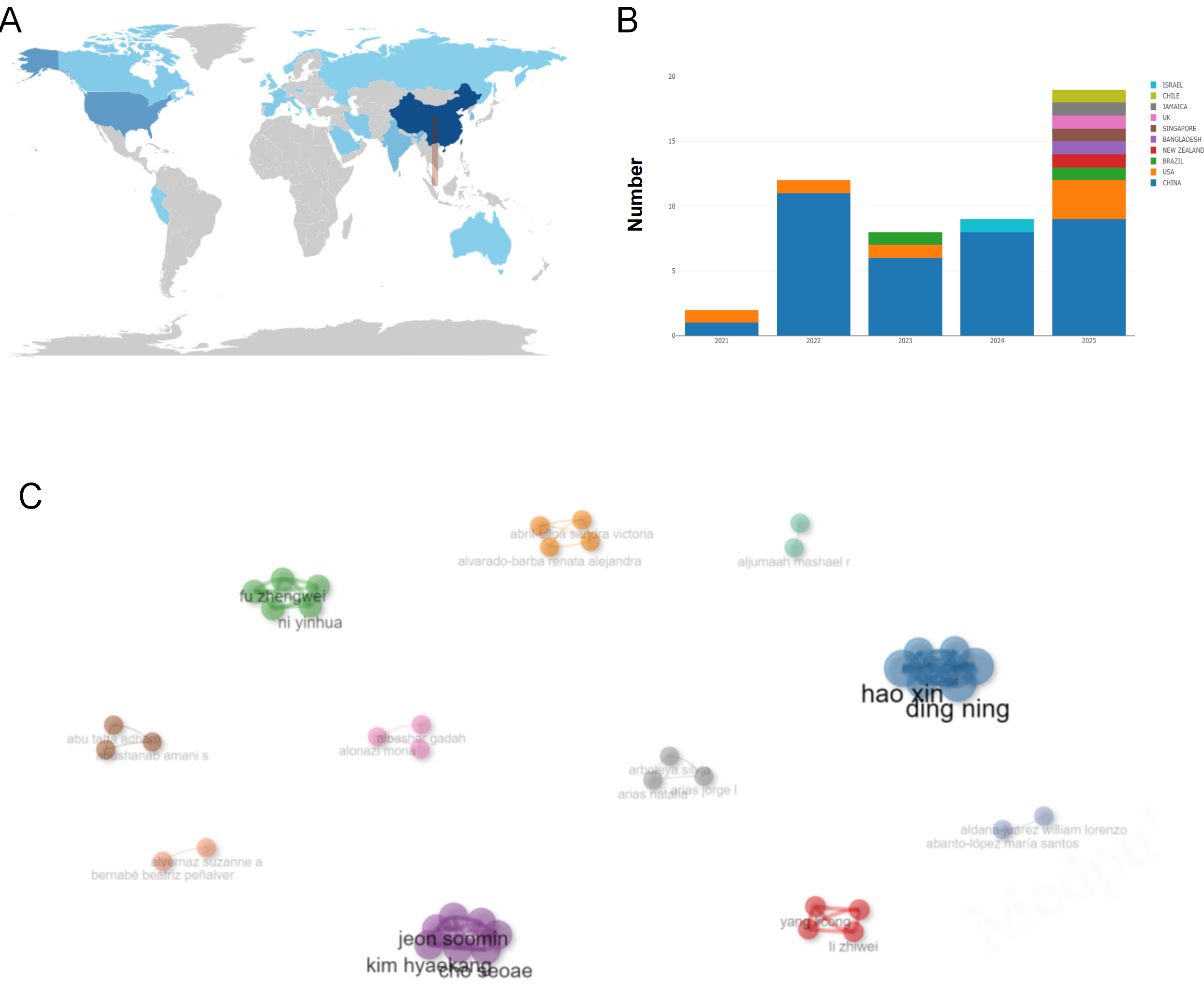
Figure 4. Global and author-level collaboration patterns in gut microbiota and academic performance research. (A) World map illustrating the geographic distribution of publications and collaborative activity among countries in this field. Darker shading indicates higher publication output, with China and the United States leading in productivity. The map suggests that international collaborations are primarily centered around these major contributors, with additional involvement from countries such as India, Australia, and several European nations. (B) Stacked bar chart showing the annual publication output by country from 2021 to 2025. China consistently produced the highest number of publications each year, followed by the United States. The diversity of contributing countries increased over time, with recent involvement from the UK, Singapore, Bangladesh, and other nations. (C) Author co-authorship network visualized by VOSviewer. Each node represents an individual author, with node size proportional to publication output. The thickness of the connecting lines reflects co-authorship strength. Several distinct clusters are evident, corresponding to research teams primarily from China, South Korea, and other regions, indicating active intra-group collaboration but relatively limited inter-cluster cooperation.
3.5. Citation analysis
The top 10 most cited publications on gut microbiota and cognitive-academic related research are listed in Table S1. As shown in the table, the citation counts of these articles range from 19 to 54. The most cited paper, published in Experimental Gerontology in 2022, explored the anti-aging effects of phlorizin through antioxidant, anti-inflammatory, and gut microbiota-regulating mechanisms, and has been cited 54 times. Other highly cited works focused predominantly on neurodegenerative disease models and the gut-brain axis, including studies on amyloid accumulation, neuroinflammation, and the role of gut microbiota in Alzheimer’s disease pathology. Notably, only one top-cited article directly addressed academic performance: a randomized placebo-controlled trial published in Gut Microbes in 2022, which reported that Lactobacillus rhamnosus CNCM I-3690 reduced subjective academic stress in healthy adults (22 citations). Overall, citation patterns indicate that the majority of influential studies in this field have concentrated on disease-related contexts and the gut-brain axis, with relatively few high-impact studies targeting educational or cognitive performance under non-disease conditions. This highlights the nascent nature of research at the intersection of gut microbiota and academic or learning traits.
3.6. Keyword analysis: disease-focused hotspots dominate, but interdisciplinary opportunities are emerging
Keywords are the core elements reflecting the thematic focus of publications. To explore the research landscape and evolving trends in gut microbiota and academic performance studies, we analyzed the keywords and extended keywords of included articles. As shown in Figure 5A, the core keywords over 2021–2025 primarily revolved around gut microbiota, brain, oxidative stress, probiotics, inflammation, and chain fatty-acids. These terms reflect the dominant research themes that link gut microbiota with neurocognitive mechanisms and health-related outcomes. A marked peak in keyword usage appeared in 2022, after which there was a slight decline and diversification of topics. This pattern suggests that initial scholarly enthusiasm around core health-related mechanisms has somewhat dispersed, with emerging but still limited interest in broader interdisciplinary topics. Figure 5B illustrates the trends of extended keywords. Highly prominent terms included alzheimer’s disease, neuroinflammation, cognitive function, intestinal flora, and notably, students. The appearance of students alongside traditional neurocognitive and disease-related terms reflects early but growing recognition of potential connections between gut microbiota and educational or learning-related traits. However, the data also clearly demonstrate that the majority of research remains concentrated on disease contexts—especially neurodegenerative conditions and inflammation pathways—with minimal high-impact exploration of direct links to academic performance, learning styles, or discipline-specific traits. Overall, the keyword trends highlight that while the gut microbiota–brain–health axis is well established as a research focus, the integration of educational, cognitive, and academic performance perspectives remains at an early stage. This gap underscores both the novelty and the opportunity for future work aiming to bridge gut microbiota research with educational sciences and cognitive development.
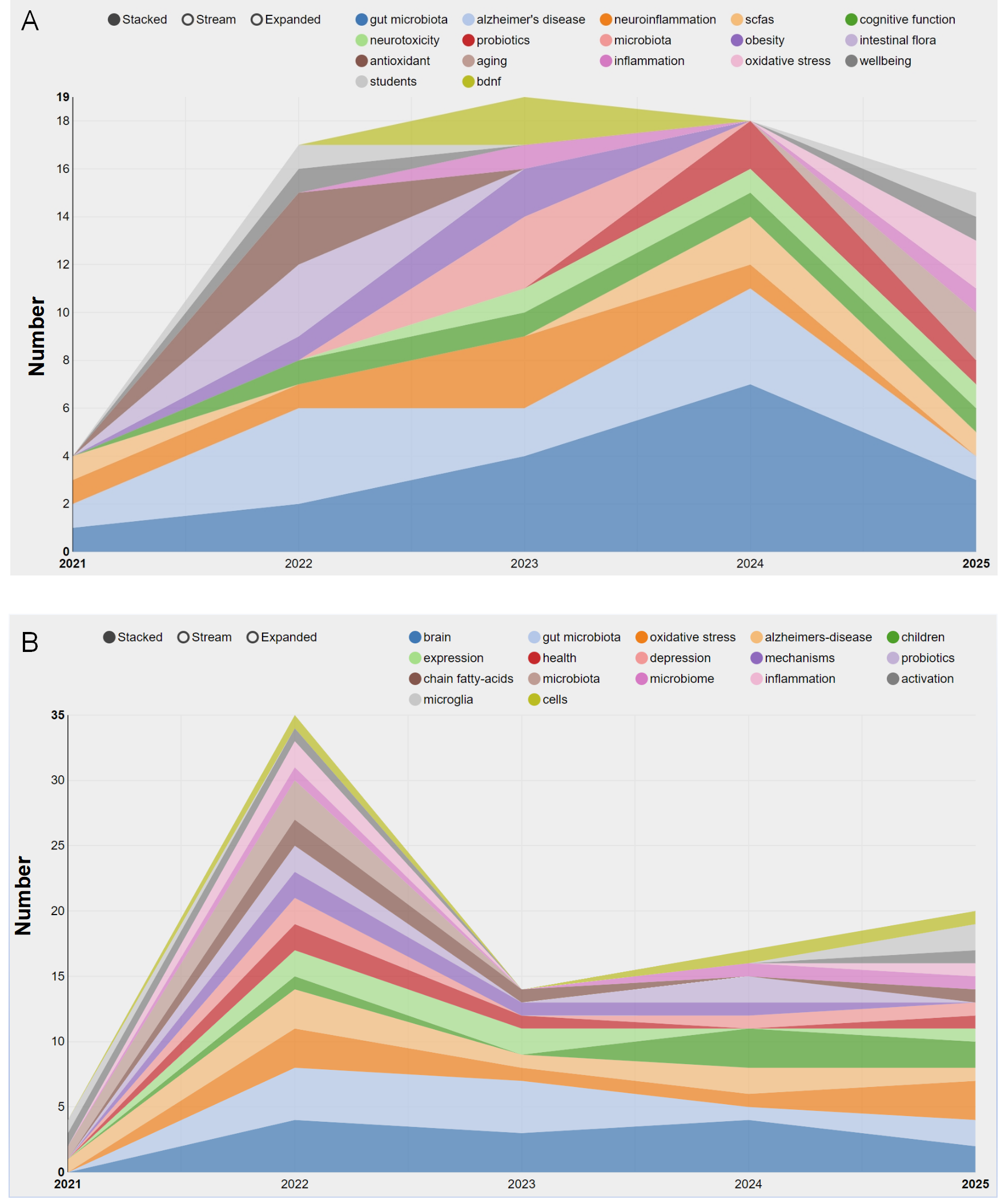
Figure 5. Temporal trends of keyword and extended keyword usage in literature on gut microbiota and academic performance. (A) Stacked area chart illustrating the annual publication trends of core keywords from 2021 to 2025. Keywords such as gut microbiota, brain, oxidative stress, probiotics, inflammation, and chain fatty-acids have shown dynamic changes over time, with a noticeable peak in 2022 followed by a slight decline and diversification of topics in subsequent years. (B) Stacked area chart depicting the trends of extended keywords from 2021 to 2025. Terms like gut microbiota, alzheimer’s disease, neuroinflammation, cognitive function, intestinal flora, and students contributed prominently to the literature, reflecting evolving research interests linking gut microbiota to neurocognitive and educational domains. The charts highlight shifts in thematic focus, suggesting the growing interdisciplinary nature of the field.
4. Discussion
This bibliometric analysis revealed that global research on the gut microbiota and cognitive-academic traits has shown a steady increase in publication volume over the past decade. However, the vast majority of studies have focused on disease-related contexts, particularly neurodegenerative disorders such as Alzheimer’s disease, Parkinson’s disease, and conditions associated with neuroinflammation, oxidative stress, and depression. In contrast, research on non-disease contexts—such as learning ability, academic performance, and discipline-specific cognitive styles—remains scarce and fragmented. There is a notable absence of systematic frameworks addressing how the gut microbiota may influence educational or psychosocial outcomes. This gap highlights the underdevelopment of cross-disciplinary research integrating microbiology, neuroscience, psychology, and education. Our analysis also revealed that research output is highly concentrated in a few countries, with China and the United States leading by a significant margin. International collaborations, as well as partnerships that bridge biomedical and educational disciplines, remain limited. Thematic hotspots identified in keyword and trend analyses further underscore this imbalance: dominant topics include the gut-brain axis, neuroinflammatory pathways, oxidative stress, and related disease mechanisms. Terms directly related to academic performance, students, or educational contexts appeared infrequently and without sustained research continuity. This pattern emphasizes the early developmental stage of cross-sector studies linking gut microbiota to cognitive and academic traits.
This study represents the first bibliometric effort to systematically map the research landscape, collaboration networks, thematic hotspots, and gaps at the intersection of gut microbiota and cognitive-academic traits. Prior bibliometric studies have mainly focused on gut microbiota and specific diseases such as Alzheimer’s disease or depression[12],with few addressing its connection to cognitive or educational traits at a global scale[13]. Our work fills this gap by quantitatively characterizing publication trends, author and institutional patterns, and research evolution, providing essential data to inform the future of this emerging interdisciplinary field. Cross-disciplinary research is increasingly recognized as key to addressing complex human health and development challenges[14]. Successful examples include integrative studies linking gut microbiota to neuropsychiatric conditions by combining microbiology, neuroimaging, and behavioral science[15], as well as projects exploring how nutrition, gut health, and school performance interrelate in children[16]. These works demonstrate the power of crossing disciplinary boundaries to generate new insights and interventions. Our findings highlight the untapped potential of gut microbiota research beyond traditional biomedical domains. By illuminating knowledge gaps at the interface of microbiology, neuroscience, psychology, and education, this study provides a data-driven foundation to support future interdisciplinary collaboration. Advancing such integration could foster novel research into how gut microbiota influence learning ability, cognitive development, academic outcomes, and even social functioning. This, in turn, may inspire personalized education strategies, cognitive enhancement approaches, and policy innovations aimed at promoting holistic youth development[17].
Recent advances in gut microbiota research have provided important insights into its role in cognitive health and brain function. Experimental studies in animal models have demonstrated that alterations in gut microbiota composition can influence learning, memory formation, and anxiety-like behaviors. For example, germ-free or antibiotic-treated mice exhibit impaired cognitive performance, which can be restored through microbiota transplantation or probiotic administration[18]. In human studies, randomized controlled trials have shown that certain probiotic formulations can improve cognitive function and reduce cognitive decline in older adults[19]. These findings have established a theoretical basis for exploring how gut microbiota might modulate cognitive abilities beyond pathological conditions. However, most existing studies remain confined to medical or disease-related contexts. Few investigations have examined whether gut microbiota might contribute to individual differences in daily learning ability, academic performance, or cognitive styles in healthy populations. Our analysis underscores the need to extend microbiota research toward these new frontiers. Integrating gut microbiota studies with education, developmental psychology, and social sciences may open novel pathways for understanding and supporting human cognitive development in real-world settings[20]. Future cross-disciplinary initiatives could draw inspiration from large-scale efforts such as the Human Connectome Project or cognitive microbiome consortia that exemplify successful integration of biology, neuroscience, and psychology[21].
In real life, learning difficulties or subject-specific challenges are common among adolescents, affecting their academic performance and mental health. It is estimated that approximately 5%–15% of school-aged children worldwide experience learning disabilities, such as dyslexia, dyscalculia, or attention deficit disorders[22]. Current research on these issues has mainly focused on brain science, cognitive psychology, and educational interventions, exploring the roles of neurodevelopment, genetic background, and environmental factors in shaping academic abilities[23]. However, examining these challenges from a gut microbiota perspective remains a novel and largely unexplored direction. Notably, animal and preliminary human studies have suggested that gut microbiota may influence basic cognitive functions such as attention, self-regulation, and social behaviors[24], providing inspiration for investigating its potential role in learning ability and subject-specific traits. In Chinese culture, expressions such as “artistic bacteria”, “science-minded brain”, and “a belly full of knowledge” reflect society’s longstanding intuitive observations of individual differences in cognitive styles and academic tendencies. These metaphors not only highlight shared social awareness of individual learning traits, but also inspire scientific reflection: could academic preferences, cognitive styles, and learning potential be partly associated with an individual’s gut microbial state? Modern cognitive science and educational research have demonstrated that cognitive styles and subject inclinations are shaped by complex neurobiological, genetic, and environmental factors, yet the role of gut microbiota in this context has received little attention[25]. Building on preliminary animal and human findings, future high-quality research that identifies reproducible and stable associations between gut microbiome profiles and academic preferences (e.g., humanities, sciences, artistic traits), or that characterizes “learning-associated” or “cognitive-modulating” microbial patterns, could open new directions for microbiota research and have far-reaching impacts on educational science, developmental psychology, and sociology. However, such exploratory work must proceed on the dual foundations of robust scientific evidence and rigorous ethical standards. Scholars have warned of potential risks related to biological determinism, overinterpretation, and labeling in microbiota research, emphasizing the need to prevent misuse of data that could result in discrimination or social injustice[26]. International guidelines for microbiome research ethics also call for adherence to principles such as informed consent, data protection, cultural sensitivity, and prioritization of societal benefit, ensuring that research outcomes are applied to promote educational equity and social inclusion, rather than reinforcing stereotypes or exacerbating inequality[27].
While this study systematically maps the global research landscape of gut microbiota and cognitive-academic traits, several limitations should be noted. First, the data source was limited to the Web of Science Core Collection, which excludes regional journals, gray literature, and unpublished studies, potentially leading to bias in geographic and disciplinary coverage. Second, although we endeavored to expand search strategies and topic terms, the diversity of terminology and the highly interdisciplinary nature of the field may have resulted in the omission of relevant studies. Furthermore, bibliometric analysis can reveal macro-level trends, collaboration patterns, and research hotspots, but it does not provide evidence for causal relationships or underlying mechanisms linking gut microbiota to academic abilities or cognitive traits. In light of these limitations and the current research gaps, future studies should advance empirical investigations of gut microbiota in relation to academic performance and subject-specific cognitive traits in healthy populations. This includes large-scale cohort studies, randomized controlled trials, and animal model experiments to test specific hypotheses. Building robust interdisciplinary collaboration networks that connect microbiology, neuroscience, psychology, and education is essential to overcome the limitations of single-discipline research. Additionally, future work exploring the role of individual gut microbiota differences in cognitive styles and learning abilities must be guided by strong ethical principles to prevent data misuse, overinterpretation, or deterministic conclusions, ensuring that research findings contribute to educational equity and social well-being.
5. Conclusion
This bibliometric study provides the first comprehensive overview of global research trends, collaboration networks, and thematic evolution in the field of gut microbiota and cognitive-academic traits. Our findings highlight the rapid growth of publications focused on disease contexts and the notable gap in studies addressing learning ability, academic performance, and subject-specific cognitive styles. The analysis underscores the need for future empirical research and interdisciplinary collaboration to explore how gut microbiota may contribute to individual differences in cognition and academic outcomes. Such efforts, guided by ethical responsibility, could open new avenues for personalized education and cognitive interventions, promoting educational equity and holistic human development.
Author Contributions
Chuan He and Junfei Gu contributed equally to this work. Chuan He was responsible for data collection, data cleaning, and the initial draft of the manuscript. Junfei Gu performed the bibliometric analysis, generated the visualizations, and contributed to data interpretation. Jiajia Jin designed the study, supervised the research process, revised the manuscript critically for important intellectual content, and served as the corresponding author. All authors read and approved the final manuscript.
Acknowledgements
The authors gratefully acknowledge the support of the State Key Laboratory for Innovation and Transformation of Luobing Theory and the Key Laboratory of Cardiovascular Remodeling and Function Research of MOE, NHC, CAMS, and Shandong Province. This research received no external funding. The authors would also like to thank colleagues from the Department of Endocrinology, the Second Affiliated Hospital of Wannan Medical College, and the Department of Cardiology, Qilu Hospital of Shandong University, for their constructive comments and technical support. Chuan He and Junfei Gu contributed equally to this work.
References
-
A. King. "Single-celled organisms set for greater role in gut health." Nature 2025.
-
Y. Zheng, L. Bonfili, T. Wei, A. M. Eleuteri. "Understanding the gut–brain axis and its therapeutic implications for neurodegenerative disorders." Nat. Rev. Neurol. 2023, 15, 21, 4631.
-
N. Bano, S. Khan, S. Ahamad, J. S. Kanshana, N. J. Dar, S. Khan, A. Nazir, S. A. Bhat. "Microglia and gut microbiota: A double-edged sword in Alzheimer's disease." Ageing Res. Rev. 2024, 101, 102515.
-
J.-K. Jo, G. Lee, C. D. Nguyen, S.-E. Park, E.-J. Kim, H.-W. Kim, S.-H. Seo, K.-M. Cho, S. J. Kwon, J.-H. Kim. "Effects of donepezil treatment on brain metabolites, gut microbiota, and gut metabolites in an amyloid beta-induced cognitive impairment mouse pilot model." J. Clin. Med. 2022, 27, 19, 6591.
-
G. Xiromerisiou, C. Marogianni, A. Androutsopoulou, P. Ntavaroukas, D. Mysiris, S. Papoutsopoulou. "Parkinson's disease, it takes guts: the correlation between intestinal microbiome and cytokine network with neurodegeneration." Biomedicines 2023, 12, 1, 93.
-
L. Zhang, R. Liu, Z. Song, X. Zhang. "Exercise, Diet, and Brain Health: From the Perspective of Gut Microbiota Regulation." Mol. Nutr. Food Res. 2025, 17, 10, 1686.
-
S. Ruan, J. Liu, X. Yuan, X. Ye, Q. Zhang. "Aerobic exercise alleviates cognitive impairment in T2DM mice through gut microbiota." Sci. Rep. 2025, 15, 1, 23917.
-
K. Reynolds, C. Bazemore, C. Hanebuth, S. Hendren, M. Horn. "The relationship of non-cognitive factors to academic and clinical performance in graduate rehabilitation science students in the United States: a systematic review." BMC Med. Educ. 2021, 18.
-
L. Liu, J. R. Huh, K. Shah. "Microbiota and the gut-brain-axis: Implications for new therapeutic design in the CNS." Prog. Neuropsychopharmacol. Biol. Psychiatry 2022, 77.
-
H. Sun, Z. Song, Q. Chen, M. Wang, F. Tang, L. Dou, Q. Zou, F. Yang. "MMiKG: a knowledge graph-based platform for path mining of microbiota–mental diseases interactions." Bioinformatics 2023, 24, 6, bbad340.
-
Q. Wang, Y. Song, X. Wu, Y. Luo, R. Miao, X. Yu, X. Guo, D. Wu, R. Bao, W. Mi. "Gut microbiota and cognitive performance: A bidirectional two-sample Mendelian randomization." Brain Behav. Immun. 2024, 353, 38–47.
-
D. Xu, J. Wu, Z. Lu, X. Zhao, Y. Feng, W. Zhang, S. Jiang, L. Zhang, T. Wang, Z. Zhao. "Bibliometric analysis of research hotspots and trends on the relationship between the gut microbiota and depression from 2020 to 2024." Front. Microbiol. 2024, 15, 1479703.
-
W. Cao, M. Xing, S. Liang, Y. Shi, Z. Li, W. Zou. "Causal relationship of gut microbiota and metabolites on cognitive performance: A mendelian randomization analysis." Mol. Psychiatry 2024, 191, 106395.
-
A. Banerjee, A. Coulter, S. Goenka, A. Hollis, A. Majeed. "Research across multiple disciplines to respond to health shocks." BMJ 2024, 387.
-
B. Carpita, D. Marazziti, L. Palego, G. Giannaccini, L. Betti, L. Dell'Osso. "Microbiota, immune system and autism spectrum disorders: an integrative model towards novel treatment options." Curr. Med. Chem. 2020, 27, 31, 5119–36.
-
V. Mela, V. Heras, M. Iesmantaite, M. L. García-Martín, M. Bernal, J. D. Posligua-García, A. Subiri-Verdugo, J. I. Martínez-Montoro, A. M. Gómez-Pérez, B. Banderas. "Microbiota fasting-related changes ameliorate cognitive decline in obesity and boost ex vivo microglial function through the gut-brain axis." Cell Metab. 2025.
-
A. I. Beltrán-Velasco, V. J. Clemente-Suárez. "Harnessing gut microbiota for biomimetic innovations in health and biotechnology." Trends Biotechnol. 2025, 10, 2, 73.
-
Z. He, Y. Liu, Z. Li, T. Sun, Z. Li, C. Liu, H. Xiang. "Gut Microbiota-Mediated Alterations of Hippocampal CB1R Regulating the Diurnal Variation of Cognitive Impairment Induced by Hepatic Ischemia–Reperfusion Injury in Mice." Neurochem. Res. 2024, 49, 8, 2165–78.
-
Y. S. Handajani, A. Hengky, E. Schröder-Butterfill, E. Hogervorst, Y. Turana. "Probiotic supplementation improved cognitive function in cognitively impaired and healthy older adults: a systematic review of recent trials." Neurol. Sci. 2023, 44, 4, 1163–69.
-
M. Klee, V. T. E. Aho, P. May, A. Heintz-Buschart, Z. Landoulsi, S. R. Jónsdóttir, C. Pauly, L. Pavelka.The Journal of Prevention of Alzheimer's Disease 2024, 11, 3, 759–68.
-
Y. Jia. "X-Disciplinarity: Illuminating Horizons Through Interdisciplinarity." Interdiscip. Sci. Rev. 2025, 1, 1, 1–1.
-
R. T. Leeb, M. L. Danielson, A. H. Claussen, L. R. Robinson, L. A. Lebrun-Harris, R. Ghandour, R. H. Bitsko, S. M. Katz, J. W. Kaminski, J. Brown. "Trends in mental, behavioral, and developmental disorders among children and adolescents in the US, 2016–2021." JAMA Pediatr. 2024, 21, E96.
-
S. Lioliou, N. Pedioti, K. Vagionaki, V. Kounali, N. Bitsakos, S. Pitsikaki, M. Papadakaki. "Exploring the Prevalence of Learning Disabilities in a Community Sample of Children Using the Greek Weschler Intelligence Scale for Children (WISC-V GR)." J. Learn. Disabil. 2025, 22, 3, 377.
-
B. L. Sharvin, M. R. Aburto, J. F. Cryan. "Decoding the neurocircuitry of gut feelings: Region-specific microbiome-mediated brain alterations." Neurosci. Biobehav. Rev. 2023, 179, 106033.
-
A. Castells-Nobau, J. Mayneris-Perxachs, J. M. Fernández-Real. "Unlocking the mind-gut connection: Impact of human microbiome on cognition." Nat. Rev. Neurosci. 2024, 32, 8, 1248–63.
-
J. C. Alverdy, A. Polcari, A. Benjamin. "Social determinants of health, the microbiome, and surgical injury." Ann. Surg. 2024, 97, 1, 158–63.
-
S. M. Mangola, J. R. Lund, S. L. Schnorr, A. N. Crittenden. "Ethical microbiome research with Indigenous communities." Nat. Microbiol. 2022, 7, 6, 749–56.