Analysis of students' cognitive structures concerning the topic of chemical bond based on word association test
published: 14 July 2025 | https://doi.org/10.63174/xdi.LURD6860
Abstract
The cognitive structure of "chemical bond" among first-year high school students was examined using lexical association tests, combined with semantic relevance analysis and cognitive structure diagram analysis. The results showed that most of the learned concept of "chemical bond" was included in the students' cognitive structure, but there were few associations about "the principles and essence of chemical bond formation", and the understanding of "different ways of chemical bond formation" was rather confusing. At the same time, the energy perspective under the theme of "chemical bond" needed to be developed and improved.
1. Introduction
Cognitive psychologists believe that "the essence of knowledge is structure." That is to assume that knowledge in a content domain is organized around a central concept, and having knowledge in that domain means there is a highly integrated conceptual structure among these concepts.[1] Learners store the knowledge they acquire in science classes in a hierarchical form in their long-term memory and present it as a cognitive structure in their memory.[2] Identifying students' cognitive structures helps teachers diagnose their gaps, anchor problems in their cognitive structures, and organize teaching content in a targeted manner. [3]
From the perspective of curriculum design, Shavelson points out that a key issue in curriculum development and instructional planning is how to construct a system of knowledge and how to convey that knowledge effectively to students so that they can learn effectively. Another important issue is the degree to which the structure in students' memory after teaching is consistent with the structure in the textbook. [4] Although science teachers try to create cognitive structures similar to their own in students' minds during the teaching process, in many areas of science teaching, students' post-teaching knowledge structures are flawed, unable to relate concepts, and even misunderstand.[5,6] Especially in chemistry, although there are many reasons for these difficulties in learning chemistry, most of them are related to the abstract nature of chemical concepts. On the other hand, it is very important to learn concepts in the field of chemistry because many of them form the basis for later study of chemistry. [7] Due to the inability to understand the basic concepts, obstacles are set up for the later conceptual structure. For this reason, each concept must be linked to another concept and gradually given to the student.
Existing studies have mainly used methods such as concept maps, interviews, and flowcharts to evaluate and analyze individual students' cognitive structures. [8,9] However, due to the limitations of the methods, it is often difficult to collect and process a large number of sample data, and it is also impossible to quickly obtain the cognitive structure of the group, thus making it difficult to promote in front-line teaching. Word Association Tests (WAT) [10], on the other hand, use students' responses to associations with concepts to reflect static cognitive structures in their minds. [11] The test is easy to write and manage, can quickly test the overall cognitive structure of a group of students in just a few minutes of class time, and is easy to quantify. [12] Since the ideas in WAT are spontaneous and subject to less restrictions than those usually found in interviews or closed questionnaires, the results of their extraction are more reliable. [13] Related studies in chemistry teaching have also evaluated the cognitive structure of many concepts, such as physical and chemical changes, acid-base, atomic structure and dissolution et al.[3,9]
"Chemical bond" are a core part of high school chemistry curriculum, which not only helps enrich students' understanding of the diversity of the material world[14,15], but also deepens their understanding of the composition and structure of matter and lays the foundation for understanding the relationship between matter and energy in chemical changes. [16] At the same time, chemical bond is also an important content carrier to develop students' core literacy of evidence reasoning and modeling. Therefore, the WAT method was used in this study to examine students' cognitive structures related to "chemical bond", and the following two questions were considered in order to provide teachers with reference for diagnosing students' learning situation and teaching practice.
First, what "chemical bond" response words are included in the cognitive structure of first-year high school students?
Second, what kind of connection is established between the key concepts of "chemical bond" in the cognitive structure of first-year high school students?
2. Research Design
2.1. Background and Sample Selection
There are 5 textbooks for high school chemistry in China, which are divided into 2 compulsory textbooks and 3 selective compulsory textbooks. Students in grade 10 will initially learn the basic content of ionic bond and covalent bond when they learn the compulsory second textbook, and students in grade 11 will further learn the chemical bond such as hydrogen bond and metal bond when they choose the compulsory third textbook.
A total of 80 students from two classes of Grade 10 in a key high school in a certain city of Shandong Province were selected. All the students have studied the Shandong Science and Technology Press, 2019 Edition textbooks and have completed the study of relevant concepts on the theme of "chemical bond" in Chapter 2 of high school Chemistry Compulsory Course 2.
2.2. Word Association Test
The basic assumption of the word association test is that after a key concept is given, students are asked to freely associate related ideas that come to their minds, thereby obtaining a relatively unrestricted mental representation of the key concept. The order in which students retrieve responses from long-term memory reflects at least a considerable part of the structure within and between the concepts of semantic memory. In the lexical association test, the semantic proximity of key concepts is associated with the degree of overlap between response levels. [17]
2.2.1 Determine key concepts
The study suggests that the number of key concepts in WAT is generally between 8 and 12, depending on the specific conceptual structure. [18] In order to identify and determine the key concepts in chemical bonds more accurately, two experts in the field of chemical education (associate professor, PhD) and secondary school chemistry teachers (20 years of teaching, master) were interviewed to find out the key concepts related to chemical bonds that are applicable to the senior year, and a preliminary list of word association tests was constructed. Subsequently, it was examined in high school chemistry textbooks to ensure it was suitable for the student group. [19,20] Ultimately determine eight terms: ionic bond, covalent bond, ionic compound, covalent compound, bond energy, intermolecular force, electrostatic interaction, bonding pair.
2.2.2. Data collection
Write each key concept on a separate page, ensure there is enough space around to write down any ideas, and avoid being distracted by irrelevant information and causing a chain reaction. Each student is given a booklet with a key concept on each page, asking them to write as many words as possible related to the key concept, rather than sentences. Every 30 seconds, remind students to switch to the key concept on the next page to answer. [21]
At the same time, remind students that the words they write should come from the field of chemistry as much as possible. Most students were able to complete the word association test within four minutes. This optimum time span was preferred because it is a time used in many studies[17]. The words that students write down on WAT for key concepts are called response words. [22] Meaningful and effective answers given by students on the topic of chemical bond are transferred to an Excel sheet. By calculating the number of responses for each key concept, a table of response frequencies was derived from the data. Since the terms used by the students to express the same concept were not exactly the same, the author combined some response words when doing the response frequency calculation. For example, students used Chinese names, chemical formulas, electronic formulas, etc. to represent substances in the questionnaire, and merged them to represent substances with Chinese names; Both "heat absorption" and "heat release" reflect changes in energy and are uniformly classified as "energy absorption" and "energy release". Response frequency data is the basis for subsequent analysis.
3. Data Analysis
3.1. Semantic Relevance analysis
Semantic relevance Analysis was conducted using the Relatedness Coefficient Analysis method proposed by Garskof and Houston. The correlation coefficient (RC) is calculated based on the number of responses and the degree of overlap provided by the two response lists for each key concept, and is calculated by the formula: [23]
Where A represents the order of occurrence of the words shared with B under key concept A, and B represents the order of occurrence of the words shared with A in key concept B (the closer the association, the higher the sort number). A·B represents the sum of the hierarchical order of A word in A multiplied by the product of the hierarchical order of the same word in B versus all common overlapping words. This would be the "ideal situation" if two key concepts produce exactly the same reaction words in the same order.
The RC calculation is done by writing macros in Excel. The steps are as follows: The first step is to rank the associated words of the key words; The second step is to calculate the correlation coefficient of the two keywords, which is compiled as a macro function for direct use in the cell. Define the function as RalateCe, with two input parameters being keyword A and keyword B, and the output being the correlation coefficient between keyword A and keyword B.
To ensure the reliability of the RC value calculated in Excel. The authors repeated all the calculations at different times to ensure the reliability of the analysis. In addition, the second author was also asked to perform some calculations again and compare the results. Since all the calculations were the same, it was decided that the results of the analysis were reliable.
After this process, the correlations between key concepts are visualized using the Cutoff Point Mapping Method. Using the obtained RC values, a mapping representing the relationships between key concepts in semantic memory was plotted. Thus, through mapping, the relationship between key concepts and chemical bond concepts in high school students' semantic memory was determined, as well as the degree of interrelation between key concepts. In this mapping method, key concepts are mapped to points, adjacent points to lines, and appropriate truncation points are selected as the structure is formed. Also show the slopes of the associated lines drawn with different widths at each cutoff level. The line with the strongest relationship is the thickest line. Finally, the graph starts with the strongest RC. As you draw the consecutive parts of the graph, the cutoff points gradually decrease based on the RC values until cutoff points for all key concepts appear.
3.2. Cognitive structure-based analysis
This study used the method developed by Nakibo lu to map the cognitive structure of high school students. [24] The cognitive structure representations obtained by the technique are associated with the associative network model, which is one of the models related to semantic memory. The map drawn by this technique shows the strength or weakness between the topic "key concepts" that students establish in cognitive structures and the "response words" they generate. The "key concepts" are shown in rectangular boxes in the map. The thicker the rectangular box, the higher the frequency, and the thinner the boundary lines are drawn as the frequency range decreases. Arrows of different thicknesses are also used to indicate the relationship between the concepts of related topics on the map. The direction of the arrows and the strength of the associations can also be determined using a response frequency table. Nakibog lu points out that this approach has more explanatory power and is better suited for showing the direction and intensity of associations found in a student's knowledge structure.
The steps to draw a cognitive structure diagram are as follows: First, determine the highest response frequency value and draw the first chart. The relationship diagram at this response frequency level is indicated by a thick arrow, and the direction of the arrow corresponds to the direction of the relationship. Then determine the range of the second response frequency by lowering the first response frequency by 10 and map within the second unit. Continue plotting by reducing the range of response frequencies until all the key concepts come out
4. Results
4.1. Results on Semantic Relevance
The correlation coefficients obtained based on the lexical association test are shown in Table 1. It can be seen that the RC values range from 0.905 to 0.177. From this, it can be seen that the most closely related group of key concepts is "covalent compound" and "covalent bond", and the least closely related group of key concepts is "bond energy" and "covalent compound".
Table 1. Correlation coefficient diagram of chemical bond cognitive structure
| Covalent bond | Ionic compound | Covalent compound | Bond energy | Intermolecular force | Electrostatic interaction | Bonding pair | |
|---|---|---|---|---|---|---|---|
| Ionic bond | 0.654 | 0.895 | 0.619 | 0.239 | 0.239 | 0.528 | 0.538 |
| Covalent bond | 0.607 | 0.905 | 0.251 | 0.278 | 0.283 | 0.565 | |
| Ionic compound | 0.645 | 0.189 | 0.194 | 0.408 | 0.462 | ||
| Covalent compound | 0.177 | 0.249 | 0.282 | 0.507 | |||
| Bond energy | 0.321 | 0.165 | 0.210 | ||||
| Intermolecular force | 0.395 | 0.210 | |||||
| Electrostatic interaction | 0.408 |
The cutoff point plot based on the correlation coefficients between the key concepts is shown in Figure 1. When the cutoff point is 0.85, two groups of concepts appear: "covalent bond" and "covalent compound", "ionic bond" and "ionic compound". These four concepts formed two interrelated "islands" in the semantic memory of first-year high school students. When the cut-off point is reduced to 0.65, the two "islands" are linked together by the interconnections of "ionic bond" and "covalent bond". When the cutoff point was reduced to 0.55, all four key concepts in the figure were linked to each other, and a new key concept, "bonding pair", emerged and was linked to the "covalent bond". When the cutoff point was reduced to 0.45, the new concept "electrostatic interaction" appeared in the picture, and "ionic bond" established a connection, while "bonding pair" were linked to all other concepts in the picture except "electrostatic interaction". "Intermolecular force" emerged at the cutoff point of 0.35, creating a weaker association with "electrostatic interaction." The last key concept, "bond energy," emerged at the cutoff point of 0.25 and established a weaker association with intermolecular forces and covalent bonds.
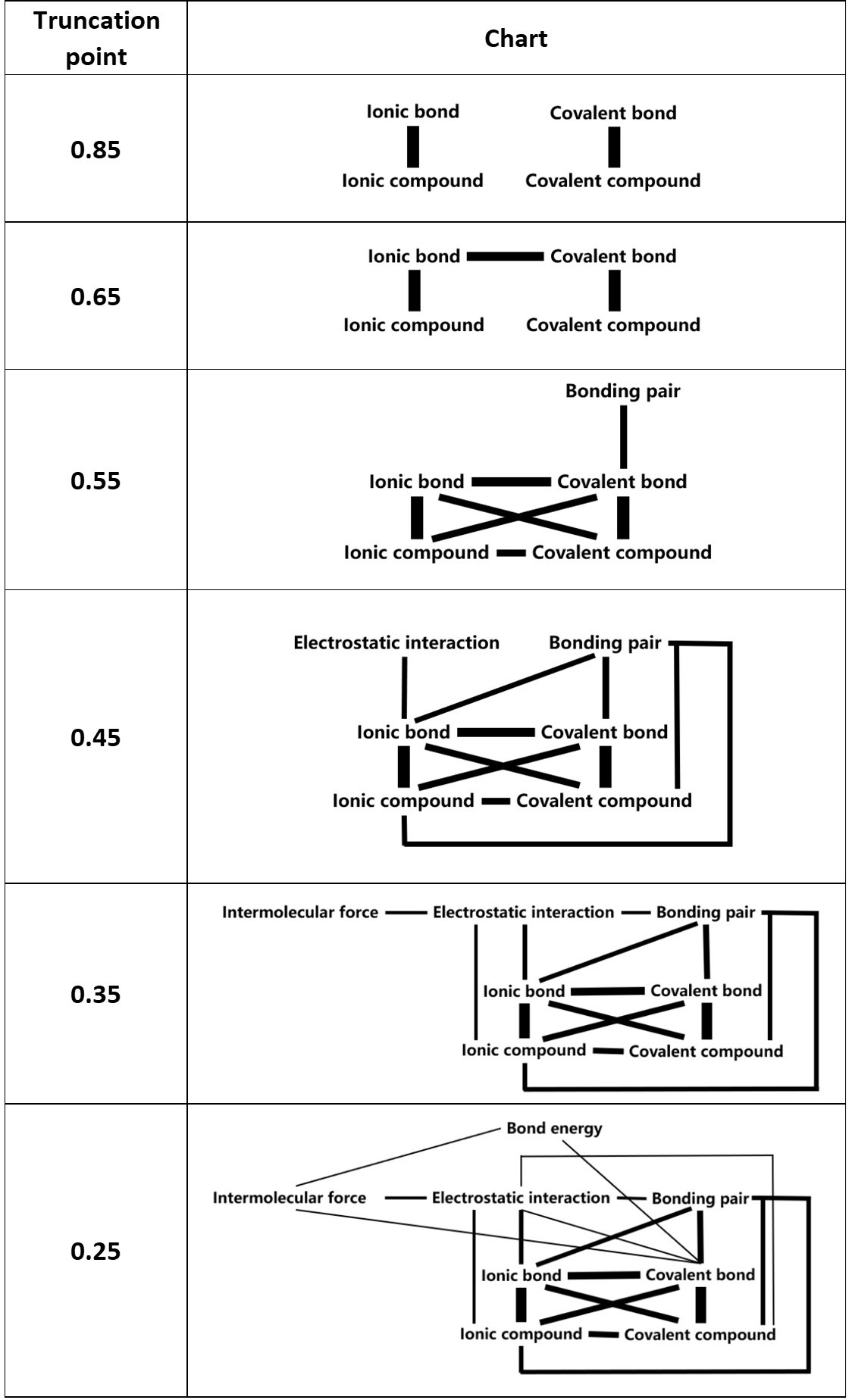
Figure 1. "Chemical bond" Key concept truncation point diagram.
4.2. Results of the cognitive structure diagram method
The cognitive structure of the "chemical bond" topic among first-year high school students is shown in Figure 2. The first connection was formed when the frequency range was 55 ≤ f ≤ 65: from the key concept of "covalent compound" to "covalent bond". Within the frequency range of 45 ≤ f ≤ 55, a pair of new connections emerged, pointing from the key concept "ionic compound" to "ionic bond". When the frequency range is 35 ≤ f ≤ 4 5, four new pairs of connections are produced, a new key concept "bonding pair" emerges and points to its response word "covalent bond". The two groups of words, "covalent compound" and "covalent bond", and "ionic compound" and "ionic bond", respectively formed bidirectional associations.
When the frequency range was 25 ≤ f ≤ 35, nine pairs of new connections emerged, and for the first time, response words other than key concepts appeared, along with two new key concepts: bond energy and intermolecular forces, though these two key concepts did not establish any connection with other key concepts. When the frequency range 15 ≤ f ≤ 25 produced 18 new connections, the last key concept, "electrostatic interaction," also appeared in the graph and pointed to another key concept, "ionic bond," and at this point all the key concepts were strung together. And the three groups of concepts - "bonding pair" and "covalent bond", "covalent bond" and "ionic bond", and "covalent compound" and "ionic compound" - are directly bidirectionally associated. "bond energy", "intermolecular force" and "ionic bond" are linked by the same response word "chemical bond".
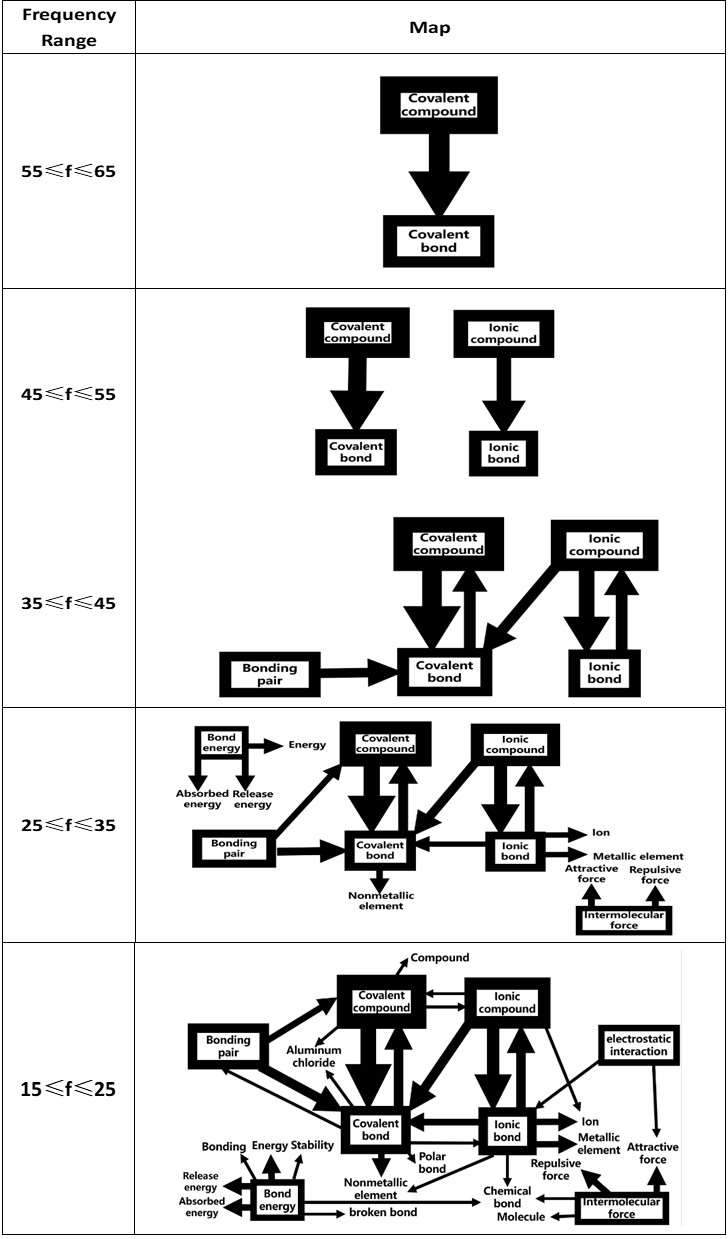
Figure 2. Cognitive structure diagram of "Chemical Bond".
5. Discussion
5.1. Response words that appear in the topic "Chemical Bond"
5.1.1. The relationship between the response word and the key concepts
Based on the relationship between response words and key concepts, the response words that appear in the cognitive structure diagram of first-year high school students can mainly be classified into the following categories: ① Response words are upper-level concepts of key concepts: When associating "covalent compound", students will associate "compound"; ② The associated concept is a subordinate concept of the key concept: When associating "covalent bond", the "nonpolar bond" that students will associate with; ③ The concept is in a parallel relationship with the key concept: When associating "ionic bond", students will think of "covalent bond" which is also a chemical bond; ④ The concept is part of the key concept: When thinking of covalent compounds, the student thinks of covalent bonds; when thinking of ionic bonds, the student thinks of ions and metal elements; ⑤ Substances associated with key concepts: When associating "covalent compound" and "covalent bonds", students will think of "aluminium chloride".
In terms of the type of response words, ②and④appear most frequently. According to the classification of cognitive styles by Ehrman and Leaver, it can be found that students tend to be more detailed in their cognitive styles, and they pay more attention to the details and composition of "key concepts".[25] For example, although students do not study the relevant knowledge of "intermolecular force" in detail at this stage, the response words "attraction" and "repulsion" appear about the same frequency in the association of "intermolecular force", indicating that students can realize that intermolecular forces are a kind of "interaction" and have a relatively comprehensive understanding of the interaction between particles. In addition, "aluminium chloride" is the only substance term that appears in the cognitive structure diagram, and "aluminium chloride" is a "special" covalent compound composed of both metallic and non-metallic elements, indicating students' attention to some special details.
Furthermore, from the perspective of the cognitive structure diagram, students lack holistic thinking. Students, for example, have less association with the higher-level concept of "chemical bond". At 15 ≤ f ≤ 25, ionic bonds form a relatively weak association with the higher-level concept of "chemical bond", and even in the key concept of "covalent bond", the word "chemical bond" is associated only nine times. This reflects the students' lack of holistic thinking and their insufficient ability to grasp and transfer big concepts and conceptual concepts.
5.1.2. The relationship between response words and knowledge
In general, the response words produced by the students covered most of the knowledge on the topic of "chemical bond" that they had already learned, but they produced relatively few response words for "principles and nature of chemical bond formation". [26] For example, "gain or lose electrons" appeared only twice in the association of "ionic bond", and the fundamental response words such as "electron shift" and "eight-electron stable structure" appeared only six and five times respectively in the association of "bonding pair", and did not appear in the cognitive structure diagram. In addition, "electrostatic interaction" produced the fewest response words, with only two relatively weak connections appearing in the cognitive structure diagram, indicating that students' understanding of "electrostatic interaction" is not adequate. In addition, words such as "static electricity", "friction", and "sweater", which have nothing to do with the theme of "chemical bond", appeared 10, 9, and 8 times respectively in the association of "static electricity", indicating that some students could only understand the literal meaning of "static electricity" and were not aware of its significance under the theme of "chemical bond".[27,28] They fail to understand the bonding nature of ionic bonds well. This is similar to the conclusion reached by Feng Zaixia et al. in 2017 when they examined the cognitive structure of chemical bonds using the flowchart method: "Students tend to ignore the bonding nature of 'ionic bonds and covalent bonds'." [9]
5.2. Connections between key concepts in high school freshmen's cognitive structure
5.2.1. Connections between key concepts of via correlation coefficient analysis
As can be seen from Figure 1, the four concepts of "covalent bond", "covalent compound", "ionic bond" and "ionic compound" are located at the center of the correlation coefficient graph, and the correlation coefficients among them are relatively high. This indicates that students have a very deep understanding of "the relationship between chemical bonds and substance classification". There are two reasons for this speculation: First, from the perspective of the Chinese character composition of the concepts, the two groups of concepts, "covalent bond" and "covalent compound", and "ionic bond" and "ionic compound", are quite similar, which makes it easy for students to make associations; Second, from the perspective of textbook arrangement, "ionic bond and covalent bond" and "ionic compound and covalent compound" are in adjacent class periods of the same section of the textbook, and students have a deep impression of them.
The correlation coefficient between "bonding pair" and "covalent bond" is not much different from that between them and "ionic bond", which also indicates that students' understanding of "different ways of forming chemical bonds" is rather confusing. [29] The reason might be that students do not understand the specific behavior of "electrons" in the formation of ionic and covalent bonds. [30]
Furthermore, as we can see from Figure 1, the connection between "bond energy" and other key concepts in students' cognition is relatively weak, which indicates that students lack the chemical concept of "energy view" under the theme of "chemical bond". One possible reason is that "bond energy" is located in the section of "Chemical Reactions and Energy Conversion" and is not in the same section as the other knowledge of "chemical bond". Students have not established good connections between chapters and can only consider the knowledge of bond energy in the context of chemical reactions, but cannot solve the problem of chemical bonds in combination with the energy perspective.
5.2.2 Connections between key concepts in association types context
According to the way key concepts are associated, they can be classified into the following two types: ① Direct association, where one key concept is the response word of another key concept. It can be further subdivided into direct unidirectional association (e.g., "covalent compound" is the response word of "bonding pair") and direct bidirectional association (e.g., "covalent compound" and "covalent bond" are each other's response words) ② Indirect association, where two key concepts are linked together by the same response word.
The results show that there are more direct associations between key concepts. Up to frequency f ≥ 15, a total of 33 pairs of connections were produced in the cognitive structure diagram. Among them, there were 13 pairs of direct associations, with a large number of direct associations between the five concepts of "covalent bond", "covalent compound", "ionic bond", "ionic compound" and "bonding pair". There are two possible reasons for this: First, the connections between the key concepts are inherently tight. Second, teachers focus on the connections between key concepts in the teaching process, but at the same time, there may be cases where the concepts themselves are overemphasized while knowledge construction is neglected.
In direct associations, there are also cases where the intensity of associations is inconsistent. "Bonding pair" are associated with "covalent bond" more frequently, but "covalent bond" are associated with "bonding pair" less frequently. This, on the one hand, reflects students' recognition of the close relationship between "bonding pair" and "covalent bond", and on the other hand, reflects students' certain cognitive deficiencies regarding "covalent bond formation", with less attention paid to the way covalent bonds are formed when students associate with related concepts of "covalent bond". The reason might be that students do not have a deep understanding of how covalent bonds are formed and the nature of bond formation. [31]
6. Conclusions
This study takes the specific knowledge of chemistry, "chemical bond", as an example and uses word association tests to conduct a diagnostic analysis of the subject cognitive structure of 80 first-year high school students. The following three main conclusions are drawn: (1) Students' cognitive styles tend to be detailed, and their ability to master and transfer big concepts and conceptual concepts is insufficient. (2) Students have a clear and profound understanding of the four key words "covalent bond", "covalent compound", "ionic bond", and "ionic compound" and their relationships, but there is a lack of understanding of "the principles and essence of chemical bond formation". (3) The connection between "bond energy" and other key concepts is relatively weak, and students need to develop and improve their perspective on energy under the theme of "chemical bond".
Based on this, the author offers the following suggestions for the teaching of chemical bonds:
Structured teaching can be adopted to improve students' cognitive structure on the topic of "chemical bond". Focus on the scientific and dialectical nature of knowledge and promote the structured construction of knowledge. [32] Use chemical historical materials related to "chemical bond" to create scenarios, such as Berzelius' "electrochemical dualism" and Louis' "octet rule", and combine factual evidence to guide students to think about the success and limitations of the chemical bond theory at different stages, and explore the internal logical connections of knowledge from a dialectical and comparative perspective. In the process of understanding the "chemical bond" theory proposed by scientists, cultivate the perspective and thinking of the chemistry discipline, enhance students' understanding of the particle view, energy view and change view in the structured construction of disciplinary knowledge, gradually promote the structuring of "disciplinary knowledge", "perspective of understanding", "thinking of understanding" and "core concepts", and develop students' core literacy. [33]
Virtual reality (VR) technology can be used to assist teaching in order to promote students' in-depth understanding of "different ways and nature of chemical bonds formation". "Chemical bond" is an abstract and hard-to-understand microscopic concept. Microscopic concepts cannot be directly perceived and understood by various senses like macroscopic concepts, so students often find it difficult to accept and understand them. VR technology can simulate and dynamically present the formation process of "ionic bond" and "covalent bond", and create a realistic three-dimensional virtual environment through multiple sensors and visualization devices. [34] In VR teaching, students can use multiple senses to perceive the formation process of chemical bonds, thus enabling a more intuitive understanding of how and how chemical bonds are formed. [35]
To better develop students' energy perspective under the theme of "chemical bond", the teaching sequence of the textbook content may be adjusted appropriately. After learning "the essence of Chemical reactions", one can directly study "the essence and transformation forms of energy changes in chemical reactions" to deepen the understanding that "chemical bonds determine energy changes". In the process of learning about the formation of ionic and covalent bonds, the "curve graph of energy changes during the formation of chemical bonds" can also be integrated into the teaching design to guide students to explore the absorption and release of energy during the formation of chemical bonds and enrich and improve students' view of energy.
Finally, WAT also has some limitations in the method, which lacks in-depth explanatory power for students' cognitive structure. Interviews with students can be added in follow-up studies to achieve an understanding of students' cognitive structure.
Conflicts of Interest
The authors declare no conflict of interest.
Funding
This work was supported by the Key project of Shandong Normal University: School-enterprise collaborative education and cultivation of innovative chemical talents in normal universities during the transformation period under grant number [2019XD21].
Author contributions
Jiaqi Wang: First author, Formal analysis, Software, Visualization, Writing Original Draft. Na Lu: Second author, Investigation, Revising Original Draft. Xinyang Hu: Third author and Corresponding author, Conceptualization, Methodology, Writing Review. Wei Chen: Fourth author, Writing Review, Revising Original Draft. Chuanzhi Sun: Fifth author, Writing Review, Revising Original Draft
References
-
R. J. Shavelson, M. A. Ruiz-Primo, E. W. Wiley. "Windows into the mind." Higher Education 2005, 49, 4, 413–30.
-
S. Kalyuga. "Rapid cognitive assessment of learners' knowledge structures." Learning and Instruction 2006, 16, 1, 1–11.
-
C. Nakiboğlu. "Mapping Pre-Service Chemistry Teachers' Group Cognitive Structure Concerning the Topic of Physical and Chemical Change via the Word Association Method." Journal of Chemical Education 2024, 101, 2, 233–46.
-
I. Hussey, J. De Houwer. "Implicit Association Test as an Analogical Learning Task." Experimental Psychology 2018, 65, 5, 272–85.
-
Y.-E. Jeon, J.-Y. Ji, H.-G. Hong. "Development and Evaluation of a Marker Arrangement-Based Mobile Augmented Reality Application for Learning Covalent and Ionic Bonding in the High School Curriculum." Journal of Chemical Education 2024, 101, 3, 1130–38.
-
S. Kang, D. Bang, S.-J. Kim. "Analysis of the Level of Cognitive Demands about Concepts of Ionic Compounds and Molecule on Science 2 Textbooks in Junior High School (II)." Journal of the Korean Chemical Society 2012, 56, 6, 739–50.
-
K. L. Hourihan, C. M. MacLeod. "Capturing conceptual implicit memory: The time it takes to produce an association." Memory & Cognition 2007, 35, 6, 1187–96.
-
X. J. Wang, S. J. Dong. "A Case Study on Cognitive Structures in High School Students' Chemistry Problem Solving." Journal of Chemical Education 2011, 32, 6, 28-30.
-
Z. X. Feng, C. G. Yan, L. X. Gao, et al. "Assessment of Chemical Concept Learning Based on Cognitive Structure Testing: A Case Study of 'Chemical Bond'." Journal of Chemical Education 2017, 38, 21, 19-24.
-
A. F. C. Cachapuz. "Word meaning and chemistry learning An investigation of the use of word association tests in chemistry lessons." 1984.
-
Z. Tóth. "Mapping students' knowledge structure in understanding density, mass percent, molar mass, molar volume and their application in calculations by the use of the knowledge space theory." Chemistry Education Research and Practice 2007, 8, 4, 376–89.
-
D. Schizas, E. Katrana, G. Stamou. "Introducing Network Analysis into Science Education: Methodological Research Examining Secondary School Students' Understanding of 'Decomposition'." International Journal of Environmental and Science Education 2013, 8, 1, 175-198.
-
O. Gulacar, B. Vernoy, E. Tran, A. Wu, E. Z. Huie, E. V. Santos, A. Wadhwa, R. Sathe, A. Milkey. "Investigating Differences in Experts' Chemistry Knowledge Structures and Comparing Them to Those of General Chemistry Students." Journal of Chemical Education 2022, 99, 8, 2950–63.
-
V. T. T. Hoai, P. N. Son, D. T. T. An, N. V. Anh. "An Investigation into whether Applying Augmented Reality (AR) in Teaching Chemistry Enhances Chemical Cognitive Ability." International Journal of Learning, Teaching and Educational Research 2024, 23, 4, 195–216.
-
C. J. Luxford, S. L. Bretz. "Development of the Bonding Representations Inventory To Identify Student Misconceptions about Covalent and Ionic Bonding Representations." Journal of Chemical Education 2014, 91, 3, 312–20.
-
L. Qin, X. N. Chen, C. G. Yan, et al. "Investigation and Multidimensional Analysis of 'Chemical Bond' Learning Outcomes Based on FLOW MAP." Education in chemistry 2019, 2, 20-25, 35.
-
C. Nakiboğlu. "Investigation of students' cognitive structures concerning the topic of physical and chemical changes: a cross-level study." Chemistry Education Research and Practice 2023, 24, 1, 89–107.
-
R. Hanson, T. Kwarteng. "Using concept mapping to remediate chemistry teacher trainees' understanding of chemical phenomena–before and after." International Journal of Scientific Research in Science and Technology 2016, 2, 4, 214–21.
-
A. Derman, F. Gunes, O. Gulacar, I. Eilks. "Using a combination technique for the assessment of students' cognitive structures on acid–base chemistry." Chemistry Education Research and Practice 2024, 25, 2, 458–73.
-
F. Weinhold, R. A. Klein. "Improved General Understanding of the Hydrogen‐Bonding Phenomena: A Reply." Angewandte Chemie 2015, 127, 9, 2636–38.
-
C. Nakiboglu. "Using word associations for assessing non major science students' knowledge structure before and after general chemistry instruction: the case of atomic structure." Chemistry Education Research and Practice 2008, 9, 4, 309–22.
-
C. Lee. "An effective English vocabulary teaching method through the responses by word association tests." Journal of Studies in Language 2007, 23, 2, 287-304.
-
E. Gussarsky, M. Gorodetsky. "On the chemical equilibrium concept: Constrained word associations and conception." Journal of Research in Science Teaching 1988, 25, 5, 319–33.
-
C.-C. Tsai. "Probing Students' Cognitive Structures in Science: The Use of a Flow Map Method Coupled with a Meta-Listening Technique." Journal of Theoretical and Computational Chemistry 2001, 27, 3, 257–68.
-
M. Ehrman, B. L. Leaver. "Cognitive styles in the service of language learning." System 2003, 31, 3, 393–415.
-
M. S. Pazinato, F. M. Bernardi, A. C. G. Miranda, M. E. F. Braibante. "Epistemological Profile of Chemical Bonding: Evaluation of Knowledge Construction in High School." Journal of Chemical Education 2021, 98, 2, 307–18.
-
B. Pölloth, D. Diekemper, S. Schwarzer. "What resources do high school students activate to link energetic and structural changes in chemical reactions? – A qualitative study." Chemistry Education Research and Practice 2023, 24, 4, 1153–73.
-
N. Azizoğlu. "Conceptual change oriented instruction and students' misconceptions in gases." 2004.
-
D. Szczepanik, J. Mrozek. "Probing the Interplay Between Multiplicity and Ionicity of the Chemical Bond." Journal of Theoretical and Computational Chemistry 2011, 10, 04, 471–82.
-
K. S. Taber. "Understanding Chemical Bonding: The development of A level students' understanding of the concept of chemical bonding." 1997.
-
G. Tsaparlis, G. Pantazi, E. T. Pappa, B. Byers. "Using electrostatic potential maps as visual representations to promote better understanding of chemical bonding." Chemistry Teacher International 2021, 3, 4, 391–411.
-
G. H. Zou. "Focusing on Knowledge Attributes: Structured Teaching of Chemical Knowledge." Education in chemistry 2024, 4, 3-8.
-
T. R. Huang, H. Wang. "Structured Design of Chemistry Teaching Content." Teaching Reference of Middle School Chemistry 2021, 9, 8-10.
-
R. H. Wu, X. M. Yan. "Implementing Triple Representation Teaching in Chemistry through VR Technology." Teaching Reference of Middle School Chemistry 2019, 2, 52-54.
-
M. S. Lewis, J. Zhao, J. K. Montclare. "Development and Implementation of High School Chemistry Modules Using Touch-Screen Technologies." Journal of Chemical Education 2012, 89, 8, 1012–18.