



Spatiotemporal Traffic Analysis for E-work and Remote Collaborations in 5G Private Networks
Abstract
The customized fifth generation (5G) private net-work is one of the most promising solutions to deal with the challenges of various flexible and differentiated application demands. Before customizing the 5G private network, network traffic analysis is necessary to be conducted. This article first introduces three typical 5G private network deployment modes and the typical application scenarios. Due to the correlation between spatial traffic and temporal traffic in 5G private net-works, characterizing both spatial randomness and temporal randomness is challenging. Thus, a spatiotemporal traffic analytical framework based on stochastic geometry and queueing theory is introduced in this article. This spatiotemporal traffic analytical framework helps guide the traffic analysis of 5G private networks and the deployment of 5G private networks. A case study of the spatiotemporal traffic analysis on a 5G private network is illustrated, where the metrics such as successful transmission probability, data transmission rate, and time delay are analyzed.
1. Introduction
Since the year 2019, the COVID-19 pandemic spread has deeply influenced almost all aspects of human lifestyles. Although substantial efforts have been paid on exploiting technological advances to effectively fight against this disease, the spread of this pandemic is not yet fully resolved. As COVID-19 is a rapidly spreading and highly contagious disease, the e-work and remote collaboration systems are becoming very important approaches to mitigate the negative impact of the COVID-19 pandemic [1]. popularized, which played an important role in epidemic prevention since the outbreak of COVID-19.
The importance of 5G applications in medical treatment, pandemic prevention and control, emergency response, logistics and other fields has also been fully verified[2].
However, compared with generalized applications for public networks, the new trend of applying 5G in many industries require a new design paradigm for customized network structure, network resource, and network management. The information characteristics, reliability and security requirements of many industrial applications are different with generalized applications for public networks [3]. Providing customized, flexible and convenient network services for users to meet the communication service demands of production, office, management and other applications are important for e-work and remote collaboration.
Before customizing the 5G private network, it is necessary to analyze the network traffic first. Since the architecture and deployment of customized 5G private networks are more flexible and diversified, the traffic fluctuations in private networks are much more intense than traffic in traditional cellular networks. Therefore, the statistical characteristics of traffic in customized 5G private networks are tough to describe. For example, hotspots such as factories, office buildings, and hospitals might experience tremendous data traffic during working or activity times, while less crowded areas like warehouse regions have smaller amounts of data demand. On the other hand, the traffic of 5G private networks varies with time. In most scenarios, daytime traffic requirements are much higher than that at midnight. The spatial and temporal variations of traffic significantly affect the performance of customized 5G private networks and thus impact the service process of traffic. In this article, we introduce the characteristics and deployment modes of 5G private network, and introduce the case of applying 5G private network in industrial automation and smart healthcare. In order to customize the 5G private network according to the requirements of different industries and scenarios, we analyzed the traffic characteristics of the 5G private network. Specifically, we use the methods of integrating stochastic geometry and queuing theory to analyze the spatiotemporal traffic of the customized 5G private network with transmission success probability, data transmission rate and end-to-end transmission delay.
2. Customized 5G Private Networks
In this section, we introduce the three typical customized 5G private network deployment modes, including virtual 5G private networks, integrated 5G private networks and standalone 5G private networks. The architectures and characteristics of three private network deployment modes will be introduced individually.
2.1. Virtual Private Network
he virtual 5G private network is a customized logical network satisfying the delay and bandwidth requirement of industry users. This logical network is deployed by applying end-to-end quality of service (QoS) provisioning or slicing technology on 5G public network resources [4]. The data of industry users in this network is isolated from the data of public users of the public network logically. Since the physical facilities of a virtual private network are completely the same as the public network, the architecture of this kind of private network is not shown here.
Compared with the two following deployment modes, i.e., integrated private network and standalone private network, this kind of deployment mode has a huge advantage when the deployment and operation cost is a major concern. The deployment cost and operation cost are low due to the shared physical facilities with public networks. However, this deployment mode has relatively poor performance in data isolation and network security, because the data is physically in the public network and the security level depends on the security mechanisms in the network layer. In addition, adequate resource management mechanisms are required in this kind of network to share the resource with the public network reasonably.
2.2. Integrated 5G Private Network
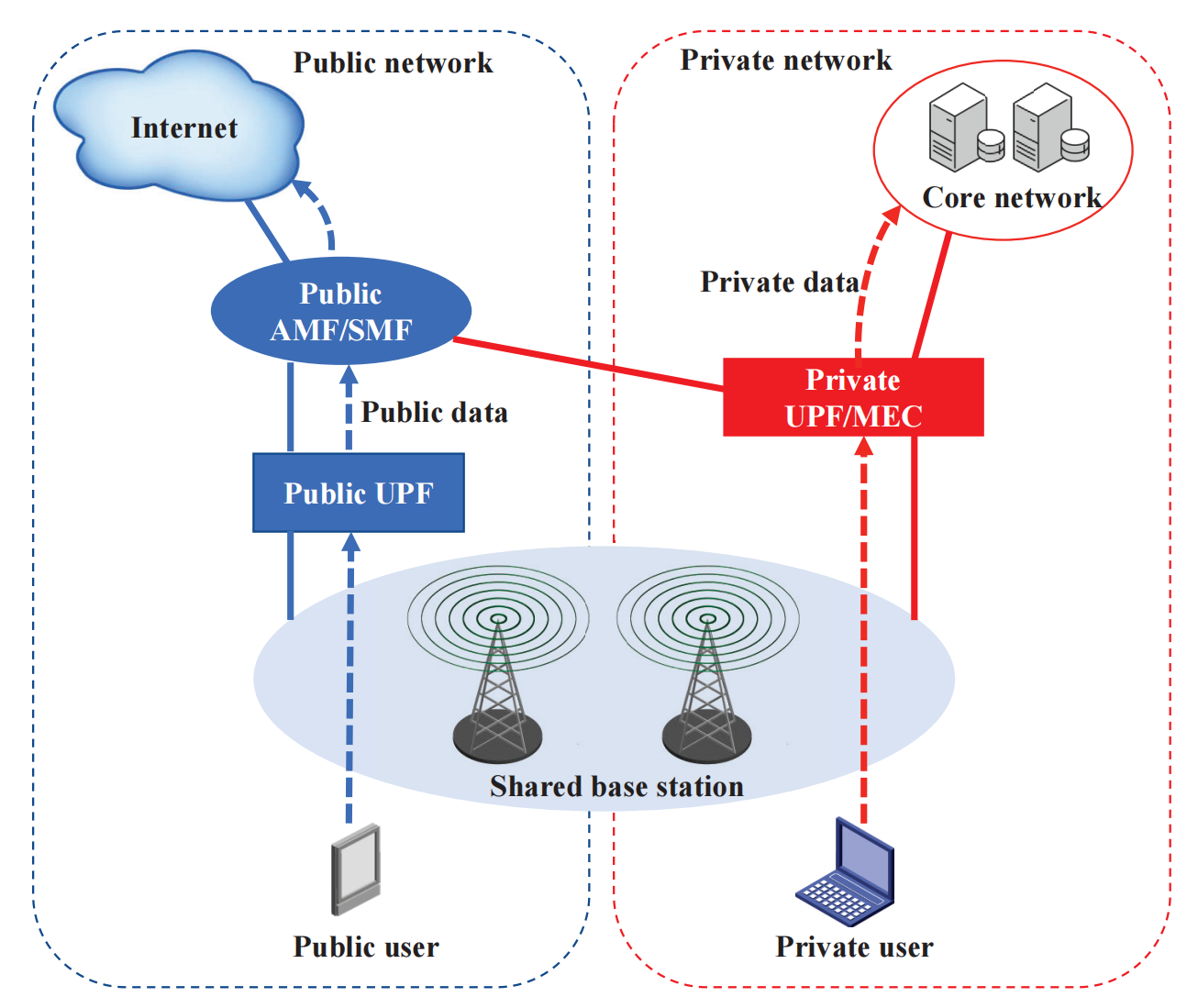
Figure 1. Architecture of integrated private network.
The integrated 5G private network is a basic connection network with enhanced bandwidth, low latency, and no data of industry users out of this private network. As shown in Figure 1, this network is deployed through the flexible customization of wireless transmission and control network elements, and the user plane function (UPF) is privately deployed for industry users. In this network, the wireless base station and control network element of the core network is customized according to industry demands, and some physical facilities are exclusive to industry users. In this mode, the data of industry users will not be affected by public network faults and network safety for industry users will be ensured.
In this mode, the UPF is confined within the private network area. Therefore, the performance of data isolation, network security and level of controllability are moderate in this mode [3]. However, most security mechanisms are not compatible with this mode before appropriate modifications.
2.3. Standalone 5G Private Network
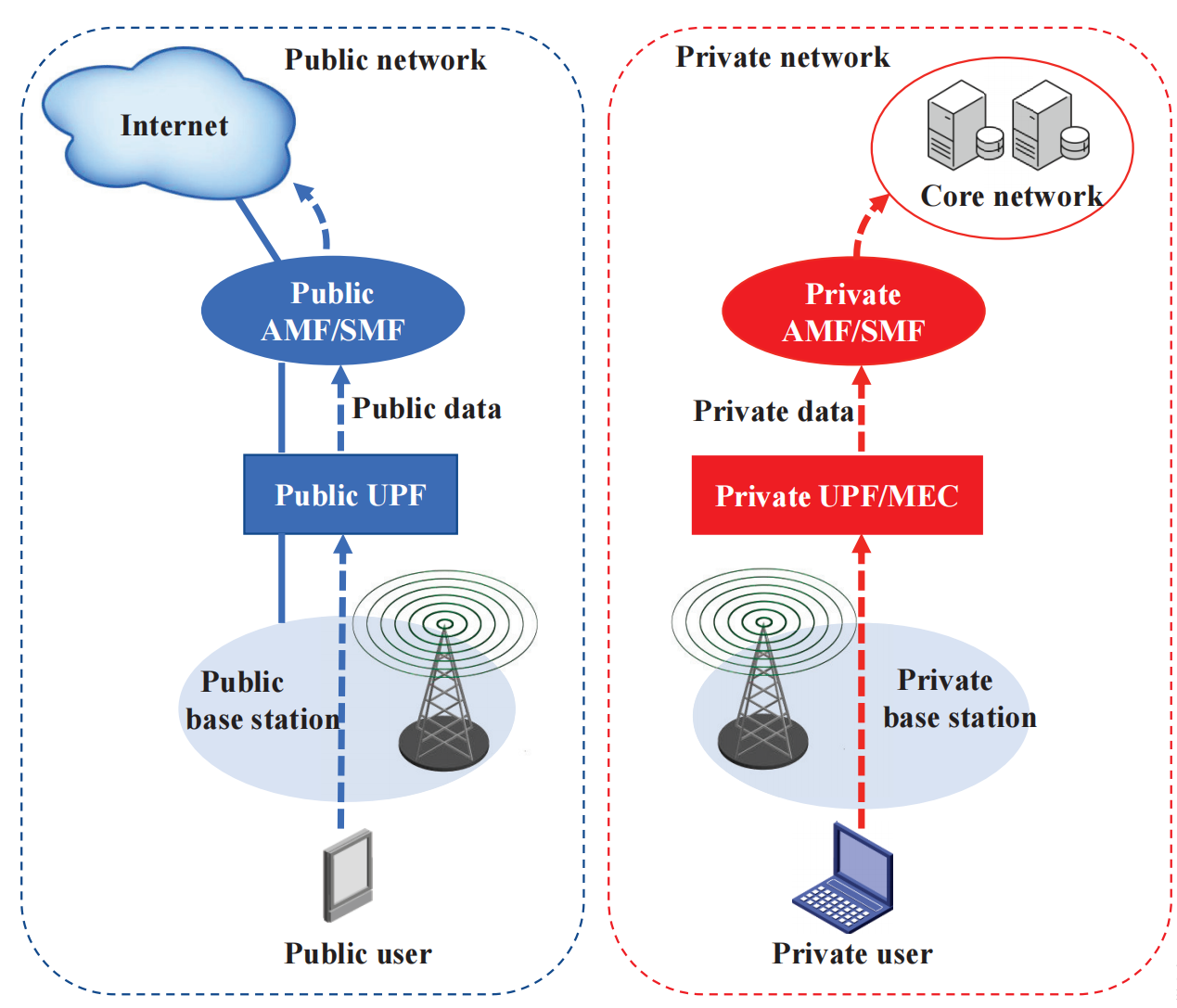
Figure 2. Architecture of strandline private network.
The 5G standalone private network is deployed with proprietary wireless equipment and core network integration facilities, and applying slicing technology, edge computing technology and other 5G networking technologies. As shown in Figure 2, this private network is physically isolated, realizing the purpose that the industry user data and public network data are completely isolated, and this private network will not be affected by the public network. In a standalone private network, all the equipment and facilities of the wireless base station, UPF and core network are separately built from the public network and are physically exclusive for industry users. This kind of private network meets the industry demands of large bandwidth, low latency, high security, and high reliability of data transmission [5].
Though this kind of private network requires high deployment costs and operation costs, the dedicated facilities and equipment can support industry users with various flexible applications. In addition, the standalone 5G private network performs best in data isolation, network security and level of controllability. All the security services (authentication, access control, data confidentiality, key management, etc.) are provided in the 5G private network.
3. Typical Application Scenarios
The customized 5G private networks are especially feasible in many scenarios, such as factory automation, smart medical, large scale engineering and railway communications. The application of customized 5G private networks in these scenarios will be introduced separately.
3.1. Industrial 5G Private Networks
The industrial private networks can be deployed in factories and manufacturing regions to meet the stringent connectivity requirements of industrial automation networks. This private network can support field-level communication between industrial controllers and field equipment (sensors, actuators, etc.), as well as communications between industrial controllers. This type of communication requires low latency and high reliability, which is currently achieved through wired technology. It also provides a flexible and robust connection layer, which is critical to achieving the vision of industrial automation. Private 5G simplifies the traditional automated system hierarchy by providing connectivity on a broader, more fine-grained scale.
3.2. Smart Medical 5G Private Networks
The requirements of medical services on wireless coverage, communication delay, security isolation, data confidentiality, reliability and stability are different from the business requirements of public users. 5G public networks can hardly meet the differentiated needs of various medical services. Different technology combinations must be introduced according to the application scenarios of various medical services to customize the corresponding private networks. For example, medical facilities such as wireless monitoring, mobile ward round, medical image transmission and medical guidance robot automatically collect data and quickly transmit, share and display the data.
While the hospital also provides remote consultation, remote electrocardiogram (ECG) monitoring, remote surgery and other services to primary-level medical institutions. Remote experts guide primary-level doctors to carry out diagnosis and treatment services in real-time through video interaction and control mobile wireless medical equipment through 5G private networks to provide remote real-time consultation to patients [6].
There are also some medical services outside the hospital, including emergency rescue and emergency and serious referral. On the way to the hospital, medical professionals in the ambulance can continuously monitor the vital signs of patients through on-board mobile medical equipment and cooperate with remote experts for diagnosis and treatment. Smart medical private networks provide large bandwidth, low delay and anytime access network services for sudden mobile rescue and referral.
The deployment of the 5G private network can reduce the working burden of medical staff, improve the efficiency and level of diagnosis and treatment, and enable patients to have a better experience of health services. Above all, the 5G private network may play an important role in fighting against COVID-19.
3.3. Engineering 5G Private Networks
Some engineering environments, such as power plants, mines, building construction, oil and gas platforms and ports, may be extremely dangerous environments, exposing personnel to various risks. Remote operation enables workers to control equipment with a higher level of safety and efficiency. It also provides some economic benefits, including reducing on-site workers. 5G private networks provide an opportunity for remote operation in engineering environments. Some key applications include remote operation on robotic equipment, port crane operations, and mobile construction and mining machinery are feasible for engineering private networks.
3.4. Railway 5G Private Networks
The above ground/underground railway transport network needs various key communication services to operate smoothly. One of the services is train radio, which requires safe and critical voice communication between the driver and the signal controller. Another service relates to signal transmission between the train and the track side (for example, in communication based train control). Both of these services require very high system reliability and low latency. 5G private network provides an attractive solution, which can realize the mixing of key services through a single technology. In addition, it has contributed to the enhancement of security services, such as closed-circuit television from trains to tracks.
4. Spatiotemporal Traffic of 5G Private Networks
The network traffic analysis is an important prior work before choosing the proper deployment mode and designing the deployment of the 5G private network. Due to the complicated correlation relationships between spatial traffic and temporal traffic of private networks, we first introduce the individually. After that, we introduce the spatiotemporal traffic analytical framework for private networks.
4.1. Spatial Traffic of Private Networks
Stochastic geometry is an effective and powerful tool to analyze the overall spatial performance of wireless network [7]. Due to the openness nature of wireless channel, all the legal or illegal transmitters in the network may share a common spectrum in space and have influence on the desired received signal at the receiver, i.e., affect the signal to noise and interference ratio (SINR) of the wireless network. SINR is an important metric to evaluate the impact of interference and noise on the desired useful receiving signal. A number of spatial performance metrics (coverage probability, outage probability, successful transmission probability, etc.) are heavily decided by SINR, while stochastic geometry is a feasible method to analyze the SINR metric in the wireless networks [8].
When applying stochastic geometry method to analyze the SINR at the receiver, we consider various parameters that impact the wireless transmission during the signal propagation in realistic commination environment. The commonly considered parameters include large scale path loss fading, shadow effect, multipath fading, etc. The effect of the mentioned parameters is heavily relying on the locations of transmitters and receiver, as shown in Figure 3. Therefore, when the spatial distribution of transmitters and receivers (commonly used spatial distribution include Poisson point distribution, Poisson cluster distribution, etc.) are determined, we can apply stochastic geometry method to analyze the SINR, and further to analyze the overall performance metrics of wireless networks.
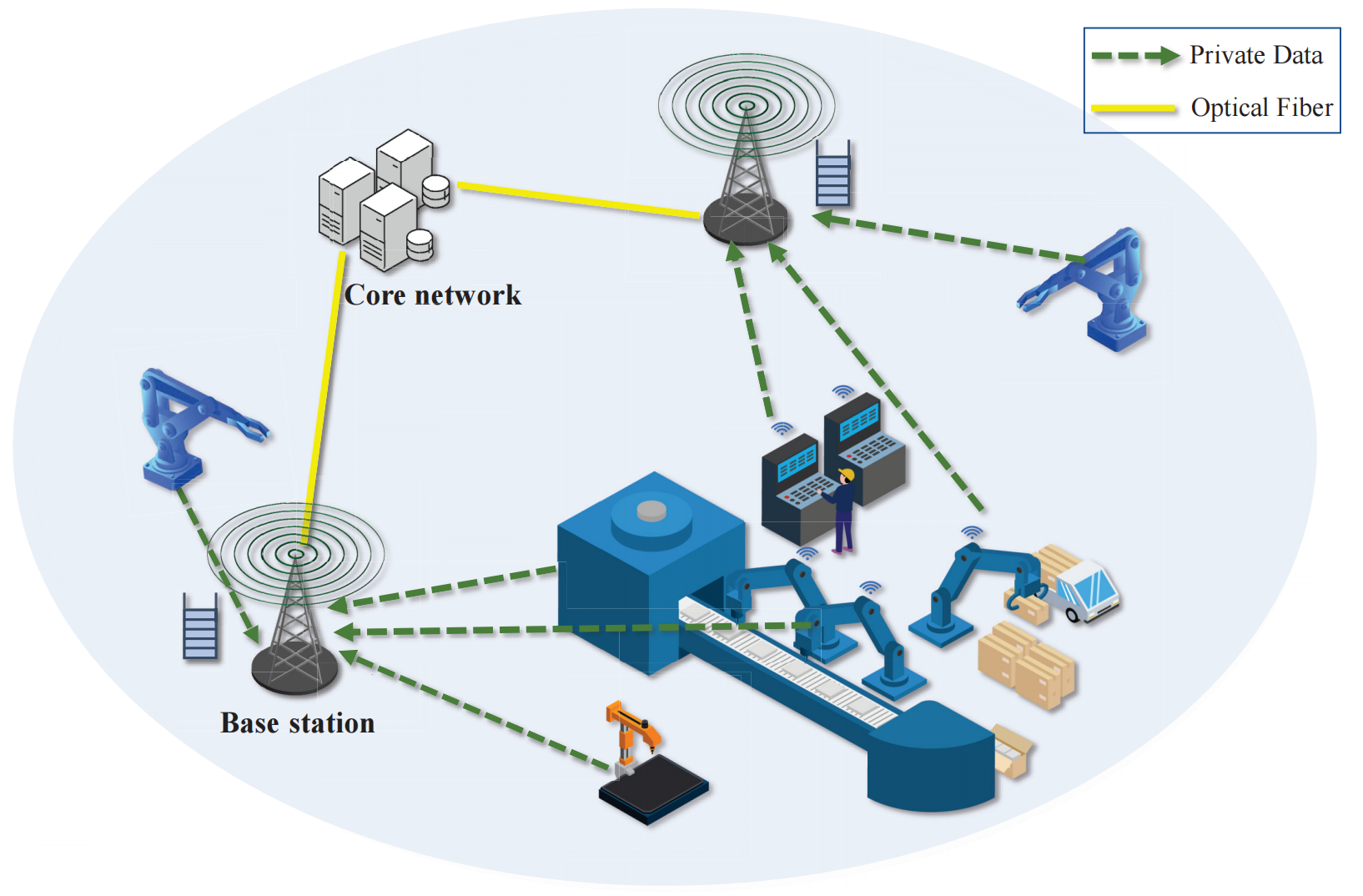
Figure 3. Network model of a private network.
4.2. Temporal Traffic of Private Networks
The network traffic of 5G private networks is also heavily impacted by temporal variations. For example, the data packet arrival rate and service processes of base stations will decide the buffer status of industry users, and further impact whether the industry user is active. Therefore, only studying the spatial performance of private networks is not sufficient.
To analyze the buffer status of industry users and the characteristics of random traffic flows in the private network, we introduce the queueing theory to the analytical framework for network traffic. Based on the queueing theory, we could build the queueing model and consider the transmission to be discrete-time. Then, we divide the data transmission processes into equal-duration time slots and assume sending one data packet requires a time slot. With this assumption, analyzing the random network traffic characterization and further analyzing the temporal network traffic of private networks becomes accessible.
4.3. Spatiotemporal Traffic Analytical Framework
As mentioned above, both the spatial traffic analysis and temporal traffic analysis of private networks are necessary to be studied. Further, the spatial traffic variations are directly related to the temporal traffic variations of the network. The changes in the buffer status of a transmitter have an influence on the activation status of this transmitter, and further impact the mutual interference between the transmission links of other transmitters. The mutual interference between the transmission links heavily impacts the successful transmission probability. The results of this space-time interaction phenomenon can be summarized in two aspects. First, the mutual interference between the transmission links is impacted by the changes in the buffer status. Second, the changes in buffer status at a transmitter are impacted by its neighboring transmitters. Therefore, we apply the integrated stochastic geometry and queueing theory method to build the spatiotemporal traffic analytical framework [9]. In this framework, we can analyze the spatiotemporal traffic of the private network.
5. Case Study of Spatiotemporal Traffic Analysis
In this section, we provide a case study of spatiotemporal traffic analysis on a private network. The spatial deployment of the 5G private network is shown in Figure 3. The spatial distribution of industry users is assumed to be distributed following the Poison point process, and the locations of the base stations are randomly distributed in the private network area. The signal propagation between industry user and base station experienced large-scale path loss fading, multipath fading and shadow effect.
The signal-to-interference ratio (SIR) received at the typical BS on the status update link from the IoT device is
where $P_{T}$ is the transmit power of transmitter at $x$, $y$ the location of the transmitter associated with the target receiver, $h_{y}$ is the fading (shadowing) coefficient between the transmitter located at $x$ and receiver located at $o$, $\alpha$ is the path loss factor, $I_{b}$ is the accumulated interference of other transmitters.
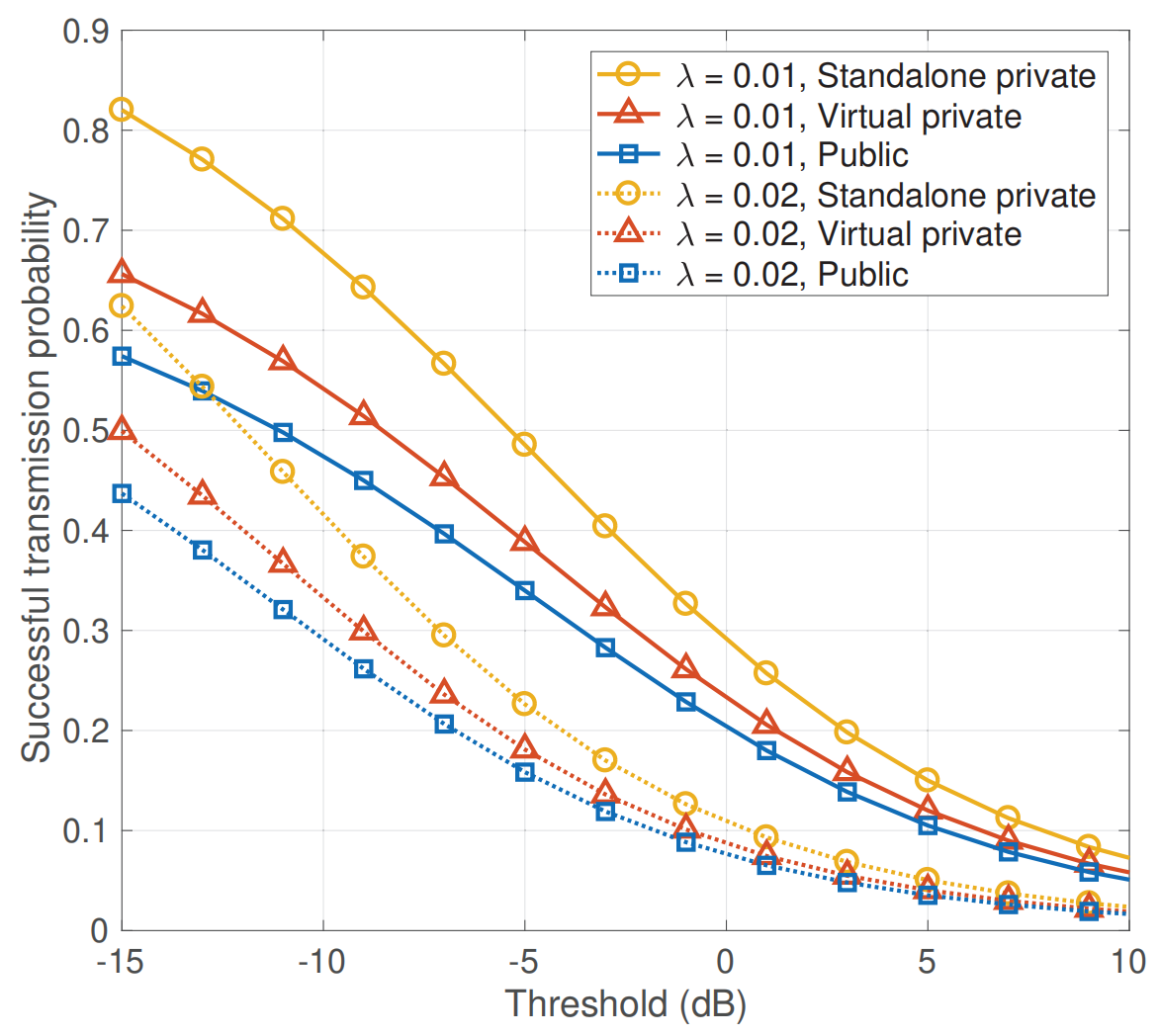
Figure 4. Successful transmission probability varies with the threshold value.
The probability of successful transmission of a regular message for the typical designated D2D receiver can be determined as
where $\beta_{d}$ is the threshold value.
The transmission rate of the typical Base Station link is
where B is the channel bandwidth.
Based on the stochastic geometry, we can derive the spatial analytical framework to analyze the spatial traffic of 5G private networks (the successful transmission probability, coverage probability, etc.). Figure 4 shows the results of the successful transmission probability of 5G private networks. The metric successful transmission probability is used to evaluate the averaged probability that the SINR at the desired receiver is larger than a threshold value [10]. When the SINR of the receiver is larger than a threshold value, this receiver can successfully decode the useful information from the received signal, and this transmission is successful. The higher SINR threshold value represents the receiver has a weaker capability to decode the received signal.
In Figure 4, we compared the results of successful transmission probability in public network, virtual private network, an integrated private network and standalone private network. The result curves of integrated private network and standalone private network coincide because the data of the two networks is confined inside of the network area, and does not travel to public network. Therefore, the successful transmission probability and other metrics of industry users in these two types of private networks are the same. Hence, in the following result figures, we show the results curves of standalone private networks, which also represent the result curves of integrated private networks.
In order to conduct a quantitative evaluation of the performance of different networks, we assume the wireless data transmission performance is the same in the four types of networks. In the public network and virtual private network, the data packets are not confined to the network area, we assume the packet loss rate, time delay and other metrics are random in the public network, which can be modeled with uniform distribution. The virtual private network will perform better than the public network due to the slicing technology. While the data packets in an integrated private network and standalone private network are confined in the network area and will not travel to the public area. As a result, their performance in successful transmission probability, transmission rate and time delay will be better than public networks and virtual private networks.
In this figure, we also find the successful transmission probability decreases as the threshold value increases. This result can be explained by the fact that the probability of a successful transmission is lower if the receiver’s capability to decode the received signal is weaker. The factor λ is the density of the active industry users. The higher value of λ represents more industry users are transmitting signals and the interference to each transmission link is larger. Therefore, when the value of λ increases, the aggregate interference signal at the receiver increases. Then, the SINR at the receiver decreases, and thus the successful transmission probability decreases.
Next, we consider the temporal analytical framework of this private network. Based on the queueing theory, we build a discrete-time transmission and queueing model. In this model, the data transmission duration is divided into time segments with the same length, and sending one data packet requires a time segment [11]. The packet transmission order is scheduled by the first-come-first-serve (FCFS) protocol, which means a transmitted packet will be removed from the head of the queue after this packet is successfully decoded by the base station [12]. Then we can derive the spatiotemporal analytical framework to analyze the spatiotemporal traffic of the private network.
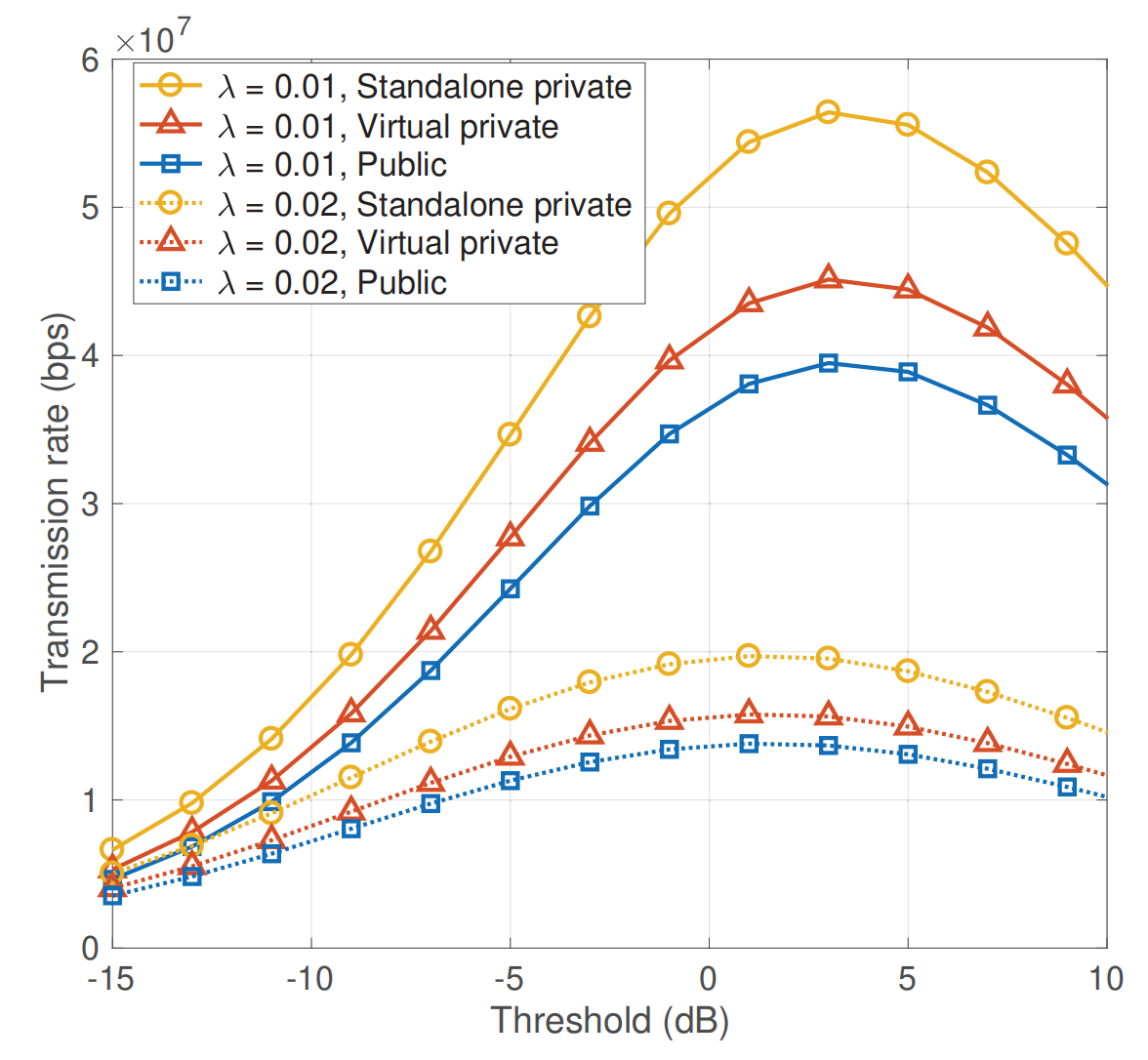
Figure 5. Transmission rate varies with the threshold value.
Figure 5 shows the results of transmission rate at the industry users. The trend of curves in Figure 5 is completely different from the curves in Figure 4. When the threshold value is low (e.g., smaller than -10dB), the transmission rate of the industry user is at a low level while the successful transmission probability is high. This result can be explained by the queueing model of the temporal analytical framework. When the threshold value is low, many industry users can build successful transmission links with the base station. However, the buffer size is limited and only one industry user could transmit the data packet while the others are queueing. Therefore, the overall transmission rate is not high at this time.
When the threshold value increases from a very low level, the successful transmission probability decreases, and fewer industry users can build successful transmission links with the base station. At this time, fewer industry users are in the queueing status, and the overall transmission rate increases. However, when the threshold value increased too high (e.g., higher than 10dB), only a few industry users can build successful transmission links with the base station. In this case, the overall transmission rate of industry users decreases. When the value of λ increases, the increased number of active industry users will lead to more congestion in the queueing model.
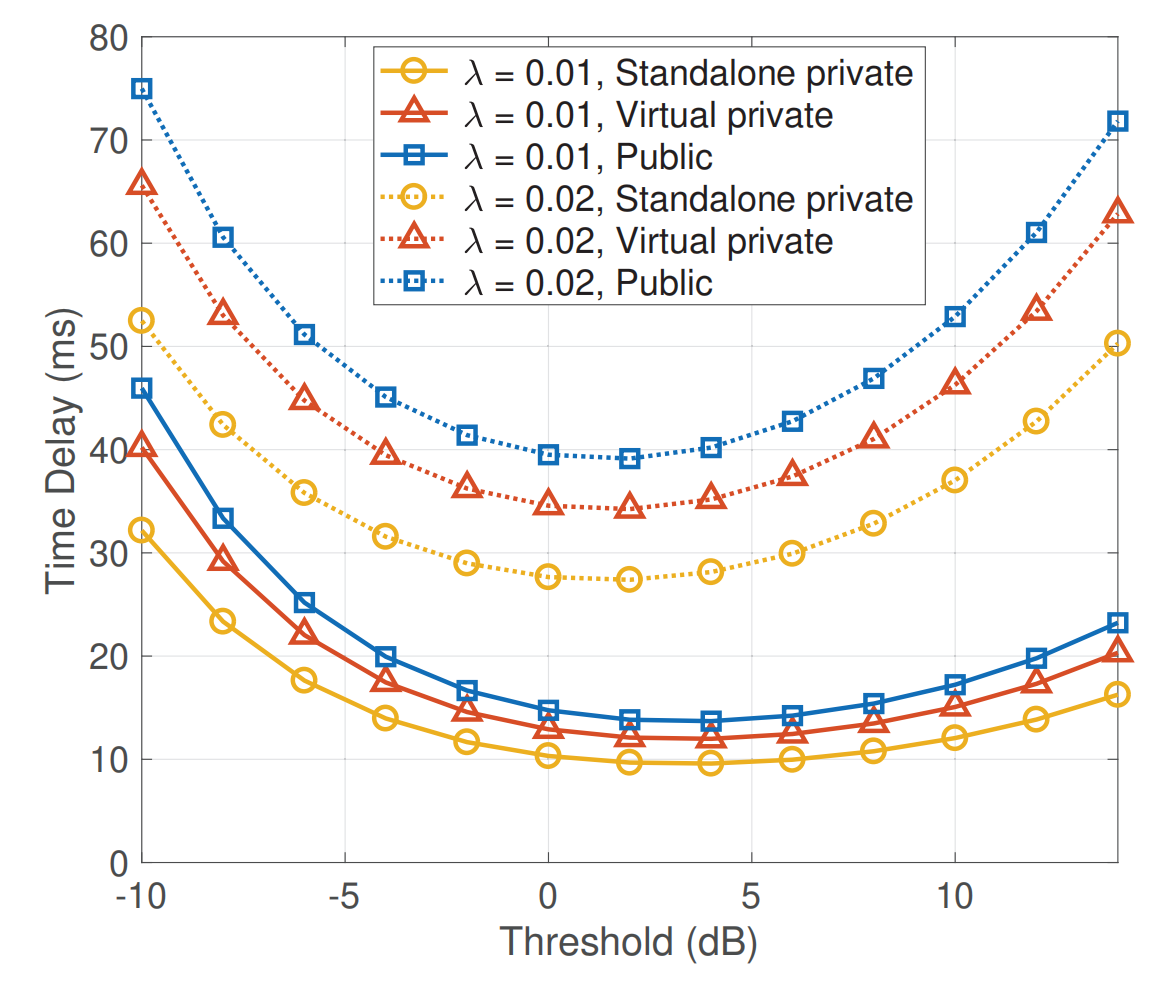
Figure 6. Daley varies with the length of data packet.
With the transmission rate at the industry users, we can derive another important metric transmission delay at the industry users. Note that the base stations are connected with the core network with optical fiber (shown in Figure 3), and the time delay in wired optical fiber is too small to be ignored. Here the results of transmission time delay in Figure 6 are the delay between the base station and the industry user.
This figure shows that a lower density of active industry users leads to lower time delays. The virtual private network performs slightly better than the public network due to the slicing technology. With the slicing technology, the virtual private network has more network resources for data packet transmission. While the data packets in an integrated private network and standalone private network are confined in the network area and do not travel to the public network. As a result, the data packet transmission in these networks has a lower time delay.
6. Conclusion
5G private network is a promising solution to E-work and remote collaboration systems. This article introduced the architecture and deployment modes of 5G private network. The typical applications of 5G private network such as industrial automation, smart healthcare, large scale engineering and railway Network are introduced. In order to analyze the spatial and temporal traffic characteristics of the 5G private network, we introduced the method that integrating stochastic geometry and queuing theory. With this method, we analyzed the spatiotemporal traffic of customizing the 5G private network with transmission success probability, data transmission rate, and transmission delay. The introduced method is helpful in guiding the traffic analysis of private networks, as well as designing the deployment of private networks.
Author Contributions
Author 1 contributed to research design and participated in manuscript drafting, author 2 involved in data analysis and supported experimental implementation, author 3 and author 4 assisted with research design and performed computational simulations, author 5 participated in experimental validation, author 6 (corresponding author) supervised research direction and coordinated cross-institutional collaborations.
Acknowledgements
The work is supported in part by the Key R&D Program of Shandong Province 2023CXPT034, in part by the National Key Research and Development Program of China 2023YFC2413003, in part by the Jinan City-School Integration Development Strategy Project JNSX2021023, in part by the Shandong Province Scientific and Technological Achievement Transfer and Transformation Subsidy (Shandong-Chongqing Science and Technology Cooperation) Project.
Conflicts of Interest
The authors declare that the research was conducted in the absence of any commercial or financial relationships that could be construed as a potential conflict of interest.
Reference
[1]. S. Chang, E. Pierson, W. K. Pang, J. Gerardin, and J. Leskovec, “Mobility Network Models of COVID-19 Explain Inequities and Inform Reopening,” Nature, 2020, 1–6.
[2]. Y. Zhong, X. Ge, H. H. Yang, T. Han and Q. Li, “Traffic Matching in 5G Ultra-Dense Networks,” IEEE Commun. Mag., 2018, 56, 8, 100-105.
[3]. S. Guo, B. Lu, M. Wen, S. Dang and N. Saeed, “Customized 5G and Beyond Private Networks with Integrated URLLC, eMBB, mMTC, and Positioning for Industrial Verticals,” IEEE Commun. Stand. Mag., 2022, 6, 1, 52-57.
[4]. X. Foukas, G. Patounas, A. Elmokashfi and M. K. Marina, “Network Slicing in 5G: Survey and Challenges,” in IEEE Commun. Mag., 2017, 55, 5, 94-100.
[5]. A. Aijaz, “Private 5G: The Future of Industrial Wireless,” IEEE Ind. Electron. Mag., 2020, 14, 4, 136-145.
[6]. X. Li, B. Tao, H. Dai, M. Imran, D. Wan, D Li, “Is Blockchain for Internet of Medical Things a Panacea for COVID-19 Pandemic?,” Pervasive Mob. Comput., 2021, 75, 101434.
[7]. J. G. Andrews, F. Baccelli and R. K. Ganti, “A Tractable Approach to Coverage and Rate in Cellular Networks,” IEEE Trans. Commun., 2011, 59, 11, 3122-3134.
[8]. M. Haenggi, J. G. Andrews, F. Baccelli, O. Dousse and M. Franceschetti, “Stochastic Geometry and Random Graphs for the Analysis and Design of Wireless Networks,” in IEEE J. Sel. Areas Commun., 2009, 27, 7, 1029-1046.
[9]. P. D. Mankar, Z. Chen, M. A. Abd-Elmagid, N. Pappas and H. S. Dhillon, “Throughput and Age of Information in a Cellular-Based IoT Network,” IEEE Trans. Wirel. Commun., 2021, 20, 12, 8248-8263.
[10]. Y. Zhong, T. Q. S. Quek and X. Ge, “Heterogeneous Cellular Networks With Spatio-Temporal Traffic: Delay Analysis and Scheduling,” in IEEE J. Sel. Areas Commun., 2017, 35, 6, 1373-1386.
[11]. M. Marvi, A. Aijaz and M. Khurram, “Integrating Stochastic Geometry and ON/OFF Traffic Models: Toward Spatio-Temporal Analysis of Wireless Networks With Heterogeneous Services,” IEEE Trans. Netw. Sci. Eng., 2022, 9, 3, 1668-1679.
[12]. Y. Li, X. Jian, K. Yu, N. Kumar and S. Cai, “Theoretical Performance Analysis of Distributed Queue for Massive Machine Type Communications: Throughput, Latency, Energy Consumption,” IEEE Trans. Netw. Serv. Manag., 2022, 19, 2, 818-828.