Recent Applications of Metal Additive Manufacturing: A Review
published: 08 March 2025 | https://doi.org/10.63174/xdi-QFDD2795
Abstract
3D Printing is getting popular in the daily life, and the materials used in this technology is various. Metal Additive Manufacturing (AM) develops rapidly in different areas, both in research and industry. And the materials are various, such as pure metal, alloy, and component materials. In this research, the researches of these three kinds of materials on metal AM are reviewed. Metal AM has plenty of applications in medicine because of the easiness on fabricating complex and unique tools. Based on several works, machine learning will apply on metal AM to control the quality of the final parts in the future.
1. Introduction
Additive Manufacturing (AM), also known as 3D Printing (3DP)[1], is a layer-by-layer manufacturing process. AM has various methods, including Fused Filament Fabrication (FFF), Selective Laser Sintering (SLS), Selective Laser Melting (SLM), Stereolithography (STL), etc.[2]. This set of technologies has been widely used in food industry[3], manufacturing process[4], aerospace area[5] and so on. Among all materials, metal, including alloy, is the most widely used one in human society[6]. This paper sorts out the application of metal AM in various fields, and summarizes the current application status of it from three main functions: medicine, industry (including alloy and pure metal), and component materials. The structure of this work is briefly introduced in Figure 1.

Figure 1. The structure of this work
2. Medicine
In the field of medicine, 3DP has become a leading healthcare and pharmaceutical manufacturing technology, which is suitable for variety of applications including tissue engineering models, anatomical models, pharmacological design and validation model, medical apparatus and instruments[7]. Vasamsetty’s group summarizes the applications of 3D Printing in the area of dentistry[8]. This research points out that 3D Printing is the ideal solution of several health care individualization problems.
2.1 Medical Devices
Metal AM is widely used because of its individualization and ability on complex structure fabrication, such as bones and joints. Bone defect and osteoporosis are common in clinic which are seriously harmful for public health. Bionic bone tissue engineering scaffolds are very important for bone tissue repair and reconstruction. 3D Printing is widely used in the area of medicine, especially in bone interface[9]. In the study of Zhao’s team, different bionic bone tissue engineering scaffolds were constructed by computer-aided design and fabricated by selected laser melting[10]. In the research of Deng’s group, four kinds of porous titanium alloy scaffolds with similar porosity and pore size, but different structures were fabricated by SLM method[11]. This work provided a new theoretical basis for design of bone scaffolds and the results are shown in Figure 2. Bandyopadhyay et al. reviewed 3DP applications in the area of bone regeneration[12]. Since 3D Printing has been widely used in medicine, they summarized materials and devices for bore regeneration. Dogan’s group reviews the applications of 3DP in the area of tissue engineering[13]. They come up with the idea that metal additive manufacturing will be used in this field by using mechanical meta-materials. In the research of Zhong’s team, metal AM of metal-organic framework incorporated porous scaffolds to promote osteogenic differentiation and bone regeneration[14]. Also, In the work of Li et al., a novel 3D printed porous titanium cage (3D printed cage) with interconnected pores inside was designed and manufactured[15]. The quality of the final bone is improved by this newly developed technology.
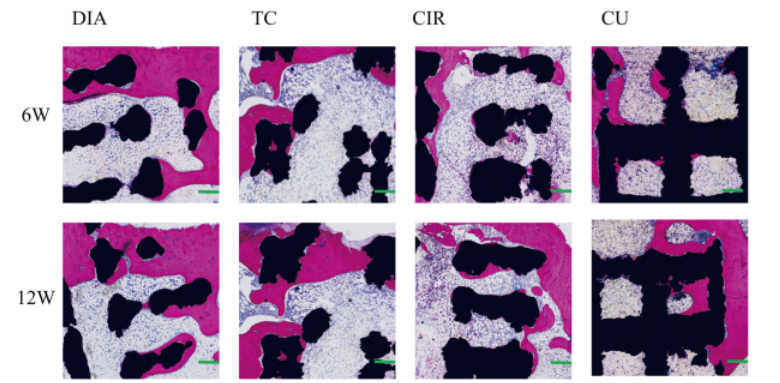
Figure 2. Histological sections of dehydrated embedded samples of the bone scaffolds obtained at 6 weeks and 12 weeks were stained. Red represents the bone tissue, and black represents the scaffold[11].
2.2 Bone and Tissue Engineering
Metallic biomaterials have been widely used in 3D Printing process, it has been summarized by Chua’s group[16]. Recently, 3D meta-materials have been achieved with the inaccessible mechanical properties in natural materials such as negative Poisson’s ratio, stiffness, and thermal expansion coefficient. Yuan et al. generate a new method for creating 3D meta-materials via laser[17]. Sing et al. used powder bed fusion and directed energy deposition technology to do the manufacturing of metallic biomaterials[18]. These techniques provide the biomedical field the opportunities to mass customize at a lower cost due to their ability to fabricate parts with complex and intrinsic designs that are specific to individual patients.
Besides, metal AM is also widely used in medical devices fabrication. Wang and Yang reviews the manufacturing process, materials, and some typical products of 3D printing implantable medical devices[19]. This work also analyzed and summarized the development trend of 3D printed implantable medical devices. The shaping of metal−organic frameworks has become increasingly studied over the past few years, because it represents a major bottleneck toward their further applications at a larger scale. Dhainaut’s team used 3D Printing method to deal with this problem[20]. Murr et al. reviewed the powder bed fusion technology from different areas of design, development, and applications[21]. This work pointed out that the predicting the mechanical properties of additively manufactured metallic specimens is a challenge in 3D Printing research.
In the area of medicine, biocompatibility is an important problem. The study of Mitra et al. shows how 3DP can be used to design metallic alloys for orthopedic and dental applications with improved biocompatibility using in vitro and in vivo studies[22]. Alam et al. added different metal particles into PLA to build anti-bacterial scaffolds[23].
3. Industry
Metal AM is widely used in several industry areas.
3.1 Alloy Fabrication with Metal AM
In real-world applications, alloy has better mechanical properties compared with pure metal, most industrial metal AM applications focus on alloy fabrication. Kenel et al. studies the AM of several alloys[24]. In this research, the ink for 3D printing consists of different alloy powders, and the fabrication quality has been proved wel. AM promises a major transformation of the production of high economic value metallic materials[25]. Murray et al. developed a kind of new superalloy for 3D Printing. This newly developed alloy could be used in electron beam melting and selective laser melting. The introduction of dislocations and precipitates has proven to be the effective methods to improve the mechanical properties of metallic materials and break strength-ductility trade-off. However, it is difficult to obtain a suitable combination of both strategies in the metal materials. In the research of Mu’s group, 3DP was used to obtain this combination successfully[26]. The limited choice of metallic alloys suitable for AM restricts the possibilities for new design strategies and improved materials performance in demanding applications. Rogov et al. applied plasma electrolytic oxidation to improve the performance of 3D printed and cast AlSi12 alloy substrates[27]. Utilization of metal/ceramic powders opens new possibilities for 3D printing of metal matrix composites of complex shape with high strength, but it is still a great challenge. In the work of Konopatsky’s group, an AlSi10Mg matrix composite embedded with 1 wt.% of hexagonal BN phase microflakes (h-BN) was obtained by means of 3D printing[28]. Figure 3 is an example of component material of bronze and PLA.
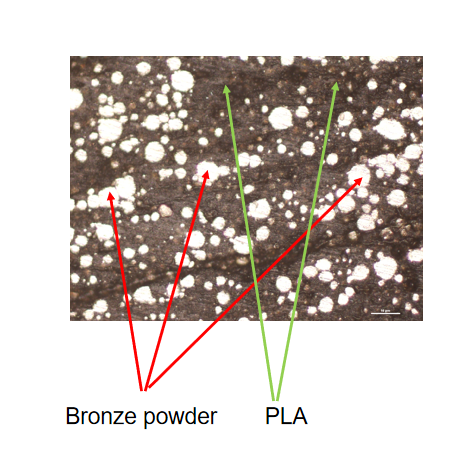
Figure 3. Comparison of Two Different Materials (Bronze and PLA)
Peng et al. developed an approach to additive manufacturing of three-dimensional (3D)-architected CoCrFeNiMn high-entropy alloys by direct ink writing combined with thermal sintering[29]. This work provides a new avenue for 3D-printing advanced architected materials with extreme mechanical energy absorption for a myriad of structural applications. It is believed that high-entropy alloys are considered as novel structural materials that can substitute conventional alloys because of the superior properties. Gao and Lu evaluate the microstructure and mechanical properties of laser 3D printed high-entropy alloys[30]. They found that the printed high-entropy alloys parts exhibits an outstanding combination of high strength and excellent ductility. Cobalt-chromium (Co-Cr) metal is one of the widely used biomaterials in the fabrication of dental prosthesis. The study of Hong et al. was to investigate whether there are differences in the properties of metals and bond strength with ceramics depending on the manufacturing methods of Co-Cr alloy[31]. This research believe that SLM manufacturing method may have the potential to replace traditional techniques for fabricating dental prosthesis. The purpose of the study done by Schweiger’s group was to evaluate internal porosity, retentive force values and survival of Co-Cr alloy clasps fabricated by direct metal laser sintering (DMLS)[32]. They also compare these properties to conventionally cast parts. They conclude that the parts made by laser-sintering could be an alternative to conventional cast clasps for the fabrication of removable partial denture frameworks.
Metal AM offers a tool to bring formerly unmanufacturable, geometrically complex, engineered structures into existence. However, considerable challenges remain in controlling the unique microstructures, defects and properties that are created through this process. The group of Tan generated a new method to deal with these problems. The LaB6-inoculated AlSi10Mg exhibited near-isotropic mechanical properties with an improved plasticity compared with un-modified AlSi10Mg[33]. And Several metallurgical issues arise during melting and solidification-based AM methods which limit their use to only a few alloys. Salehi et al. shows how capillarity-driven bridging can serve as a new and rapid tool of assembling powder particles into 3D structures providing the least metallurgical complexity[34]. The group of Yang used 3D printing method to fabricate micrometer copper-zinc alloy particle-reinforced wood plastic composites. Also, this kind of newly generated material is applied in the area art, toy, classic furniture, etc[35].
Magnesium alloys are a promising new class of degradable biomaterials that have a similar stiffness to bone, which minimizes the harmful effects of stress shielding. Karunakaran et al. survey the current techniques to 3D print magnesium constructs and provide guidance on best additive practices for these alloys[36]. In the study of Maltseva’s group, the parts were fabricated by SLS and the magnetic properties were studied[37].
CoCrMo alloys have been used for several decades in implantable devices due to their favourable mechanical properties, low wear rate in addition to good biocompatibility and high corrosion resistance. In the work of de Castro Girão et al., CoCrMo samples were produced by DMLS AM process[38]. The microstructure and surface composition were examined employing scanning electron microscopy, X-ray diffraction and X-ray photoelectron spectroscopy. Also, in the research of Kazantseva et al., a comparative study was performed of microstructure and strength characteristics of the CoCrMo alloy obtained by SLM[39]. It was found that the SLM alloy has a two-phase structure after standard annealing, in contrast to the cast alloy. And in the work of Raj et al., Direct metal laser sintered process is used to fabricate turbine engine components by using Inconel 718 alloy[40].
Titanium alloy has been widely used in the area of aerospace. In order to reduce the manufacturing cost, 3D Printing of titanium alloy has been a popular research point. The aim of Karolewska and Ligaj is to compare the properties of titanium alloy Ti6Al4V under static loading conditions for samples made by 3D printing and metallurgical method[41]. The work of Misra’s group deals with the fabrication of silicon carbide (SiC) reinforced Ti6Al4V metal matrix composites (MMC’s) by a DMLS process, followed by characterization of microstructures and evaluation of mechanical properties[42]. The improved mechanical properties and surface characteristics result in the formation of effective MMC’s for various engineering applications.
In metal AM process, quality evaluation is a challenge. Hafeez et al. investigated the mechanical properties and microstructure evolution of a b-type Ti-35Nb-2Ta-3Zr alloy prepared by SLS process[43]. Mostafaei et al. discuss the effect of powder size on densification and microstructural evolution of binder-jet 3D-printed alloy 625[44]. The fatigue behavior of DMLS fabricated Ti-6Al-4V as-built specimens has been evaluated by Morettini’s group[45]. Snopinski et al. discuss the effect of built direction and deformation temperature on 3D Printed AlSi10Mg alloy parts[46]. Semisolid metal processing is a well-known technology that can be used to enhance manufacturing product quality in broad industries. The article of Fei et al. reviewed literature and findings from thixotropy rheology and semisolid metal processing methods, finally to thixotropic metal 3D printing[47]. Additively manufactured porous metallic structures have recently received great attention for bone implant applications. The morphological characteristics and mechanical behavior of 3D printed titanium alloy trabecular structure will affect the effects of artificial prosthesis replacement. The study of Zhang’s group will be benefit of the application of prostheses with proper structures and functions[48]. Kuo’s group studied the microstructure evolution and mechanical property response via 3D printing parameter development of Al-Sc alloy[49]. They found that this kind of fabricated part could be used in lightweight applications. This research also found the effect parameters of this material.
Shape memory alloy has plenty of applications, but the manufacture of it is a challenge. Akbari et al. generated a new method that using shape memory alloy wires to do 3DP[50]. This research also found that 3D Printed parts have better quality. In the work of Fathi et al., the in-depth microstructure and electrochemical properties of AlSi10Mg parts fabricated be DMLS are studied[51].
In nuclear industry, it is difficult to fabricate some specimens, but 3DP is a useful technology to deal with it. Kim’s group developed a new application of metal AM in nuclear industry[52]. Han et al. reviewed the processes and applications of high-entropy alloys for 3D Printing[53]. And this work will also provide guidance for future research. Ishfaq’s group summarized the mechanical properties of DMLS fabricated parts by several alloy materials[54]. They found that this technology will improve the hardness and fatigue strength.
Eutectic high-entropy alloys (EHEAs) that consist of at least two phases with different properties are promising candidates for engineering applications. However, the reported EHEAs still have difficulty competing with traditional alloys because the as-cast alloys are either not strong enough or brittle, while high-strength and ductile EHEAs produced by severe plastic deformation are not suitable for preparing industrial-grade products. Zhu et al. demonstrates a strategy for simultaneously improving the strength and ductility of EHEAs by introducing directional eutectic cells with ultrafine two-phase lamellae, whose formation is different from single-phase solidified alloys like superalloys and depends strongly on 3DP process control[55].
3.2 Pure Metal Fabrication with Metal AM
Also, metal AM can also be used to fabricate pure metallic parts. Copper has been widely used in many applications due to its outstanding properties such as malleability, high corrosion resistance, and excellent electrical and thermal conductivity. Also, this kind material has been used for more than 5000 years in the history of human. In the present study, the extrusion-based 3D printing process was explored using metal injection moulding copper feedstock to fabricate dense copper parts. In the research of Singh et al., the influence of manufacturing parameters, such as layer thickness, nozzle speed, extrusion multiplier and extrusion temperature on green density and surface roughness were studied. The final fabricated parts have high density and low surface roughness[56]. Mohammadizadeh et al. generated a new metal AM method based on FFF to fabricate pure copper specimens[57]. The mechanical properties of this work is 70% of casting parts. Figure 4 is the cross-sectional view of the final copper part. Cao et al. generated a method to fabricate high-performance lithium metal microbattery by using cellulose nanofibers[58]. This kind of battery will have a lot of applications in the future. Also, Li et al. did research on this kind of battery[59, 60]. Tran’s paper presents a comprehensive review of recent work on 3D printing technology of highly pure copper over the past few years[61].
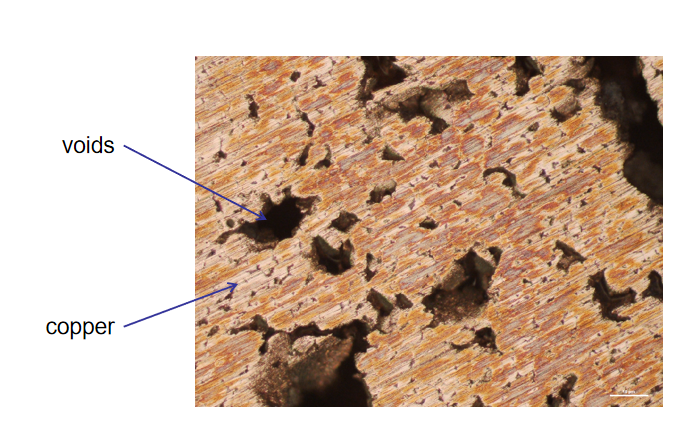
Figure 4. Cross-sectional View of Final Copper Part (Pure Copper Parts with Voids)
Stretchable electronic circuits and systems will be critical for future wearable devices and smart textiles, where existing flexible printed circuit board techniques severely limit conformal deformation. And iquid-metal is now extensively used for stretchable electronic applications due to their superior electrical conductivity, non-toxicity, and mechanical stability in micro-channels. In the work of Votzke et al., they present a scalable fabrication approach for making robust interconnects for stretchable electronics by using 3D-printed liquid metal paste[62]. LKhondoker’s group developed a new method to do liquid-metal 3DP[63]. Kim et al. introduce a 3D-printed rigid microbump-integrated liquid metal-based soft pressure sensor for wearable and health-monitoring applications[64]. In several industrial fields, the customized production of complex components by 3D printing has been hailed as a potentially trans-formative tool in manufacturing with important applications. Mukherjee and DebRoy explain how a digital twin of the printing machine will reduce the difficulty[65]. It is shown that a comprehensive digital twin of 3D printing machine consisting of mechanistic, control and statistical models of 3D printing, machine learning and big data can reduce the volume of trial and error testing, reduce defects and shorten time between the design and production.
The study of Tasaka et al. aimed to compare the accuracy of removable partial denture frameworks fabricated by 3D-printed pattern casting and those fabricated by SLS[66]. They used partially edentulous mandibular model to do the simulation. The accuracies of removable partial denture frameworks fabricated by AM-Cast and SLS differ depending on the specific structural component of the removable partial denture. Residual distortion is a major technical challenge for laser powder bed fusion additive manufacturing. Chen et al. proposes a multiscale process modeling framework for efficiently and accurately simulating residual distortion and stress at the part-scale for the DMLS process[67].
AM of high-quality materials by SLM depends not only on establishing appropriate process parameters, but also on the characteristics of the metal powders used and their stability over time or after recycling. The aim of Condruz et al.’s research was to characterize the IN 625 powder used over multiple manufacturing cycles[68]. It was experimentally determined that the powders present a good flowability based on the flow rate value obtained for both virgin and recirculated powders, confirmed also by the Hausner ratio and angle of repose. The control complex laser-powder-melt pool interdependency dynamics is a challenge in metal 3D Printing. The Khairallah et al. used high-fidelity simulations, coupled with synchrotron experiments, to capture fast multitransient dynamics at the meso-nanosecond scale and discovered new spatter-induced defect formation mechanisms that depend on the scan strategy and a competition between laser shadowing and expulsion[69].
The corrosion behaviour of AM parts must be considered if additive techniques are to find widespread application. In the work of Kong et al., researchers review relationships between the unique microstructures and the corresponding corrosion behaviour of several metallic materials fabricated by selective laser melting, one of the most popular powder-bed additive technologies for metals[70]. In the research of Liu et al., Fused Deposition Modeling and Sintering (FDMS) was proposed for fast making metal parts at low energy consumption and low cost[71]. Metal/polymer composite filament is printed by the printer based on Fused Deposition Modeling (FDM), and then debinding and sintering are conducted on the printed parts to form compact metal parts. This is a new research point in metal AM and Figure 9 shows the sketch of this process.
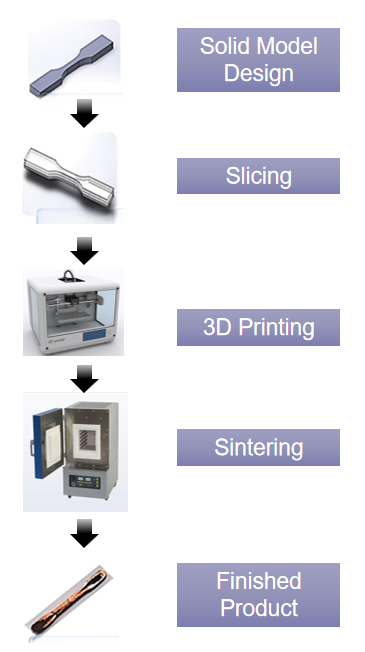
Figure 5. Sketch of FDMS Process
DMLS is an advanced AM technique for the 3DP of metals. This technology is also beneficial in the jewelry industry, where precious metals are used, and the design and price are determinative factors. In the paper of Korium et al., the metal 3D printing process for jewelry production is discussed[72]. Pure Al with high laser reflectivity is essentially incompatible with laser powder bed fusion. In the study of Geng’s team, the researchers propose decorating Al with a small amount of high laser absorbing Co nanoparticles on the surface of Al powders to reduce laser reflectivity and improve print-ability[73]. Also, they did test on the mechanical properties of the final parts. In the article of Koga’s group, they generated a control design for the laser power to drive the depth of the melt pool to the desired set point[74].
Demand for the construction of new structures is increasing all over the world. Kanyilmaz’s group used 3D Printing method to increase quality and resource-efficiency in the construction sector[75]. Buchanan and Gardner review the applications of metal 3D Printing in construction. Also, this work come up with the challenges and opportunities in this area[76]. Mechanical properties and geometries of printed products have been extensively studied in metal 3D printing. However, chemical properties and catalytic functions, introduced by metal 3D printing itself, are rarely mentioned. Wei’s group provides a simple and low-cost manufacturing method to realize functional integration of catalyst and reactor, and will facilitate the developments of chemical synthesis and 3DP technology[77]. In the work of Gardner’s group, the world’s first 3D Printed bridge was introduced[78]. And this paper introduced the testing and initial verification of this bridge.
4. Component Materials
In real-world applications, metal AM could also use component materials to fabricate parts. 3D Printing technology is also applied in polymer industry[79]. Lanzl et al. used SLS technology to fabricate copper specimen by using copper filled polyamide 12 material[80]. Continuous fiber reinforced polymer composites have been widely used in many industrial area, such as automobile, aircraft, space and so on. Innovation on 3D Printing of this material opened a new era for the design and fabrication of complicated composite structure with high performance and low cost. Tian et al. summarize the development and applications of this high-quality material[81]. Ling et al. studied the influence of different manufacturing parameters on the mechanical properties of SLS fabricated parts. The results showed that the densification process and energy accumulation effect were beneficial to reduce the porosity ratio of specimens, thereby improving its tensile strength in the early period of laser sintering[82]. Stoia et al. present a study on the tensile properties of Alumide and polyamide PA2200 standard samples produced by Additive manufacturing based on SLS[83]. This research finds that the manufacturing orientation will have influence on some mechanical properties, but tensile strength is less influenced. Zone-melted (ZM) Bi2Te3 is a standard commercially available thermoelectric material. In the study of Qiu et al., SLM technology is used to fabricate workpiece. After testing, SLM fabricated parts have better mechanical property than traditional manufacturing method[84]. In the aircraft industry, 3DP can confer several benefits, such as shortened cycle times, reduced production costs, and lighter part weights. Wang et al. investigated these concerns by reviewing the current 3D printing practices in the aircraft industry[85]. In the research of Hadadzadeh et al., Mg2Si colonies was added into AlSi10Mg. And the mechanical properties of final parts were improved[86]. Jucan et al. used SLS method to fabricate parts with WC-Co/PA12 powders. This is an useful method on complex parts manufacturing[87].
The formation of defects within additive-manufactured components is a major concern for critical structural and cyclic load applications. Brennan et al.’s article discusses the formation of defects within metal AM, namely fusion-based processes and solid-state/sintering processes[88]. In the research of Lahtinen et al., SLS printing was utilized to produce porous, solid objects, in which the catalytically active component, Pd/SiO2, is attached to an easily printable supporting polypropylene framework[89]. Physical properties of the printed objects, such as porosity, were controlled by varying the printing parameters. The results show that the selective laser sintering process provides an alternative and effective way to produce highly active and easily reusable heterogeneous catalysts without significantly reducing the catalytic efficiency of the active Pd/SiO2 component. Significant progress has been made in understanding SLM process as well as fabrication of various materials using this technology. Yu et al. focused on particle reinforced metal matrix nanocomposites (MMNCs) with SLM and provides a comprehensive overview of the underlying scientific topics behind them[90].
3DP has been widely used in fabricating complex shaped electrical discharge machining (EDM) electrode . In the study of Sahu and Mahapatra, an EDM electrode is prepared directly by selective laser sintering (SLS) process using metal matrix composite of aluminium (Al), silicon (Si) and magnesium (Mg)[91]. In ceramics industry, 3D Printing has been widely used. In the research of Liu’s group, 3D Printing is used to fabricate metal-organic frameworks decorated hierarchical porous ceramics for high-efficiency catalytic degradation[92]. The mechanical property of the final parts is suitable for application.
5. Results & Conclusions
The materials used in metal AM is various. And this technology develops rapidly both in research and industry. SLS and SLM are the most widely used metal AM techniques, especially in the area of medicine. In this research, different materials used in metal AM processes are reviewed, including pure metal, alloy, and component materials. Based on the summary of this paper, metal AM is widely applied in medicine, since it is easily to fabricate some complex and unique tools, especially Ti or steel tools. However, in industry area, metal AM is usually used in some high-tech areas, such as aerospace, aircraft, nuclear industry, and so on. Because the cost of AM is still high, it is difficult to apply this technique in mass production. And in overall, alloy has more widely applications in metal AM.
6. Future Work
The use of AM techniques for low volume production of complex geometries from a wide range of materials has shown to decrease product cost and lead times. Mapley’s group describes the production of net-shaoed bonded NdFeB magnets using SLS technology[93]. In the future, as the development of machine learning, it will be applied in metal AM. There have been several machine learning applications in metal AM area. For example, In the work of Liang’s group, the modifed inherent strain theory is proposed to enable efficient yet accurate prediction of the residual deformation of large components produced by 3DP[94]. Ly et al. developed a decision tree algorithm to predict the fabrication quality[95]. Kim and Zohdi used deep learning algorithm to optimize the tool path of SL processes[96]. And Zhang’s group used different machine learning algorithms to predict the quality of metal AM fabricated copper and bronze parts[97, 98]. Also, in the area of biomedicine, this technology will have bright future[99, 100]. Thus, based on machine learning application is a popular research point of metal AM research.
Conflicts of Interest
The authors declare no conflict of interest.
Funding
This work was supported by Shandong Agriculture and Engineering University Start-Up Fund for Talented Scholars (BSQJ-202301).
This research received no external funding.
Acknowledgments
This research has been made possible with the help provided by Mr. Xin Liu.
Author contributions
Conceptualization, Z.Z.; methodology, Z.Z., H.W. and H.F.; software, Z.Z. and H.W.; resources, Z.Z., H.W., H.F. and J.L.; writing—original draft preparation, Z.Z.; writing—review and editing, Z.Z., H.W., H.F. and J.L.; visualization, Z.Z.; All authors have read and agreed to the published version of the manuscript.
References
Z. Zhang, I. Fidan. "Machine Learning-Based Void Percentage Analysis of Components Fabricated with the Low-Cost Metal Material Extrusion Process." Materials, 2022, 15,12, 4292.
Z. Zhang, I. Fidan, M. Allen. "Detection of material extrusion in-process failures via deep learning." Inventions, 2020, 5.3, 25.
R. Sharma, P. C. Nath, T.K. Hazarika, A. Ojha, P. K. Nayak, K. Sridhar. "Recent advances in 3D printing properties of natural food gels: Application of innovative food additives." Food Chemistry, 2024, 432, 137196.
A. Jandyal, I. Chaturvedi, I. Wazir, A. Raina, M. U. Haq. "3D printing–A review of processes, materials and applications in industry 4.0." Sustainable Operations and Computers, 2022, 3, 33-42.
D. W. Martinez, M. T. Espina, H. M. Cascolan, J. L. Crisostomo, J. R. C. Dizon. "A comprehensive review on the application of 3D printing in the aerospace industry." Key engineering materials, 2022, 913, 27-34.
A. Ślosarczyk, I. Klapiszewska, D. Skowronska, M. Janczarek, T. Jesionowki, L. Klapiszewski. "A comprehensive review of building materials modified with metal and metal oxide nanoparticles against microbial multiplication and growth." Chemical Engineering Journal, 2023, 466, 143276.
D. Fan, Y. Li, X. Wang, T. Zhu, Q. Wang, H. Cai, W. Li, Y. Tian, Z. Liu. "Progressive 3D printing technology and its application in medical materials." Frontiers in pharmacology, 2020, 11, 122.
P. Vasamsetty, T. paa, D. Kukkala, M. Singamshetty, S. Gajula. "3D printing in dentistry–Exploring the new horizons." Materials Today: Proceedings, 2020, 26, 838-841.
Y. Zheng, Q. Han, J. Wang, D. Li, Z. Song, J. Yu. "Promotion of osseointegration between implant and bone interface by titanium alloy porous scaffolds prepared by 3D printing." ACS biomaterials science & engineering, 2020, 6, 9, 5181-5190.
L. Zhao, X. Pei, L. Jiang, C. Hu, J. Sun, F. Xing, C. Zhou, Y. Fan, X. Zhang. "Bionic design and 3D printing of porous titanium alloy scaffolds for bone tissue repair." Composites Part B: Engineering, 2019, 162, 154-161.
F. Deng, L. Liu, Z, Li, J. Liu. "3D printed Ti6Al4V bone scaffolds with different pore structure effects on bone ingrowth." Journal of Biological Engineering, 2021, 15, 1-13.
A. Bandyopadhyay, I. Mitra, S. Bose. "3D printing for bone regeneration." Current osteoporosis reports, 2020, 18, 505-514.
E. Dogan, A. Bhusal, B. Cecen, A. K. Miri. "3D Printing metamaterials towards tissue engineering." Applied materials today, 2020, 20, 100752.
L. Zhong, J. Chen, Z. Ma, H. Feng, S. Chen, H. Cai, Y. Xue, X. Pei, J. Wang, Q. Wan. "3D printing of metal–organic framework incorporated porous scaffolds to promote osteogenic differentiation and bone regeneration." Nanoscale, 2020, 12, 48, 24437-24449.
P. Li, W. Jiang, J. Yan, K. Hu, Z. Han, B. Wang, Y. Zhao, G. Cui, Z. Wang, K. Mao, Y. Wang, F. Cui. "A novel 3D printed cage with microporous structure and in vivo fusion function." Journal of Biomedical Materials Research Part A, 2019, 107, 7, 1386-1392.
K. Chua, I. Khan, D. Zhu. "Additive manufacturing and 3D printing of metallic biomaterials." Engineered Regeneration, 2021, 2, 288-299.
S. Yuan, C. K. Chua, K. Zhou. "3D‐printed mechanical metamaterials with high energy absorption." Advanced Materials Technologies, 2019, 4, 3, 1800419.
S. L. Sing, C. F. Tey, J. Tan, S. Huang. "3D printing of metals in rapid prototyping of biomaterials: Techniques in additive manufacturing." Rapid prototyping of biomaterials, 2020, 17-40.
Z. Wang, Y. Yang. "Application of 3D printing in implantable medical devices." BioMed Research International, 2021, 2021, 1, 6653967.
J. Dhainaut, M. Bonneau, R. Ueoka, K. Kanamori, S. Furukawa. "Formulation of metal–organic framework inks for the 3D printing of robust microporous solids toward high-pressure gas storage and separation." ACS applied materials & interfaces, 2020, 12, 9, 10983-10992.
L. E. Murr. "Metallurgy principles applied to powder bed fusion 3D printing/additive manufacturing of personalized and optimized metal and alloy biomedical implants: An overview." Journal of Materials Research and Technology, 2020, 9, 1, 1087-1103.
I. Mitra, S. Bose, W. S. Dernell, N. Dasgupta, C. Ecksreand, J. Herrick, M. J. Yaszemski. "3D Printing in alloy design to improve biocompatibility in metallic implants." Materials Today, 2021, 45, 20-34.
F. Alam, V. R. Shukla, K. M. Varadarajan, S. Kumar. "Microarchitected 3D printed polylactic acid (PLA) nanocomposite scaffolds for biomedical applications." Journal of the Mechanical Behavior of Biomedical Materials, 2020, 103, 103576.
C. Kenel, N. Casati, D. C. Dunand. "3D ink-extrusion additive manufacturing of CoCrFeNi high-entropy alloy micro-lattices." Nature communications, 2019, 10, 1, 904.
S. P. Murray, K. M. Pusch, A. T. Polonsky, C. Torbet, G. Seward, N. Zhou, S. Forsik, et al. "A defect-resistant Co–Ni superalloy for 3D printing." Nature communications, 2020, 11, 1, 4975.
Y. Mu, L. He, S. Deng, Y. Jia, G. Wang, Q. Zhai, P. K. Liaw, C. T. Liu. "A high-entropy alloy with dislocation-precipitate skeleton for ultrastrength and ductility." Acta Materialia, 2022, 232 117975.,
A. B. Rogov, H. Lyu, A. Matthews, A. Yerokhin. "AC plasma electrolytic oxidation of additively manufactured and cast AlSi12 alloys." Surface and Coatings Technology, 2020, 399, 126116.
A. S. Konopatsky, D. G. Kvashnin, S. Corthay, I. Boyarintsev, K. L. Firestein, A. Orekhov. "Microstructure evolution during AlSi10Mg molten alloy/BN microflake interactions in metal matrix composites obtained through 3D printing." Journal of Alloys and Compounds, 2021, 859, 157765.
S. Peng, S. Mooraj, R. Feng, L. Liu, J. Ren, Y. Liu, F. Kong, Z. Xiao, C. Zhu, P. K. Liaw, W. Chen. "Additive manufacturing of three-dimensional (3D)-architected CoCrFeNiMn high-entropy alloy with great energy absorption." Scripta Materialia, 2021, 190, 46-51.
X. Gao, Y. Lu. "Laser 3D printing of CoCrFeMnNi high-entropy alloy." Materials Letters, 2019, 236, 77-80.
J. Hong, S. Kim, S. Heo, J. Koak. "Mechanical properties and metal-ceramic bond strength of Co-Cr alloy manufactured by selective laser melting." Materials, 2020, 13, 24, 5745.
J. Schweiger, J. F. Guth, K. J. Erdelt, D. Edelhoff. "Internal porosities, retentive force, and survival of cobalt–chromium alloy clasps fabricated by selective laser-sintering." Journal of prosthodontic research, 2020, 64, 2, 210-216.
Q. Tan, J. Zhang, N. Mo, Z. Fan, Y. Yin, M. Bermingham. "A novel method to 3D-print fine-grained AlSi10Mg alloy with isotropic properties via inoculation with LaB6 nanoparticles." Additive Manufacturing, 2020, 32, 101034.
M. Salehi, S. Maleksaeedi, S. Nai, G. Meenashisundaram, M. Goh, M. Gupta. "A paradigm shift towards compositionally zero-sum binderless 3D printing of magnesium alloys via capillary-mediated bridging." Acta Materialia, 2019, 165, 294-306.
F. Yang, J. Zeng, H. Long, J. Xiao, Y. Luo, J. Gu, W. Zhou, Y. Wei, X. Dong. "Micrometer copper-zinc alloy particles-reinforced wood plastic composites with high gloss and antibacterial properties for 3D printing." Polymers, 2020, 12, 3, 621.
R. Karunakaran, S. Ortgies, A. Tamayol, F. Bobaru. "Additive manufacturing of magnesium alloys." Bioactive materials, 2020, 5, 1, 44-54.
V. E. Maltseva, S. V. Andreev, D. S. Neznakhin, A. N. Urzhumtsev, N. V. Selezneva, A. S. Volegov. "The magnetic properties of a NdFeB permanent magnets prepared by selective laser sintering." Physics of Metals and Metallography, 2020, 123, 8, 740-745.
D. de Castro Girão, M. Béreš, A. L. Jardini. "An assessment of biomedical CoCrMo alloy fabricated by direct metal laser sintering technique for implant applications." Materials Science and Engineering: C, 2020, 107, 110305.
N. Kazantseva, I. Ezhov, D. Davydov, A. Merkushev. "Analysis of structure and mechanical properties of Co–Cr–Mo alloy obtained by 3D printing." Physics of Metals and Metallography, 2019, 120, 1172-1179.
B. Raj, J. Jappes, M. Khan, V. Dillibabu, N. Brintha. "Direct metal laser sintered (DMLS) process to develop Inconel 718 alloy for turbine engine components." Optik, 2020, 202, 163735.
k. Karolewska, B. Ligaj. "Comparison analysis of titanium alloy Ti6Al4V produced by metallurgical and 3D printing method." AIP Conference Proceedings. Vol. 2077. No. 1. AIP Publishing, 2019.
S. Misra, M. Hussain, A. Gupta, V. Kumar. "Fabrication and characteristic evaluation of direct metal laser sintered SiC particulate reinforced Ti6Al4V metal matrix composites." Journal of Laser Applications, 2019, 31, 1.
N. Hafeez, S. Liu, E. Lu, L. Wang, R. Liu, L. Zhang. "Mechanical behavior and phase transformation of β-type Ti-35Nb-2Ta-3Zr alloy fabricated by 3D-Printing." Journal of Alloys and Compounds, 2019, 790, 117-126.
A. Mostafaei, P. R. de Vecchis, I. Nettleship, M. Chmielus. "Effect of powder size distribution on densification and microstructural evolution of binder-jet 3D-printed alloy 625." Materials & Design, 2019, 162, 375-383.
G. Morettini, N. Razavi, G. Zucca. "Effects of build orientation on fatigue behavior of Ti-6Al-4V as-built specimens produced by direct metal laser sintering." Procedia Structural Integrity, 2019, 24, 349-359.
P. Snopiński, K. Matus, O. Hilšer, S. Rusz. "Effects of Built Direction and Deformation Temperature on the Grain Refinement of 3D Printed AlSi10Mg Alloy Processed by Equal Channel Angular Pressing (ECAP)." Materials, 2023, 16, 12, 4288.
Y. Fei, J. Xu, D. Yao, J. Zhou. "From semisolid metal processing to thixotropic 3D printing of metallic alloys." Virtual and Physical Prototyping, 2022, 17, 3, 489-507.
C. Zhang, L. Zhang, L. Liu, L. Lv, L. Gao, N. Liu, X. Wang, J. Ye. "Mechanical behavior of a titanium alloy scaffold mimicking trabecular structure." Journal of Orthopaedic Surgery and Research, 2020, 15, 1-11.
C. Kuo, C. Chua, P. Peng, Y. Chen, S. Sing, S. Huang, Y. Su. "Microstructure evolution and mechanical property response via 3D printing parameter development of Al–Sc alloy." Virtual and Physical Prototyping, 2020, 15, 1, 120-129.
S. Akbari, A. Sakhaei, S. Panjwani, K. Kowsari, A. Serjouei, Q. Ge. "Multimaterial 3D printed soft actuators powered by shape memory alloy wires." Sensors and Actuators A: Physical, 2019, 290, 177-189.
P. Fathi, M. Rafieazad, X. Duan, M. Mohammadi, A. Nasiri. "On microstructure and corrosion behaviour of AlSi10Mg alloy with low surface roughness fabricated by direct metal laser sintering." Corrosion Science, 2019, 157, 126-145.
I. Kim, Y. Jung, H. Kim, J. Jang. "Oxidation-resistant coating of FeCrAl on Zr-alloy tubes using 3D printing direct energy deposition." Surface and Coatings Technology, 2021, 411, 126915.
C. Han, Q. Fang, Y. Shi, S. Tor, C. Chua, K. Zhou. "Recent advances on high‐entropy alloys for 3D printing." Advanced Materials, 2020, 32, 26, 1903855.
K. Ishfaq, M. Abdullah, M. A. Mahmood. "A state-of-the-art direct metal laser sintering of Ti6Al4V and AlSi10Mg alloys: Surface roughness, tensile strength, fatigue strength and microstructure." Optics & Laser Technology, 2021, 143, 107366.
Y. Zhu, S. Zhou, Z. Xiong, Y. Liang, Y. Xue, L. Wang. "Enabling stronger eutectic high-entropy alloys with larger ductility by 3D printed directional lamellae." Additive Manufacturing, 2021, 39, 101901.
G. Singh, J. Missiaen, D. Bouvard, J. Chaix. "Copper extrusion 3D printing using metal injection moulding feedstock: Analysis of process parameters for green density and surface roughness optimization." Additive manufacturing, 2021, 38, 101778.
M. Mohammadizadeh, H. Lu, I. Fidan, K. Tantawi, A. Gupta. "Mechanical and thermal analyses of metal-PLA components fabricated by metal material extrusion." Inventions, 2020, 5, 3, 44. https://doi.org/10.3390/inventions5030044
D. Cao, Y. Xing, K. Tantratian, X. Wang, Y. Ma, A. Mukhopadhyay, Z. Cheng, Q. Zhang, Y. Jiao, L. Chen, H. Zhu. "3D printed high‐performance lithium metal microbatteries enabled by nanocellulose." Advanced Materials, 2019, 31, 14, 1807313.
H. Li, H. Ren, Z. Sun, S. Qin, A. Campos, E. Takeuchi, A. Marschilok, K. Takeuchi. "Polythiophene side chain chemistry and its impact on advanced composite anodes for lithium-ion batteries." Chemical Communications, 2025, 61, 1, 173-176.
H. Ren, H. Li, P. Barry, Z. Wang, A. Campos, E. Takeuchi, A. Marschilok, S. Yan. "Recent Advances in the Application of Magnetite (Fe3O4) in Lithium-Ion Batteries: Synthesis, Electrochemical Performance, and Characterization Techniques." Chemistry of Materials, 2024, 36, 19, 9299-9319.
T. Tran, A. Chinnappan, J. Lee, N. Loc, L. Tran. "3D printing of highly pure copper." Metals, 2019, 9, 7, 756.
C. Votzke, U. Daalkhaijav, Y. Mengüç, M. Johnston. "3D-printed liquid metal interconnects for stretchable electronics." IEEE Sensors Journal, 2019, 19, 10, 3832-3840.
M. Khondoker, A. Ostashek, D. Sameoto. "Direct 3d printing of stretchable circuits via liquid metal co‐extrusion within thermoplastic filaments." Advanced Engineering Materials, 2019, 21, 7, 1900060.
K. Kim, J. Choi, Y. Jeong, I. Cho, M. Kim. "Highly sensitive and wearable liquid metal‐based pressure sensor for health monitoring applications: integration of a 3D‐printed microbump array with the microchannel." Advanced healthcare materials, 2019, 8, 22, 1900978.
T. Mukherjee, T. DebRoy. "A digital twin for rapid qualification of 3D printed metallic components." Applied Materials Today, 2019, 14, 59-65.
A. Tasaka, T. Shimizu, Y. Kato, H. Okano, Y. Ida. "Accuracy of removable partial denture framework fabricated by casting with a 3D printed pattern and selective laser sintering." Journal of prosthodontic research, 2020, 64, 2, 224-230.
Q. Chen, X. Liang, D. Hayduke, J. Liu, L. Cheng. "An inherent strain based multiscale modeling framework for simulating part-scale residual deformation for direct metal laser sintering." Additive Manufacturing, 2019, 28, 406-418.
M. R. Condruz, G. Matache, A. Paraschiv. "Characterization of IN 625 recycled metal powder used for selective laser melting." Manufacturing Review, 2020, 7, 5.
S. Khairallah, A. Martin, J. Lee, G. Guss, N. Calta, J. Hammons, M. Nielsen, K. Chaput. "Controlling interdependent meso-nanosecond dynamics and defect generation in metal 3D printing." Science, 2020, 368, 6491, 660-665.
D. Kong, C. Dong, X. Ni, X. Li. "Corrosion of metallic materials fabricated by selective laser melting." npj Materials Degradation, 2019, 3, 1, 24.
B. Liu, Y. Wang, Z. Lin, T. Zhang. "Creating metal parts by fused deposition modeling and sintering." Materials Letters, 2020, 263, 127252.
M. Korium, H. Roozbahani, M. Alizadeh, S. Perepelkina, H. Handroos. "Direct metal laser sintering of precious metals for jewelry applications: process parameter selection and microstructure analysis." IEEE Access, 2021, 9, 126530-126540.
K. Geng, Y. Yang, S. Li, R. Misra, Q. Zhu. "Enabling high-performance 3D printing of Al powder by decorating with high laser absorbing Co phase." Additive Manufacturing, 2020, 32, 101012.
S. Koga, M. Krstic, J. Beaman. "Laser sintering control for metal additive manufacturing by PDE backstepping." IEEE Transactions on Control Systems Technology, 2020, 28, 5, 1928-1939.
A. Kanyilmaz, A. Demir, M. Chierici, F. Berto. "Role of metal 3D printing to increase quality and resource-efficiency in the construction sector." Additive Manufacturing, 2022, 50, 102541.
C. Buchanan, L. Gardner. "Metal 3D printing in construction: A review of methods, research, applications, opportunities and challenges." Engineering Structures, 2019, 180, 332-348.
Q. Wei, H. Li, G. Liu, Y. He, Y. Wang, Y. Tan, D. Wang, X. Peng, G. Yang, N. Tsubaki. "Metal 3D printing technology for functional integration of catalytic system." Nature communications, 2020, 11, 1, 4098.
L. Gardner, P. Kyvelou, G. Herbert. "Testing and initial verification of the world's first metal 3D printed bridge." Journal of constructional steel research, 2020, 172, 106233.
P. Sun, L. Zhang, S. Tao. "Preparation of hybrid chitosan membranes by selective laser sintering for adsorption and catalysis." Materials & Design, 2019, 173, 107780.
L. Lanzl, K. Wudy, S. Greiner, D. Drummer. "Selective laser sintering of copper filled polyamide 12: Characterization of powder properties and process behavior." Polymer Composites, 2019, 40, 5, 1801-1809.
X. Tian, A. Todoroki, T. Liu, L. Wu, Z. Hou, M. Ueda. "3D printing of continuous fiber reinforced polymer composites: development, application, and prospective." Chinese Journal of Mechanical Engineering: Additive Manufacturing Frontiers, 2022, 1, 1, 100016.
Z. Ling, J. Wu, X. Wang, X. Li, J. Zheng. "Experimental study on the variance of mechanical properties of polyamide 6 during multi-layer sintering process in selective laser sintering." The International Journal of Advanced Manufacturing Technology, 2019, 101, 1227-1234.
D. I. Stoia, E. Linul, L. Marsavina. "Influence of manufacturing parameters on mechanical properties of porous materials by selective laser sintering." Materials, 2019, 12, 6, 871.
J. Qiu, Y. Yan, T. Luo, K. Tang, L. Yao, J. Zhang, M. Zhang, X. Su, G. Tan, H. Xie, M. Kanatzidis. "3D Printing of highly textured bulk thermoelectric materials: mechanically robust BiSbTe alloys with superior performance." Energy & Environmental Science, 2019, 12, 10, 3106-3117.
Y. Wang, T. Chen, Y. Yeh. "Advanced 3D printing technologies for the aircraft industry: a fuzzy systematic approach for assessing the critical factors." The International Journal of Advanced Manufacturing Technology, 2019, 105, 4059-4069.
A. B. S. A. Hadadzadeh, M. Mohammadi. "Contribution of Mg2Si precipitates to the strength of direct metal laser sintered AlSi10Mg." Materials Science and Engineering: A, 2019, 739, 295-300.
O. D. Jucan, R. V. Gădălean, H. F. Chicinaş, M. Hering. "Study on the indirect selective laser sintering (SLS) of WC-Co/PA12 powders for the manufacturing of cemented carbide parts." International Journal of Refractory Metals and Hard Materials, 2021, 96, 105498.
M. C. Brennan, J. S. Keist, T. A. Palmer. "Defects in metal additive manufacturing processes." 2021, 4808-4818.
E. Lahtinen, L. Turunen, M. Hänninen, K. Kolari. "Fabrication of porous hydrogenation catalysts by a selective laser sintering 3D printing technique." ACS omega, 2019, 4, 7, 12012-12017.
W. Yu, S. Sing, C. Chua, C. Kuo, X. Tian. "Particle-reinforced metal matrix nanocomposites fabricated by selective laser melting: A state of the art review." Progress in Materials Science, 2019, 104, 330-379.
A. K. Sahu, S. S. Mahapatra. "Performance analysis of tool electrode prepared through laser sintering process during electrical discharge machining of titanium." The International Journal of Advanced Manufacturing Technology, 2020, 106, 3, 1017-1041.
D. Liu, P. Jiang, X. Li, J. Liu, L. Zhou, X. Wang, F. Zhou. "3D printing of metal-organic frameworks decorated hierarchical porous ceramics for high-efficiency catalytic degradation." Chemical Engineering Journal, 2020, 397, 125392.
M. Mapley, J. Pauls, G. Tansley, A. Busch, S. Gregory. "Selective laser sintering of bonded magnets from flake and spherical powders." Scripta Materialia, 2019, 172, 154-158.
X. Liang, Q. Chen, L. Cheng, D. Hayduke, A. C. To. "Modified inherent strain method for efficient prediction of residual deformation in direct metal laser sintered components." Computational Mechanics, 2019, 64, 1719-1733.
H. B. Ly, E. Monteiro, T. T. Le, V. M. Le, M. Dal, G. Regnier. "Prediction and sensitivity analysis of bubble dissolution time in 3D selective laser sintering using ensemble decision trees." Materials, 2019, 12, 9, 1544.
D. H. Kim, T. I. Zohdi. "Tool path optimization of selective laser sintering processes using deep learning." Computational Mechanics 69.1 (2022): 383-401.Mohammadizadeh, Mahdi, et al. "Mechanical and thermal analyses of metal-PLA components fabricated by metal material extrusion." Inventions, 2020, 5, 3, 44.
Z. Zhang, J. Femi-Oyetoro, I. Fidan, M. Ismail, M. Allen. "Prediction of dimensional changes of low-cost metal material extrusion fabricated parts using machine learning techniques." Metals, 2021, 11, 5, 690.
Z. Zhang, I. Fidan. "Machine Learning-Based Void Percentage Analysis of Components Fabricated with the Low-Cost Metal Material Extrusion Process." Materials, 2022, 15, 12, 4292.
Y. Wang, M. Gao, D. Wang, L. Sun, T. J. Webster. "Nanoscale 3D bioprinting for osseous tissue manufacturing." International Journal of Nanomedicine, 2020, 215-226.
H. Li, T. J. Webster. "Trends in nanomedicine." Nanomedicine, 2023. 1-18.